

246
M. Hasebe and M. Ito
*
FBP2 Petunia (Solanaceae).
DEFH72 Antirrhinum (Scrophulariaceae).
AGL9 Arabidopsis (Brassleaeeae).
RsMADS11 Ranunculus (Ranunculaceae).
MpMADS13 Magnolia (Magnollac8ae) •
.,......,-....;:°O~:,~g~7°cr,~~B«(~~~~:~~?O
OMAOSI Aranda (Orehldaeeae) 0
AGL2 Arabidapsls (Brasslcaceae) •
....----- AGL4 ArabJdopsis (Brassicaceae).
AGL3 Arabidopsls (Brassicaceae).
PrMAOS 1 (Pinaeeae) •
[
~~~~~DEFH49 AnUrrhinum (ScrophuJariaceae).
MpMADS14 Magnolia (Magnollaceae).
RsMADS10 Ranunculus (Aanunculaceae).
OsMAOS5 Oryza (Poacea,ee)l.!02..-======:::::
ZMEMAOSA Zo. (Posc.a.) 0ZMEMAOSB Zoa (Posc.a.) 0
Lw,°r S _ M _ A ..;O..;S..;,6 .&;J:~J~~a%"~~~o9a (Magnollac.a.)_
MpMADS4 Magnolia (Magnoliac8ae).
L~i:===~.AGLI3 Arsbidopsis (Brassicaceae).
AGL6 ArabJdopsis (Brassicac8ae).
RsMADS2 (Ranunculacaae).
98
GbMAOS8 (Ginkgoacoa.) •
70
PrMADS2 Pinus (Pinaceaera
100 PrMAOS3 Pinus (Plnaceae) •
DAL 1 Pinus (Pinaceae) •
GpMADS3 Gnefum (Gnetacaae).;-====::::
56
AGL8 Arabidopsis (Brasslcaceae).
~C==~~~~~~.f4tn~a~~~1~fu~Y:~;~~)c"acoa.) •
..
MpMADS15 MagnoNe (Magnoli8ceae) •
APt Arabidops;s (Brasslcaceae).
CAL Arabidopsis (Brasslcaceae) •
... _ _ _ ~~~~ ~?,:~:hi(~';'V~~~~~r.~~~,::,~.oa_e_) --::-_ _ "
.,l!l![:~~-:-.. PrMADSB Pinus (Pinacase) •
PrMAOS6 Pinus (Plnaceae) •
PrMADS4 Pinus (Pinaceae).
OAL3 Pinus (Pinaceae).
r ...J.~~==::;;~ PrMADS5 Pinus (Pinaceae).
PrMADS9 Pinus (Pinaceae) •
GbMAOS3 (Ginkgoacoao).
100
MpMAOS6 Magnolia (Magnoliaceae) 0
MpMAOS9 Magnolia (MagnoUaceae).
AGL t4 Arabldopsis (Brasslcaceae). _ _ _ _ _
AGL2
AGL6
AP1
AGL14
95
CMAOS11CRM6 Ceratopterls {Pteridaceae)O
CerMADS3 Ceratopter/s (pterldaceae) 0
r-__ ...;1;;;;00:{"=: CPCRM6 Ceratopteris (,r;;~:t:.E."::{C/erls (Pterldaceao) D
C R M 6
CerMADS2 Cerstopteris (Pterldaceae) 0
( :~9~1 ~~~~~C~M~A~O~s~9~c~e~,~at~o~pl~e~riS~(~Pt~.~ri~d~aCea8)D - - - - - - -....
GbMADS7 (Ginkgo.cea~r;AOS10 MagnoliB (Magnoliaceae)_
GpMADS1 Gnetum (Gnetaceae) •
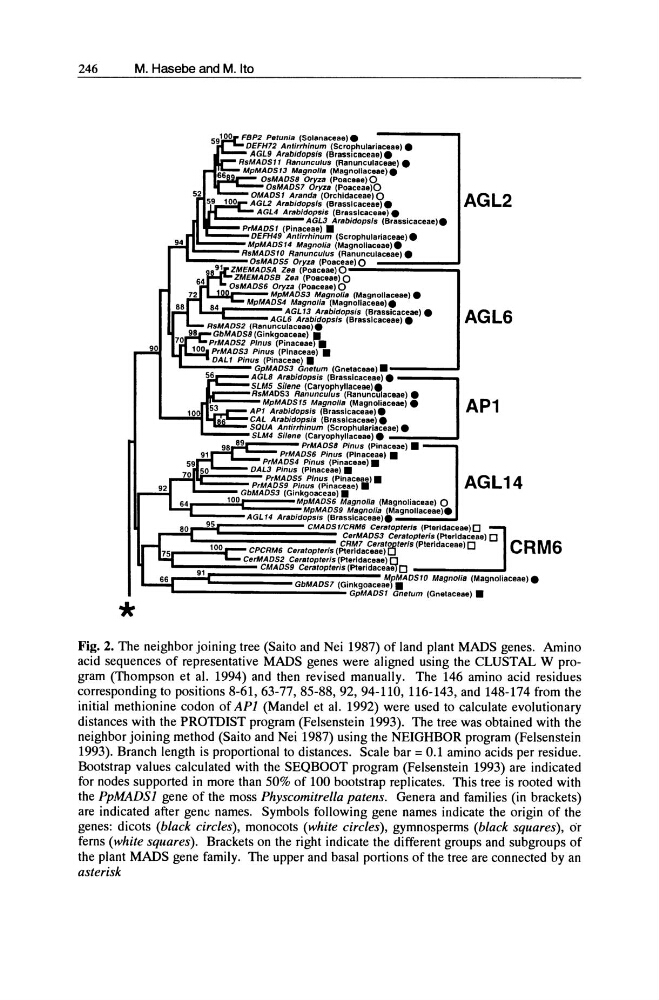
Fig. 2. The neighbor joining tree (Saito and Nei 1987) of land plant MADS genes. Amino
acid sequences of representative MADS genes were aligned using the CLUSTAL W program (Thompson et al. 1994) and then revised manually. The 146 amino acid residues
corresponding to positions 8-61,63-77,85-88,92,94-110,116-143, and 148-174 from the
initial methionine codon of API (Mandel et al. 1992) were used to calculate evolutionary
distances with the PROTDIST program (Felsenstein 1993). The tree was obtained with the
neighbor joining method (Saito and Nei 1987) using the NEIGHBOR program (Felsenstein
1993). Branch length is proportional to distances. Scale bar = 0.1 amino acids per residue.
Bootstrap values calculated with the SEQBOOT program (Felsenstein 1993) are indicated
for nodes supported in more than 50% of 100 bootstrap replicates. This tree is rooted with
the PpMADSl gene of the moss Physcomitrella patens. Genera and families (in brackets)
are indicated after gene names. Symbols following gene names indicate the origin of the
genes: dicots (black circles), monocots (white circles), gymnosperms (black squares), or
ferns (white squares). Brackets on the right indicate the different groups and subgroups of
the plant MADS gene family. The upper and basal portions of the tree are connected by an
asterisk
M. Hasebe and M. Ito
*
FBP2 Petunia (Solanaceae).
DEFH72 Antirrhinum (Scrophulariaceae).
AGL9 Arabidopsis (Brassleaeeae).
RsMADS11 Ranunculus (Ranunculaceae).
MpMADS13 Magnolia (Magnollac8ae) •
.,......,-....;:°O~:,~g~7°cr,~~B«(~~~~:~~?O
OMAOSI Aranda (Orehldaeeae) 0
AGL2 Arabidapsls (Brasslcaceae) •
....----- AGL4 ArabJdopsis (Brassicaceae).
AGL3 Arabidopsls (Brassicaceae).
PrMAOS 1 (Pinaeeae) •
[
~~~~~DEFH49 AnUrrhinum (ScrophuJariaceae).
MpMADS14 Magnolia (Magnollaceae).
RsMADS10 Ranunculus (Aanunculaceae).
OsMAOS5 Oryza (Poacea,ee)l.!02..-======:::::
ZMEMAOSA Zo. (Posc.a.) 0ZMEMAOSB Zoa (Posc.a.) 0
Lw,°r S _ M _ A ..;O..;S..;,6 .&;J:~J~~a%"~~~o9a (Magnollac.a.)_
MpMADS4 Magnolia (Magnoliac8ae).
L~i:===~.AGLI3 Arsbidopsis (Brassicaceae).
AGL6 ArabJdopsis (Brassicac8ae).
RsMADS2 (Ranunculacaae).
98
GbMAOS8 (Ginkgoacoa.) •
70
PrMADS2 Pinus (Pinaceaera
100 PrMAOS3 Pinus (Plnaceae) •
DAL 1 Pinus (Pinaceae) •
GpMADS3 Gnefum (Gnetacaae).;-====::::
56
AGL8 Arabidopsis (Brasslcaceae).
~C==~~~~~~.f4tn~a~~~1~fu~Y:~;~~)c"acoa.) •
..
MpMADS15 MagnoNe (Magnoli8ceae) •
APt Arabidops;s (Brasslcaceae).
CAL Arabidopsis (Brasslcaceae) •
... _ _ _ ~~~~ ~?,:~:hi(~';'V~~~~~r.~~~,::,~.oa_e_) --::-_ _ "
.,l!l![:~~-:-.. PrMADSB Pinus (Pinacase) •
PrMAOS6 Pinus (Plnaceae) •
PrMADS4 Pinus (Pinaceae).
OAL3 Pinus (Pinaceae).
r ...J.~~==::;;~ PrMADS5 Pinus (Pinaceae).
PrMADS9 Pinus (Pinaceae) •
GbMAOS3 (Ginkgoacoao).
100
MpMAOS6 Magnolia (Magnoliaceae) 0
MpMAOS9 Magnolia (MagnoUaceae).
AGL t4 Arabldopsis (Brasslcaceae). _ _ _ _ _
AGL2
AGL6
AP1
AGL14
95
CMAOS11CRM6 Ceratopterls {Pteridaceae)O
CerMADS3 Ceratopter/s (pterldaceae) 0
r-__ ...;1;;;;00:{"=: CPCRM6 Ceratopteris (,r;;~:t:.E."::{C/erls (Pterldaceao) D
C R M 6
CerMADS2 Cerstopteris (Pterldaceae) 0
( :~9~1 ~~~~~C~M~A~O~s~9~c~e~,~at~o~pl~e~riS~(~Pt~.~ri~d~aCea8)D - - - - - - -....
GbMADS7 (Ginkgo.cea~r;AOS10 MagnoliB (Magnoliaceae)_
GpMADS1 Gnetum (Gnetaceae) •
Fig. 2. The neighbor joining tree (Saito and Nei 1987) of land plant MADS genes. Amino
acid sequences of representative MADS genes were aligned using the CLUSTAL W program (Thompson et al. 1994) and then revised manually. The 146 amino acid residues
corresponding to positions 8-61,63-77,85-88,92,94-110,116-143, and 148-174 from the
initial methionine codon of API (Mandel et al. 1992) were used to calculate evolutionary
distances with the PROTDIST program (Felsenstein 1993). The tree was obtained with the
neighbor joining method (Saito and Nei 1987) using the NEIGHBOR program (Felsenstein
1993). Branch length is proportional to distances. Scale bar = 0.1 amino acids per residue.
Bootstrap values calculated with the SEQBOOT program (Felsenstein 1993) are indicated
for nodes supported in more than 50% of 100 bootstrap replicates. This tree is rooted with
the PpMADSl gene of the moss Physcomitrella patens. Genera and families (in brackets)
are indicated after gene names. Symbols following gene names indicate the origin of the
genes: dicots (black circles), monocots (white circles), gymnosperms (black squares), or
ferns (white squares). Brackets on the right indicate the different groups and subgroups of
the plant MADS gene family. The upper and basal portions of the tree are connected by an
asterisk