

188
T. Kohyama et aI.
140
a
140
b
140
c
120
120
120
•
~
x 100
100
100
•
Q)
"0
80
80
80
.s
•
. ~
•
f!!
60
60
60
Q)
40
40
40
.2:
•
•
Cl
•
•
20
20
20
0
0
•
0
200
400
600
20000 40000 60000 0
100000 200000 300000
Biomass (I ha· 1 ), B
BxH" (I m ha- 1 )
BxH"xG (12 m ha-2 yrl)
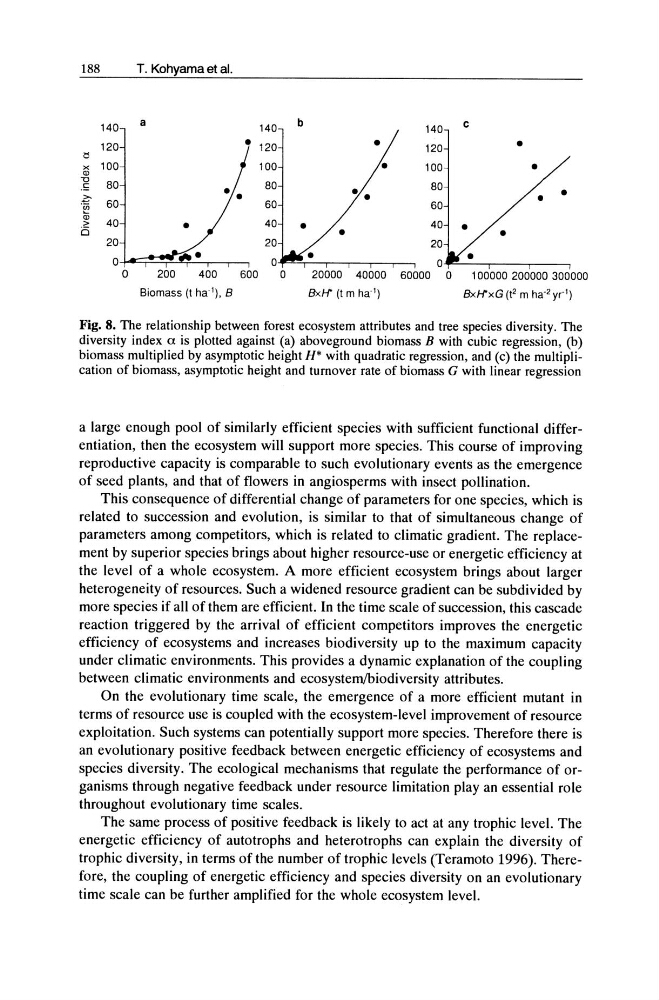
Fig. 8. The relationship between forest ecosystem attributes and tree species diversity. The
diversity index a is plotted against (a) aboveground biomass B with cubic regression, (b)
biomass multiplied by asymptotic height H* with quadratic regression, and (c) the multiplication of biomass, asymptotic height and turnover rate of biomass G with linear regression
a large enough pool of similarly efficient species with sufficient functional differentiation, then the ecosystem will support more species. This course of improving
reproductive capacity is comparable to such evolutionary events as the emergence
of seed plants, and that of flowers in angiosperms with insect pollination.
This consequence of differential change of parameters for one species, which is
related to succession and evolution, is similar to that of simultaneous change of
parameters among competitors, which is related to climatic gradient. The replacement by superior species brings about higher resource-use or energetic efficiency at
the level of a whole ecosystem. A more efficient ecosystem brings about larger
heterogeneity of resources. Such a widened resource gradient can be subdivided by
more species if all of them are efficient. In the time scale of succession, this cascade
reaction triggered by the arrival of efficient competitors improves the energetic
efficiency of ecosystems and increases biodiversity up to the maximum capacity
under climatic environments. This provides a dynamic explanation of the coupling
between climatic environments and ecosystemlbiodiversity attributes.
On the evolutionary time scale, the emergence of a more efficient mutant in
terms of resource use is coupled with the ecosystem-level improvement of resource
exploitation. Such systems can potentially support more species. Therefore there is
an evolutionary positive feedback between energetic efficiency of ecosystems and
species diversity. The ecological mechanisms that regulate the performance of organisms through negative feedback under resource limitation play an essential role
throughout evolutionary time scales.
The same process of positive feedback is likely to act at any trophic level. The
energetic efficiency of autotrophs and heterotrophs can explain the diversity of
trophic diversity, in terms of the number of trophic levels (Teramoto 1996). Therefore, the coupling of energetic efficiency and species diversity on an evolutionary
time scale can be further amplified for the whole ecosystem level.
T. Kohyama et aI.
140
a
140
b
140
c
120
120
120
•
~
x 100
100
100
•
Q)
"0
80
80
80
.s
•
. ~
•
f!!
60
60
60
Q)
40
40
40
.2:
•
•
Cl
•
•
20
20
20
0
0
•
0
200
400
600
20000 40000 60000 0
100000 200000 300000
Biomass (I ha· 1 ), B
BxH" (I m ha- 1 )
BxH"xG (12 m ha-2 yrl)
Fig. 8. The relationship between forest ecosystem attributes and tree species diversity. The
diversity index a is plotted against (a) aboveground biomass B with cubic regression, (b)
biomass multiplied by asymptotic height H* with quadratic regression, and (c) the multiplication of biomass, asymptotic height and turnover rate of biomass G with linear regression
a large enough pool of similarly efficient species with sufficient functional differentiation, then the ecosystem will support more species. This course of improving
reproductive capacity is comparable to such evolutionary events as the emergence
of seed plants, and that of flowers in angiosperms with insect pollination.
This consequence of differential change of parameters for one species, which is
related to succession and evolution, is similar to that of simultaneous change of
parameters among competitors, which is related to climatic gradient. The replacement by superior species brings about higher resource-use or energetic efficiency at
the level of a whole ecosystem. A more efficient ecosystem brings about larger
heterogeneity of resources. Such a widened resource gradient can be subdivided by
more species if all of them are efficient. In the time scale of succession, this cascade
reaction triggered by the arrival of efficient competitors improves the energetic
efficiency of ecosystems and increases biodiversity up to the maximum capacity
under climatic environments. This provides a dynamic explanation of the coupling
between climatic environments and ecosystemlbiodiversity attributes.
On the evolutionary time scale, the emergence of a more efficient mutant in
terms of resource use is coupled with the ecosystem-level improvement of resource
exploitation. Such systems can potentially support more species. Therefore there is
an evolutionary positive feedback between energetic efficiency of ecosystems and
species diversity. The ecological mechanisms that regulate the performance of organisms through negative feedback under resource limitation play an essential role
throughout evolutionary time scales.
The same process of positive feedback is likely to act at any trophic level. The
energetic efficiency of autotrophs and heterotrophs can explain the diversity of
trophic diversity, in terms of the number of trophic levels (Teramoto 1996). Therefore, the coupling of energetic efficiency and species diversity on an evolutionary
time scale can be further amplified for the whole ecosystem level.