

96
120
110
100
' *
Q
ll')
1\ 90
a..
Ol
~ 80
(J)
(])
a 70
ci
~ 60
50
40
D.E. Soltis and P.S. Soltis
185
rbcL
alpB
185+
185+
rbcL+ 185+rbcL
rbcL
alpB
alpB
+ alpB
Gene(s)
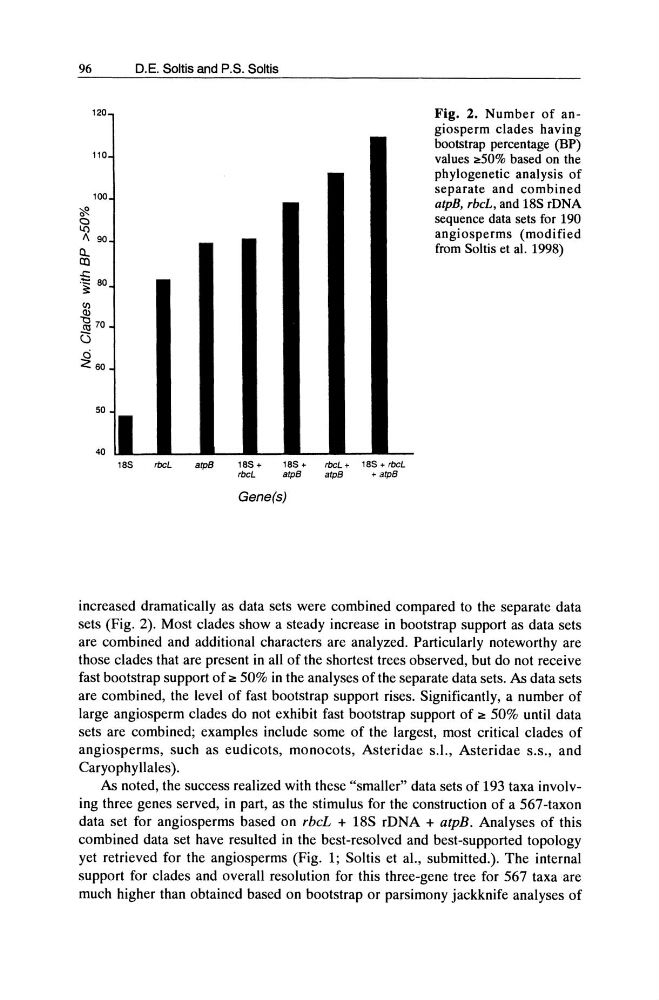
Fig. 2. Number of angiosperm clades having
bootstrap percentage (BP)
values ~50% based on the
phylogenetic analysis of
separate and combined
atpB, rbcL, and 18S rDNA
sequence data sets for 190
angiosperms (modified
from Soltis et al. 1998)
increased dramatically as data sets were combined compared to the separate data
sets (Fig. 2). Most clades show a steady increase in bootstrap support as data sets
are combined and additional characters are analyzed. Particularly noteworthy are
those clades that are present in all of the shortest trees observed, but do not receive
fast bootstrap support of O!! 50% in the analyses of the separate data sets. As data sets
are combined, the level of fast bootstrap support rises. Significantly, a number of
large angiosperm clades do not exhibit fast bootstrap support of O!! 50% until data
sets are combined; examples include some of the largest, most critical clades of
angiosperms, such as eudicots, monocots, Asteridae s.l., Asteridae s.s., and
Caryophyllales).
As noted, the success realized with these "smaller" data sets of 193 taxa involving three genes served, in part, as the stimulus for the construction of a 567-taxon
data set for angiosperms based on rbcL + 18S rDNA + atpB. Analyses of this
combined data set have resulted in the best-resolved and best-supported topology
yet retrieved for the angiosperms (Fig. 1; Soltis et aI., submitted.). The internal
support for clades and overall resolution for this three-gene tree for 567 taxa are
much higher than obtained based on bootstrap or parsimony jackknife analyses of
120
110
100
' *
Q
ll')
1\ 90
a..
Ol
~ 80
(J)
(])
a 70
ci
~ 60
50
40
D.E. Soltis and P.S. Soltis
185
rbcL
alpB
185+
185+
rbcL+ 185+rbcL
rbcL
alpB
alpB
+ alpB
Gene(s)
Fig. 2. Number of angiosperm clades having
bootstrap percentage (BP)
values ~50% based on the
phylogenetic analysis of
separate and combined
atpB, rbcL, and 18S rDNA
sequence data sets for 190
angiosperms (modified
from Soltis et al. 1998)
increased dramatically as data sets were combined compared to the separate data
sets (Fig. 2). Most clades show a steady increase in bootstrap support as data sets
are combined and additional characters are analyzed. Particularly noteworthy are
those clades that are present in all of the shortest trees observed, but do not receive
fast bootstrap support of O!! 50% in the analyses of the separate data sets. As data sets
are combined, the level of fast bootstrap support rises. Significantly, a number of
large angiosperm clades do not exhibit fast bootstrap support of O!! 50% until data
sets are combined; examples include some of the largest, most critical clades of
angiosperms, such as eudicots, monocots, Asteridae s.l., Asteridae s.s., and
Caryophyllales).
As noted, the success realized with these "smaller" data sets of 193 taxa involving three genes served, in part, as the stimulus for the construction of a 567-taxon
data set for angiosperms based on rbcL + 18S rDNA + atpB. Analyses of this
combined data set have resulted in the best-resolved and best-supported topology
yet retrieved for the angiosperms (Fig. 1; Soltis et aI., submitted.). The internal
support for clades and overall resolution for this three-gene tree for 567 taxa are
much higher than obtained based on bootstrap or parsimony jackknife analyses of