

64
William K. Lauenroth
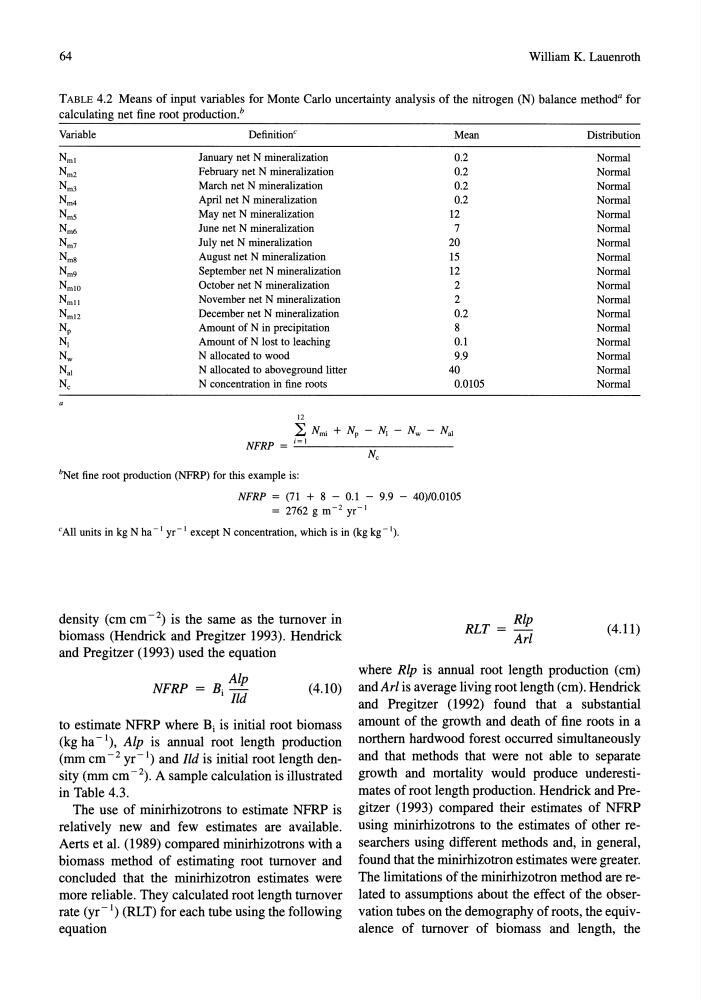
TABLE 4.2 Means of input variables for Monte Carlo uncertainty analysis of the nitrogen (N) balance method a for
calculating net fine root production. b
Variable
Definition c
Nml
January net N mineralization
Nm2
February net N mineralization
Nm3
March net N mineralization
Nm4
April net N mineralization
Nm5
May net N mineralization
Nm6
June net N mineralization
Nm7
July net N mineralization
Nm8
August net N mineralization
Nm9
September net N mineralization
NmlO
October net N mineralization
Nmll
November net N mineralization
Nml2
December net N mineralization
Np
Amount of N in precipitation
NI
Amount of N lost to leaching
Nw
N allocated to wood
Nal
N allocated to aboveground litter
Nc
N concentration in fine roots
12
Mean
0.2
0.2
0.2
0.2
12
7
20
15
12
2
2
0.2
8
0.1
9.9
40
0.0105
Distribution
Normal
Normal
Normal
Normal
Normal
Normal
Normal
Normal
Normal
Normal
Normal
Normal
Normal
Normal
Normal
Normal
Normal
2: Nmi + Np - NI - Nw - Nal
NFRP = ~i~~I __________________ __
Nc
bNet fine root production (NFRP) for this example is:
NFRP = (71 + 8 - 0.1 - 9.9 - 40)/0.0105
= 2762gm- 2 yr- 1
cAlI units in kg N ha - 1 yr -I except N concentration, which is in (kg kg -I).
density (cm cm - 2) is the same as the turnover in
biomass (Hendrick and Pregitzer 1993). Hendrick
and Pregitzer (1993) used the equation
NFRP = B- Alp
1 Ild
(4.10)
to estimate NFRP where Bj is initial root biomass
(kg ha - 1), Alp is annual root length production
(rom cm -2 yr- 1 ) and Ild is initial root length density (rom cm - 2). A sample calculation is illustrated
in Table 4.3.
The use of minirhizotrons to estimate NFRP is
relatively new and few estimates are available.
Aerts et al. (1989) compared minirhizotrons with a
biomass method of estimating root turnover and
concluded that the minirhizotron estimates were
more reliable. They calculated root length turnover
rate (yr - 1) (RLT) for each tube using the following
equation
RLT
Rip
Arl
(4.11)
where Rip is annual root length production (cm)
andArl is average living root length (cm). Hendrick
and Pregitzer (1992) found that a substantial
amount of the growth and death of fine roots in a
northern hardwood forest occurred simultaneously
and that methods that were not able to separate
growth and mortality would produce underestimates of root length production. Hendrick and Pregitzer (1993) compared their estimates of NFRP
using minirhizotrons to the estimates of other researchers using different methods and, in general,
found that the minirhizotron estimates were greater.
The limitations of the minirhizotron method are related to assumptions about the effect of the observation tubes on the demography of roots, the equivalence of turnover of biomass and length, the
William K. Lauenroth
TABLE 4.2 Means of input variables for Monte Carlo uncertainty analysis of the nitrogen (N) balance method a for
calculating net fine root production. b
Variable
Definition c
Nml
January net N mineralization
Nm2
February net N mineralization
Nm3
March net N mineralization
Nm4
April net N mineralization
Nm5
May net N mineralization
Nm6
June net N mineralization
Nm7
July net N mineralization
Nm8
August net N mineralization
Nm9
September net N mineralization
NmlO
October net N mineralization
Nmll
November net N mineralization
Nml2
December net N mineralization
Np
Amount of N in precipitation
NI
Amount of N lost to leaching
Nw
N allocated to wood
Nal
N allocated to aboveground litter
Nc
N concentration in fine roots
12
Mean
0.2
0.2
0.2
0.2
12
7
20
15
12
2
2
0.2
8
0.1
9.9
40
0.0105
Distribution
Normal
Normal
Normal
Normal
Normal
Normal
Normal
Normal
Normal
Normal
Normal
Normal
Normal
Normal
Normal
Normal
Normal
2: Nmi + Np - NI - Nw - Nal
NFRP = ~i~~I __________________ __
Nc
bNet fine root production (NFRP) for this example is:
NFRP = (71 + 8 - 0.1 - 9.9 - 40)/0.0105
= 2762gm- 2 yr- 1
cAlI units in kg N ha - 1 yr -I except N concentration, which is in (kg kg -I).
density (cm cm - 2) is the same as the turnover in
biomass (Hendrick and Pregitzer 1993). Hendrick
and Pregitzer (1993) used the equation
NFRP = B- Alp
1 Ild
(4.10)
to estimate NFRP where Bj is initial root biomass
(kg ha - 1), Alp is annual root length production
(rom cm -2 yr- 1 ) and Ild is initial root length density (rom cm - 2). A sample calculation is illustrated
in Table 4.3.
The use of minirhizotrons to estimate NFRP is
relatively new and few estimates are available.
Aerts et al. (1989) compared minirhizotrons with a
biomass method of estimating root turnover and
concluded that the minirhizotron estimates were
more reliable. They calculated root length turnover
rate (yr - 1) (RLT) for each tube using the following
equation
RLT
Rip
Arl
(4.11)
where Rip is annual root length production (cm)
andArl is average living root length (cm). Hendrick
and Pregitzer (1992) found that a substantial
amount of the growth and death of fine roots in a
northern hardwood forest occurred simultaneously
and that methods that were not able to separate
growth and mortality would produce underestimates of root length production. Hendrick and Pregitzer (1993) compared their estimates of NFRP
using minirhizotrons to the estimates of other researchers using different methods and, in general,
found that the minirhizotron estimates were greater.
The limitations of the minirhizotron method are related to assumptions about the effect of the observation tubes on the demography of roots, the equivalence of turnover of biomass and length, the