

32
Osvaldo E. Sala and Amy T. Austin
PAR
PRODUCERS
GPP
1 1 1
Reflection
Heat
AR
Transmission
HR
HR
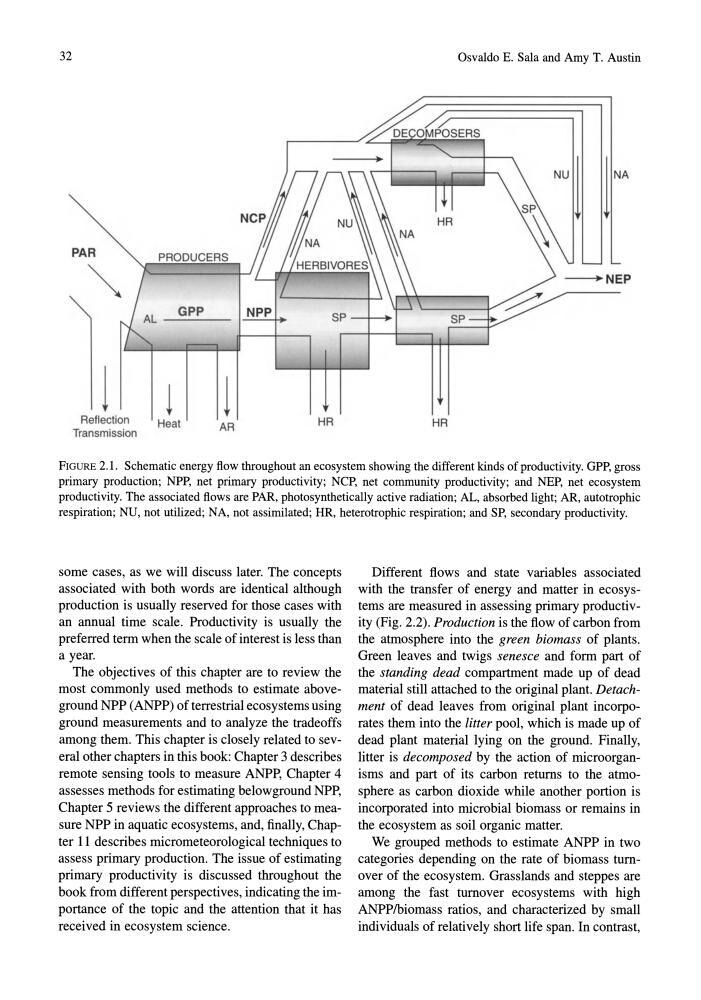
FIGURE 2.1. Schematic energy flow throughout an ecosystem showing the different kinds of productivity. GPP, gross
primary production; NPP, net primary productivity; NCP, net community productivity; and NEP, net ecosystem
productivity. The associated flows are PAR, photosynthetically active radiation; AL, absorbed light; AR, autotrophic
respiration; NU, not utilized; NA, not assimilated; HR, heterotrophic respiration; and SP, secondary productivity.
some cases, as we will discuss later. The concepts
associated with both words are identical although
production is usually reserved for those cases with
an annual time scale. Productivity is usually the
preferred term when the scale of interest is less than
a year.
The objectives of this chapter are to review the
most commonly used methods to estimate aboveground NPP (ANPP) of terrestrial ecosystems using
ground measurements and to analyze the tradeoffs
among them. This chapter is closely related to several other chapters in this book: Chapter 3 describes
remote sensing tools to measure ANPP, Chapter 4
assesses methods for estimating below ground NPP,
Chapter 5 reviews the different approaches to measure NPP in aquatic ecosystems, and, finally, Chapter 11 describes micrometeorological techniques to
assess primary production. The issue of estimating
primary productivity is discussed throughout the
book from different perspectives, indicating the importance of the topic and the attention that it has
received in ecosystem science.
Different flows and state variables associated
with the transfer of energy and matter in ecosystems are measured in assessing primary productivity (Fig. 2.2). Production is the flow of carbon from
the atmosphere into the green biomass of plants.
Green leaves and twigs senesce and form part of
the standing dead compartment made up of dead
material still attached to the original plant. Detachment of dead leaves from original plant incorporates them into the litter pool, which is made up of
dead plant material lying on the ground. Finally,
litter is decomposed by the action of microorganisms and part of its carbon returns to the atmosphere as carbon dioxide while another portion is
incorporated into microbial biomass or remains in
the ecosystem as soil organic matter.
We grouped methods to estimate ANPP in two
categories depending on the rate of biomass turnover of the ecosystem. Grasslands and steppes are
among the fast turnover ecosystems with high
ANPPlbiomass ratios, and characterized by small
individuals of relatively short life span. In contrast,
Osvaldo E. Sala and Amy T. Austin
PAR
PRODUCERS
GPP
1 1 1
Reflection
Heat
AR
Transmission
HR
HR
FIGURE 2.1. Schematic energy flow throughout an ecosystem showing the different kinds of productivity. GPP, gross
primary production; NPP, net primary productivity; NCP, net community productivity; and NEP, net ecosystem
productivity. The associated flows are PAR, photosynthetically active radiation; AL, absorbed light; AR, autotrophic
respiration; NU, not utilized; NA, not assimilated; HR, heterotrophic respiration; and SP, secondary productivity.
some cases, as we will discuss later. The concepts
associated with both words are identical although
production is usually reserved for those cases with
an annual time scale. Productivity is usually the
preferred term when the scale of interest is less than
a year.
The objectives of this chapter are to review the
most commonly used methods to estimate aboveground NPP (ANPP) of terrestrial ecosystems using
ground measurements and to analyze the tradeoffs
among them. This chapter is closely related to several other chapters in this book: Chapter 3 describes
remote sensing tools to measure ANPP, Chapter 4
assesses methods for estimating below ground NPP,
Chapter 5 reviews the different approaches to measure NPP in aquatic ecosystems, and, finally, Chapter 11 describes micrometeorological techniques to
assess primary production. The issue of estimating
primary productivity is discussed throughout the
book from different perspectives, indicating the importance of the topic and the attention that it has
received in ecosystem science.
Different flows and state variables associated
with the transfer of energy and matter in ecosystems are measured in assessing primary productivity (Fig. 2.2). Production is the flow of carbon from
the atmosphere into the green biomass of plants.
Green leaves and twigs senesce and form part of
the standing dead compartment made up of dead
material still attached to the original plant. Detachment of dead leaves from original plant incorporates them into the litter pool, which is made up of
dead plant material lying on the ground. Finally,
litter is decomposed by the action of microorganisms and part of its carbon returns to the atmosphere as carbon dioxide while another portion is
incorporated into microbial biomass or remains in
the ecosystem as soil organic matter.
We grouped methods to estimate ANPP in two
categories depending on the rate of biomass turnover of the ecosystem. Grasslands and steppes are
among the fast turnover ecosystems with high
ANPPlbiomass ratios, and characterized by small
individuals of relatively short life span. In contrast,