

394
James J. Elser
300
®
Leptodora
Polyphemus 8
- 200 -
Acanthodiaptomus 0
C,)
's
Heterocope 0
.s
OBosmina
CIS
Holopedium c9
- D.
0
100 -
Diaphanosoma
°DaPhnia
0
I
I
I
I
0
10
20
30
40
50
N:P (atomic)
@ Low Food Concentration High Food Concentration
70r......;.......;.~:;;=?--=!:=:;=:;----,
60
50
40
30
- 20
J 10
. . 0
. .
• E 70
>0
60
"CI ., 50
CD
40
30
20
10
0
0
14 0
14
Age (d)
25
20
15
,.. 10
.!!
5
iii!
'15o!
0
ij" 25
.. &
=. 20
Oca
ca
S 15
10
5
0
Low Food Concentration
High Food Concentration
0
Nutrient-sufficient
0
algae (C:P = 150:1)
8i
o aDO
10&0
C
0.5 1 1.5 2 2.5 0 0.5 1 1.5 2 2.5
Body length of female (mm)
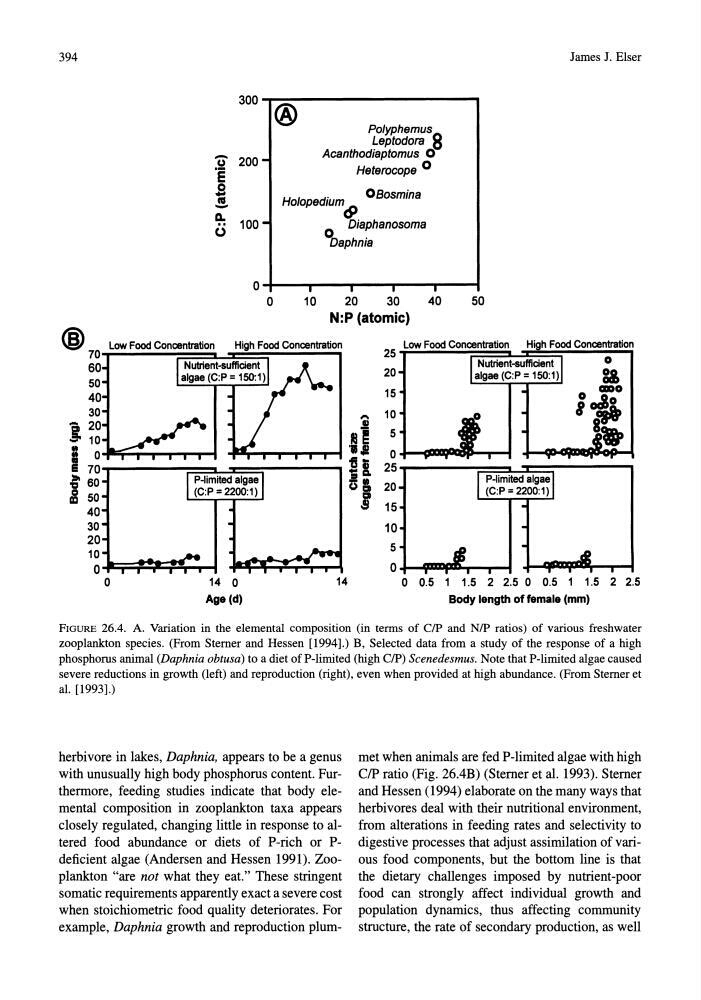
FIGURE 26.4. A. Variation in the elemental composition (in terms of CIP and NIP ratios) of various freshwater
zooplankton species. (From Sterner and Hessen [1994].) B, Selected data from a study of the response of a high
phosphorus animal (Daphnia obtusa) to a diet of P-lirnited (high CIP) Scenedesmus. Note that P-lirnited algae caused
severe reductions in growth (left) and reproduction (right), even when provided at high abundance. (From Sterner et
al. [1993].)
herbivore in lakes, Daphnia, appears to be a genus
with unusually high body phosphorus content. Furthermore, feeding studies indicate that body elemental composition in zooplankton taxa appears
closely regulated, changing little in response to altered food abundance or diets of P-rich or Pdeficient algae (Andersen and Hessen 1991). Zooplankton "are not what they eat." These stringent
somatic requirements apparently exact a severe cost
when stoichiometric food quality deteriorates. For
example, Daphnia growth and reproduction plummet when animals are fed P-limited algae with high
CIP ratio (Fig. 26.4B) (Sterner et al. 1993). Sterner
and Hessen (1994) elaborate on the many ways that
herbivores deal with their nutritional environment,
from alterations in feeding rates and selectivity to
digestive processes that adjust assimilation of various food components, but the bottom line is that
the dietary challenges imposed by nutrient-poor
food can strongly affect individual growth and
population dynamics, thus affecting community
structure, the rate of secondary production, as well
James J. Elser
300
®
Leptodora
Polyphemus 8
- 200 -
Acanthodiaptomus 0
C,)
's
Heterocope 0
.s
OBosmina
CIS
Holopedium c9
- D.
0
100 -
Diaphanosoma
°DaPhnia
0
I
I
I
I
0
10
20
30
40
50
N:P (atomic)
@ Low Food Concentration High Food Concentration
70r......;.......;.~:;;=?--=!:=:;=:;----,
60
50
40
30
- 20
J 10
. . 0
. .
• E 70
>0
60
"CI ., 50
CD
40
30
20
10
0
0
14 0
14
Age (d)
25
20
15
,.. 10
.!!
5
iii!
'15o!
0
ij" 25
.. &
=. 20
Oca
ca
S 15
10
5
0
Low Food Concentration
High Food Concentration
0
Nutrient-sufficient
0
algae (C:P = 150:1)
8i
o aDO
10&0
C
0.5 1 1.5 2 2.5 0 0.5 1 1.5 2 2.5
Body length of female (mm)
FIGURE 26.4. A. Variation in the elemental composition (in terms of CIP and NIP ratios) of various freshwater
zooplankton species. (From Sterner and Hessen [1994].) B, Selected data from a study of the response of a high
phosphorus animal (Daphnia obtusa) to a diet of P-lirnited (high CIP) Scenedesmus. Note that P-lirnited algae caused
severe reductions in growth (left) and reproduction (right), even when provided at high abundance. (From Sterner et
al. [1993].)
herbivore in lakes, Daphnia, appears to be a genus
with unusually high body phosphorus content. Furthermore, feeding studies indicate that body elemental composition in zooplankton taxa appears
closely regulated, changing little in response to altered food abundance or diets of P-rich or Pdeficient algae (Andersen and Hessen 1991). Zooplankton "are not what they eat." These stringent
somatic requirements apparently exact a severe cost
when stoichiometric food quality deteriorates. For
example, Daphnia growth and reproduction plummet when animals are fed P-limited algae with high
CIP ratio (Fig. 26.4B) (Sterner et al. 1993). Sterner
and Hessen (1994) elaborate on the many ways that
herbivores deal with their nutritional environment,
from alterations in feeding rates and selectivity to
digestive processes that adjust assimilation of various food components, but the bottom line is that
the dietary challenges imposed by nutrient-poor
food can strongly affect individual growth and
population dynamics, thus affecting community
structure, the rate of secondary production, as well