

374
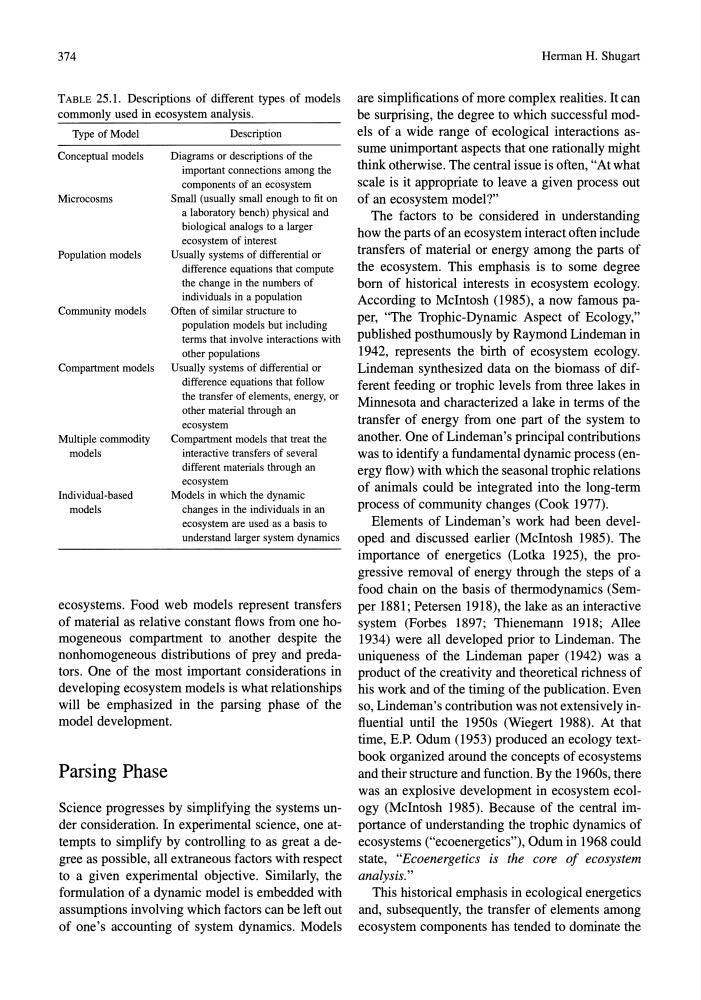
TABLE 25.1. Descriptions of different types of models
commonly used in ecosystem analysis.
Type of Model
Description
Conceptual models
Microcosms
Population models
Community models
Compartment models
Multiple commodity
models
Individual-based
models
Diagrams or descriptions of the
important connections among the
components of an ecosystem
Small (usually small enough to fit on
a laboratory bench) physical and
biological analogs to a larger
ecosystem of interest
Usually systems of differential or
difference equations that compute
the change in the numbers of
individuals in a population
Often of similar structure to
population models but including
terms that involve interactions with
other popUlations
Usually systems of differential or
difference equations that follow
the transfer of elements, energy, or
other material through an
ecosystem
Compartment models that treat the
interactive transfers of several
different materials through an
ecosystem
Models in which the dynamic
changes in the individuals in an
ecosystem are used as a basis to
understand larger system dynamics
ecosystems. Food web models represent transfers
of material as relative constant flows from one homogeneous compartment to another despite the
nonhomogeneous distributions of prey and predators. One of the most important considerations in
developing ecosystem models is what relationships
will be emphasized in the parsing phase of the
model development.
Parsing Phase
Science progresses by simplifying the systems under consideration. In experimental science, one attempts to simplify by controlling to as great a degree as possible, all extraneous factors with respect
to a given experimental objective. Similarly, the
formulation of a dynamic model is embedded with
assumptions involving which factors can be left out
of one's accounting of system dynamics. Models
Herman H. Shugart
are simplifications of more complex realities. It can
be surprising, the degree to which successful models of a wide range of ecological interactions assume unimportant aspects that one rationally might
think otherwise. The central issue is often, "At what
scale is it appropriate to leave a given process out
of an ecosystem model?"
The factors to be considered in understanding
how the parts of an ecosystem interact often include
transfers of material or energy among the parts of
the ecosystem. This emphasis is to some degree
born of historical interests in ecosystem ecology.
According to McIntosh (1985), a now famous paper, "The Trophic-Dynamic Aspect of Ecology,"
published posthumously by Raymond Lindeman in
1942, represents the birth of ecosystem ecology.
Lindeman synthesized data on the biomass of different feeding or trophic levels from three lakes in
Minnesota and characterized a lake in terms of the
transfer of energy from one part of the system to
another. One of Lindeman's principal contributions
was to identify a fundamental dynamic process (energy flow) with which the seasonal trophic relations
of animals could be integrated into the long-term
process of community changes (Cook 1977).
Elements of Lindeman's work had been developed and discussed earlier (McIntosh 1985). The
importance of energetics (Lotka 1925), the progressive removal of energy through the steps of a
food chain on the basis of thermodynamics (Semper 1881; Petersen 1918), the lake as an interactive
system (Forbes 1897; Thienemann 1918; Allee
1934) were all developed prior to Lindeman. The
uniqueness of the Lindeman paper (1942) was a
product of the creativity and theoretical richness of
his work and of the timing of the publication. Even
so, Lindeman's contribution was not extensively influential until the 1950s (Wiegert 1988). At that
time, E.P. Odum (1953) produced an ecology textbook organized around the concepts of ecosystems
and their structure and function. By the 1960s, there
was an explosive development in ecosystem ecology (McIntosh 1985). Because of the central importance of understanding the trophic dynamics of
ecosystems ("ecoenergetics"), Odum in 1968 could
state, "Ecoenergetics is the core of ecosystem
analysis. "
This historical emphasis in ecological energetics
and, subsequently, the transfer of elements among
ecosystem components has tended to dominate the
TABLE 25.1. Descriptions of different types of models
commonly used in ecosystem analysis.
Type of Model
Description
Conceptual models
Microcosms
Population models
Community models
Compartment models
Multiple commodity
models
Individual-based
models
Diagrams or descriptions of the
important connections among the
components of an ecosystem
Small (usually small enough to fit on
a laboratory bench) physical and
biological analogs to a larger
ecosystem of interest
Usually systems of differential or
difference equations that compute
the change in the numbers of
individuals in a population
Often of similar structure to
population models but including
terms that involve interactions with
other popUlations
Usually systems of differential or
difference equations that follow
the transfer of elements, energy, or
other material through an
ecosystem
Compartment models that treat the
interactive transfers of several
different materials through an
ecosystem
Models in which the dynamic
changes in the individuals in an
ecosystem are used as a basis to
understand larger system dynamics
ecosystems. Food web models represent transfers
of material as relative constant flows from one homogeneous compartment to another despite the
nonhomogeneous distributions of prey and predators. One of the most important considerations in
developing ecosystem models is what relationships
will be emphasized in the parsing phase of the
model development.
Parsing Phase
Science progresses by simplifying the systems under consideration. In experimental science, one attempts to simplify by controlling to as great a degree as possible, all extraneous factors with respect
to a given experimental objective. Similarly, the
formulation of a dynamic model is embedded with
assumptions involving which factors can be left out
of one's accounting of system dynamics. Models
Herman H. Shugart
are simplifications of more complex realities. It can
be surprising, the degree to which successful models of a wide range of ecological interactions assume unimportant aspects that one rationally might
think otherwise. The central issue is often, "At what
scale is it appropriate to leave a given process out
of an ecosystem model?"
The factors to be considered in understanding
how the parts of an ecosystem interact often include
transfers of material or energy among the parts of
the ecosystem. This emphasis is to some degree
born of historical interests in ecosystem ecology.
According to McIntosh (1985), a now famous paper, "The Trophic-Dynamic Aspect of Ecology,"
published posthumously by Raymond Lindeman in
1942, represents the birth of ecosystem ecology.
Lindeman synthesized data on the biomass of different feeding or trophic levels from three lakes in
Minnesota and characterized a lake in terms of the
transfer of energy from one part of the system to
another. One of Lindeman's principal contributions
was to identify a fundamental dynamic process (energy flow) with which the seasonal trophic relations
of animals could be integrated into the long-term
process of community changes (Cook 1977).
Elements of Lindeman's work had been developed and discussed earlier (McIntosh 1985). The
importance of energetics (Lotka 1925), the progressive removal of energy through the steps of a
food chain on the basis of thermodynamics (Semper 1881; Petersen 1918), the lake as an interactive
system (Forbes 1897; Thienemann 1918; Allee
1934) were all developed prior to Lindeman. The
uniqueness of the Lindeman paper (1942) was a
product of the creativity and theoretical richness of
his work and of the timing of the publication. Even
so, Lindeman's contribution was not extensively influential until the 1950s (Wiegert 1988). At that
time, E.P. Odum (1953) produced an ecology textbook organized around the concepts of ecosystems
and their structure and function. By the 1960s, there
was an explosive development in ecosystem ecology (McIntosh 1985). Because of the central importance of understanding the trophic dynamics of
ecosystems ("ecoenergetics"), Odum in 1968 could
state, "Ecoenergetics is the core of ecosystem
analysis. "
This historical emphasis in ecological energetics
and, subsequently, the transfer of elements among
ecosystem components has tended to dominate the