

14. Nutrient Transfonnations
source
sink
rate of
~4
~----I~~
N
interest
15 N
100~-------------.
80
60
%
40
.. ' ............ """"""" "\""""""""""".
: /
atom %15 N of sink
.
20 .:
.
2
4
6
8
relative incubation time
(incub. time/MRT)
10
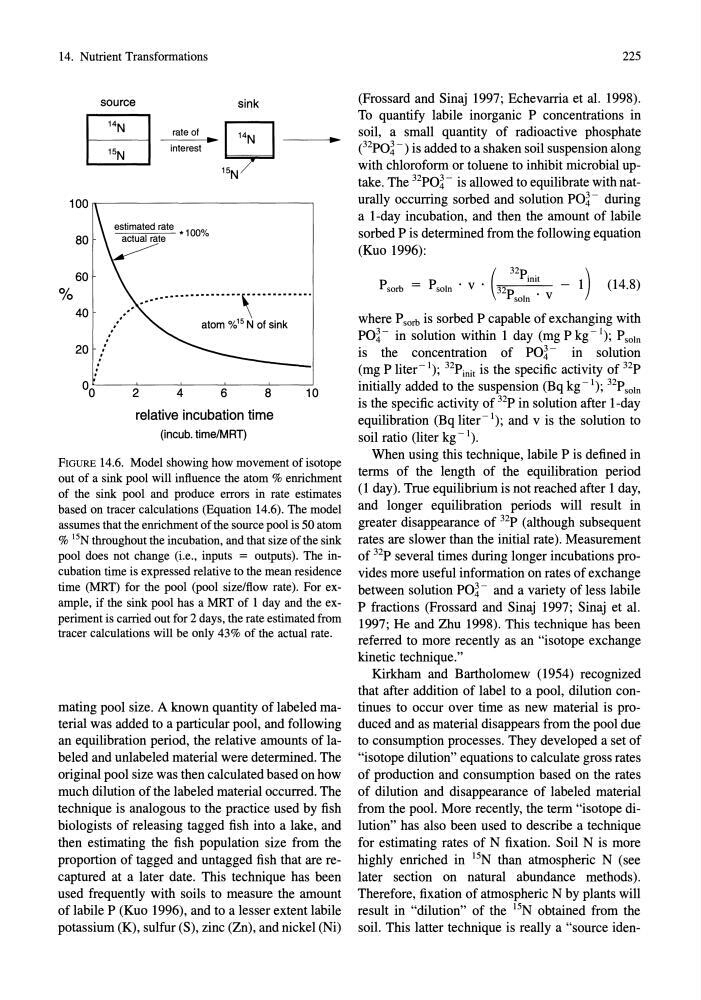
FIGURE 14.6. Model showing how movement of isotope
out of a sink pool will influence the atom % enrichment
of the sink pool and produce errors in rate estimates
based on tracer calculations (Equation 14.6). The model
assumes that the enrichment of the source pool is 50 atom
% 15N throughout the incubation, and that size ofthe sink
pool does not change (i.e., inputs = outputs). The incubation time is expressed relative to the mean residence
time (MRT) for the pool (pool sizelflow rate). For example, if the sink pool has a MRT of 1 day and the experiment is carried out for 2 days, the rate estimated from
tracer calculations will be only 43% of the actual rate.
mating pool size. A known quantity of labeled material was added to a particular pool, and following
an equilibration period, the relative amounts of labeled and unlabeled material were determined. The
original pool size was then calculated based on how
much dilution of the labeled material occurred. The
technique is analogous to the practice used by fish
biologists of releasing tagged fish into a lake, and
then estimating the fish population size from the
proportion of tagged and untagged fish that are recaptured at a later date. This technique has been
used frequently with soils to measure the amount
of labile P (Kuo 1996), and to a lesser extent labile
potassium (K), sulfur (S), zinc (Zn), and nickel (Ni)
225
(Frossard and Sinaj 1997; Echevarria et al. 1998).
To quantify labile inorganic P concentrations in
soil, a small quantity of radioactive phosphate
e2pO~ -) is added to a shaken soil suspension along
with chloroform or toluene to inhibit microbial uptake. The 32PO~ - is allowed to equilibrate with naturally occurring sorbed and solution PO~ - during
a I-day incubation, and then the amount of labile
sorbed P is determined from the following equation
(Kuo 1996):
P
P
(
32Pinit
1)
sorb = soln' V' 32
-
P soln • V
(14.8)
where P sorb is sorbed P capable of exchanging with
PO~ - in solution within 1 day (mg P kg -I); P soln
is the concentration of PO~ - in solution
(mg P liter-I); 32Pinit is the specific activity of 32p
initially added to the suspension (Bq kg-I); 32Psoln
is the specific activity of 32p in solution after I-day
equilibration (Bq liter-I); and v is the solution to
soil ratio (liter kg - I).
When using this technique, labile P is defined in
terms of the length of the equilibration period
(1 day). True equilibrium is not reached after 1 day,
and longer equilibration periods will result in
greater disappearance of 32p (although subsequent
rates are slower than the initial rate). Measurement
of 32p several times during longer incubations provides more useful information on rates of exchange
between solution PO~ - and a variety of less labile
P fractions (Frossard and Sinaj 1997; Sinaj et al.
1997; He and Zhu 1998). This technique has been
referred to more recently as an "isotope exchange
kinetic technique."
Kirkham and Bartholomew (1954) recognized
that after addition of label to a pool, dilution continues to occur over time as new material is produced and as material disappears from the pool due
to consumption processes. They developed a set of
"isotope dilution" equations to calculate gross rates
of production and consumption based on the rates
of dilution and disappearance of labeled material
from the pool. More recently, the term "isotope dilution" has also been used to describe a technique
for estimating rates of N fixation. Soil N is more
highly enriched in 15N than atmospheric N (see
later section on natural abundance methods).
Therefore, fixation of atmospheric N by plants will
result in "dilution" of the 15N obtained from the
soil. This latter technique is really a "source iden-
source
sink
rate of
~4
~----I~~
N
interest
15 N
100~-------------.
80
60
%
40
.. ' ............ """"""" "\""""""""""".
: /
atom %15 N of sink
.
20 .:
.
2
4
6
8
relative incubation time
(incub. time/MRT)
10
FIGURE 14.6. Model showing how movement of isotope
out of a sink pool will influence the atom % enrichment
of the sink pool and produce errors in rate estimates
based on tracer calculations (Equation 14.6). The model
assumes that the enrichment of the source pool is 50 atom
% 15N throughout the incubation, and that size ofthe sink
pool does not change (i.e., inputs = outputs). The incubation time is expressed relative to the mean residence
time (MRT) for the pool (pool sizelflow rate). For example, if the sink pool has a MRT of 1 day and the experiment is carried out for 2 days, the rate estimated from
tracer calculations will be only 43% of the actual rate.
mating pool size. A known quantity of labeled material was added to a particular pool, and following
an equilibration period, the relative amounts of labeled and unlabeled material were determined. The
original pool size was then calculated based on how
much dilution of the labeled material occurred. The
technique is analogous to the practice used by fish
biologists of releasing tagged fish into a lake, and
then estimating the fish population size from the
proportion of tagged and untagged fish that are recaptured at a later date. This technique has been
used frequently with soils to measure the amount
of labile P (Kuo 1996), and to a lesser extent labile
potassium (K), sulfur (S), zinc (Zn), and nickel (Ni)
225
(Frossard and Sinaj 1997; Echevarria et al. 1998).
To quantify labile inorganic P concentrations in
soil, a small quantity of radioactive phosphate
e2pO~ -) is added to a shaken soil suspension along
with chloroform or toluene to inhibit microbial uptake. The 32PO~ - is allowed to equilibrate with naturally occurring sorbed and solution PO~ - during
a I-day incubation, and then the amount of labile
sorbed P is determined from the following equation
(Kuo 1996):
P
P
(
32Pinit
1)
sorb = soln' V' 32
-
P soln • V
(14.8)
where P sorb is sorbed P capable of exchanging with
PO~ - in solution within 1 day (mg P kg -I); P soln
is the concentration of PO~ - in solution
(mg P liter-I); 32Pinit is the specific activity of 32p
initially added to the suspension (Bq kg-I); 32Psoln
is the specific activity of 32p in solution after I-day
equilibration (Bq liter-I); and v is the solution to
soil ratio (liter kg - I).
When using this technique, labile P is defined in
terms of the length of the equilibration period
(1 day). True equilibrium is not reached after 1 day,
and longer equilibration periods will result in
greater disappearance of 32p (although subsequent
rates are slower than the initial rate). Measurement
of 32p several times during longer incubations provides more useful information on rates of exchange
between solution PO~ - and a variety of less labile
P fractions (Frossard and Sinaj 1997; Sinaj et al.
1997; He and Zhu 1998). This technique has been
referred to more recently as an "isotope exchange
kinetic technique."
Kirkham and Bartholomew (1954) recognized
that after addition of label to a pool, dilution continues to occur over time as new material is produced and as material disappears from the pool due
to consumption processes. They developed a set of
"isotope dilution" equations to calculate gross rates
of production and consumption based on the rates
of dilution and disappearance of labeled material
from the pool. More recently, the term "isotope dilution" has also been used to describe a technique
for estimating rates of N fixation. Soil N is more
highly enriched in 15N than atmospheric N (see
later section on natural abundance methods).
Therefore, fixation of atmospheric N by plants will
result in "dilution" of the 15N obtained from the
soil. This latter technique is really a "source iden-