

220
John M. Stark
blocked by autoclavlng
\\
"
EEJ
mineralization
Org;niC ..
.- Solution
p
net dissolution
..
.and precipitation
Sorbed
Inorganic
p
immobilization
//'
blocked by irradiation
or aufoclavlng
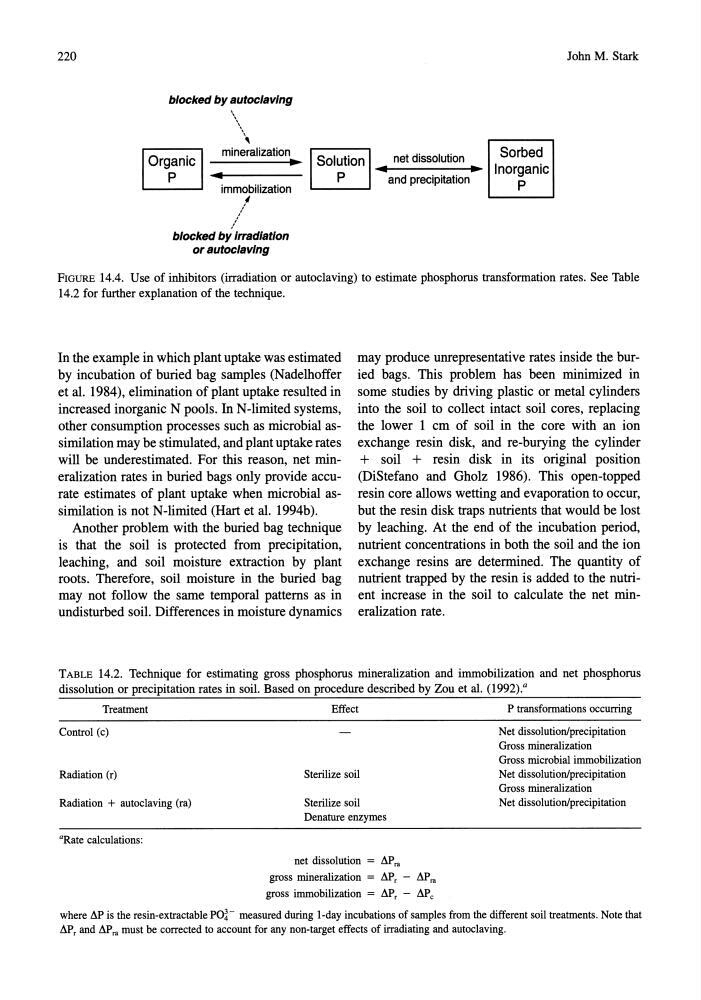
FIGURE 14.4. Use of inhibitors (irradiation or autoc1aving) to estimate phosphorus transfonnation rates. See Table
14.2 for further explanation of the technique.
In the example in which plant uptake was estimated
by incubation of buried bag samples (Nadelhoffer
et al. 1984), elimination of plant uptake resulted in
increased inorganic N pools. In N-limited systems,
other consumption processes such as microbial assimilation may be stimulated, and plant uptake rates
will be underestimated. For this reason, net mineralization rates in buried bags only provide accurate estimates of plant uptake when microbial assimilation is not N-limited (Hart et al. 1994b).
Another problem with the buried bag technique
is that the soil is protected from precipitation,
leaching, and soil moisture extraction by plant
roots. Therefore, soil moisture in the buried bag
may not follow the same temporal patterns as in
undisturbed soil. Differences in moisture dynamics
may produce unrepresentative rates inside the buried bags. This problem has been minimized in
some studies by driving plastic or metal cylinders
into the soil to collect intact soil cores, replacing
the lower 1 cm of soil in the core with an ion
exchange resin disk, and re-burying the cylinder
+ soil + resin disk in its original position
(DiStefano and Gholz 1986). This open-topped
resin core allows wetting and evaporation to occur,
but the resin disk traps nutrients that would be lost
by leaching. At the end of the incubation period,
nutrient concentrations in both the soil and the ion
exchange resins are determined. The quantity of
nutrient trapped by the resin is added to the nutrient increase in the soil to calculate the net mineralization rate.
TABLE 14.2. Technique for estimating gross phosphorus mineralization and immobilization and net phosphorus
dissolution or precipitation rates in soil. Based on procedure described by Zou et al. (1992).a
Treatment
Control (c)
Radiation (r)
Radiation + autoclaving (ra)
aRate calculations:
Effect
Sterilize soil
Sterilize soil
Denature enzymes
net dissolution = &P ra
gross mineralization = &Pr - &P ra
gross immobilization = &Pr - &Pc
P transformations occurring
Net dissolution/precipitation
Gross mineralization
Gross microbial immobilization
Net dissolution/precipitation
Gross mineralization
Net dissolution/precipitation
where ~P is the resin-extractable PO~ - measured during i-day incubations of samples from the different soil treatments. Note that
&Pr and ~P ra must be corrected to account for any non-target effects of irradiating and autoclaving.
John M. Stark
blocked by autoclavlng
\\
"
EEJ
mineralization
Org;niC ..
.- Solution
p
net dissolution
..
.and precipitation
Sorbed
Inorganic
p
immobilization
//'
blocked by irradiation
or aufoclavlng
FIGURE 14.4. Use of inhibitors (irradiation or autoc1aving) to estimate phosphorus transfonnation rates. See Table
14.2 for further explanation of the technique.
In the example in which plant uptake was estimated
by incubation of buried bag samples (Nadelhoffer
et al. 1984), elimination of plant uptake resulted in
increased inorganic N pools. In N-limited systems,
other consumption processes such as microbial assimilation may be stimulated, and plant uptake rates
will be underestimated. For this reason, net mineralization rates in buried bags only provide accurate estimates of plant uptake when microbial assimilation is not N-limited (Hart et al. 1994b).
Another problem with the buried bag technique
is that the soil is protected from precipitation,
leaching, and soil moisture extraction by plant
roots. Therefore, soil moisture in the buried bag
may not follow the same temporal patterns as in
undisturbed soil. Differences in moisture dynamics
may produce unrepresentative rates inside the buried bags. This problem has been minimized in
some studies by driving plastic or metal cylinders
into the soil to collect intact soil cores, replacing
the lower 1 cm of soil in the core with an ion
exchange resin disk, and re-burying the cylinder
+ soil + resin disk in its original position
(DiStefano and Gholz 1986). This open-topped
resin core allows wetting and evaporation to occur,
but the resin disk traps nutrients that would be lost
by leaching. At the end of the incubation period,
nutrient concentrations in both the soil and the ion
exchange resins are determined. The quantity of
nutrient trapped by the resin is added to the nutrient increase in the soil to calculate the net mineralization rate.
TABLE 14.2. Technique for estimating gross phosphorus mineralization and immobilization and net phosphorus
dissolution or precipitation rates in soil. Based on procedure described by Zou et al. (1992).a
Treatment
Control (c)
Radiation (r)
Radiation + autoclaving (ra)
aRate calculations:
Effect
Sterilize soil
Sterilize soil
Denature enzymes
net dissolution = &P ra
gross mineralization = &Pr - &P ra
gross immobilization = &Pr - &Pc
P transformations occurring
Net dissolution/precipitation
Gross mineralization
Gross microbial immobilization
Net dissolution/precipitation
Gross mineralization
Net dissolution/precipitation
where ~P is the resin-extractable PO~ - measured during i-day incubations of samples from the different soil treatments. Note that
&Pr and ~P ra must be corrected to account for any non-target effects of irradiating and autoclaving.