

218
John M. Stark
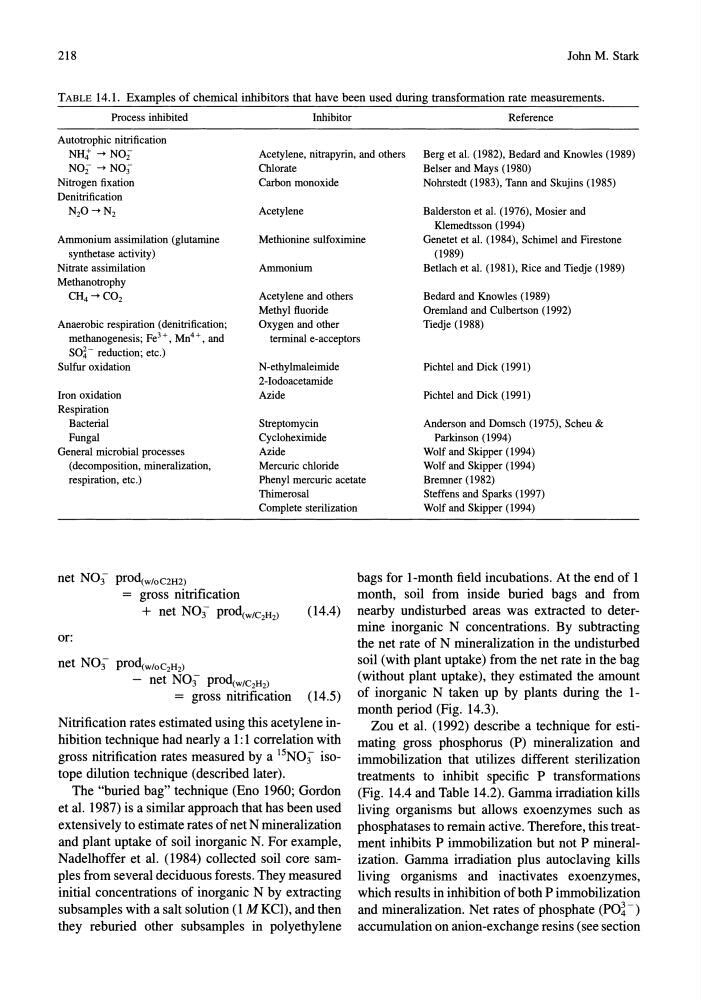
TABLE 14.1. Examples of chemical inhibitors that have been used during transfonnation rate measurements.
Process inhibited
Inhibitor
Reference
Autotrophic nitrification
NH: --> NO;
NO; --> NO;
Nitrogen fixation
Denitrification
Acetylene, nitrapyrin, and others
Chlorate
Berg et al. (1982), Bedard and Knowles (1989)
Belser and Mays (1980)
Carbon monoxide
N20 --> N2
Acetylene
Nohrstedt (1983), Tann and Skujins (1985)
Balderston et al. (1976), Mosier and
Klemedtsson (1994)
Ammonium assimilation (glutamine
synthetase activity)
Methionine sulfoximine
Genetet et al. (1984), Schimel and Firestone
(1989)
Nitrate assimilation
Methanotrophy
CH4 --> CO2
Ammonium
Acetylene and others
Methyl fluoride
Oxygen and other
Betlach et al. (1981), Rice and Tiedje (1989)
Bedard and Knowles (1989)
Orernland and Culbertson (1992)
Tiedje (1988)
Anaerobic respiration (denitrification;
methanogenesis; Fe3+, Mn4+, and
SO~ - reduction; etc.)
terminal e-acceptors
Sulfur oxidation
Iron oxidation
Respiration
Bacterial
Fungal
N-ethylmaleimide
2-Iodoacetarnide
Azide
Streptomycin
Cycloheximide
Azide
Pichtel and Dick (1991)
Pichtel and Dick (1991)
Anderson and Domsch (1975), Scheu &
General microbial processes
(decomposition, mineralization,
respiration, etc.)
Mercuric chloride
Phenyl mercuric acetate
Thimerosal
Parkinson (1994)
Wolf and Skipper (1994)
Wolf and Skipper (1994)
Bremner (1982)
Steffens and Sparks (1997)
Wolf and Skipper (1994)
Complete sterilization
net NO; prod(w/oc2H2)
gross nitrification
+ net NO; prod(w/c2H2)
(14.4)
or:
net NO; prod(w/oc 2H 2)
net NO; Pro~w/C2H2)
= gross nitrification (14.5)
Nitrification rates estimated using this acetylene inhibition technique had nearly a 1: 1 correlation with
gross nitrification rates measured by a 15NO; isotope dilution technique (described later).
The "buried bag" technique (Eno 1960; Gordon
et al. 1987) is a similar approach that has been used
extensively to estimate rates of net N mineralization
and plant uptake of soil inorganic N. For example,
Nadelhoffer et al. (1984) collected soil core samples from several deciduous forests. They measured
initial concentrations of inorganic N by extracting
subsamples with a salt solution (1 MKCl), and then
they reburied other subsamples in polyethylene
bags for I-month field incubations. At the end of 1
month, soil from inside buried bags and from
nearby undisturbed areas was extracted to determine inorganic N concentrations. By subtracting
the net rate of N mineralization in the undisturbed
soil (with plant uptake) from the net rate in the bag
(without plant uptake), they estimated the amount
of inorganic N taken up by plants during the 1month period (Fig. 14.3).
Zou et al. (1992) describe a technique for estimating gross phosphorus (P) mineralization and
immobilization that utilizes different sterilization
treatments to inhibit specific P transformations
(Fig. 14.4 and Table 14.2). Gamma irradiation kills
living organisms but allows exoenzymes such as
phosphatases to remain active. Therefore, this treatment inhibits P immobilization but not P mineralization. Gamma irradiation plus autoclaving kills
living organisms and inactivates exoenzymes,
which results in inhibition of both P immobilization
and mineralization. Net rates of phosphate (PO~ -)
accumulation on anion-exchange resins (see section
John M. Stark
TABLE 14.1. Examples of chemical inhibitors that have been used during transfonnation rate measurements.
Process inhibited
Inhibitor
Reference
Autotrophic nitrification
NH: --> NO;
NO; --> NO;
Nitrogen fixation
Denitrification
Acetylene, nitrapyrin, and others
Chlorate
Berg et al. (1982), Bedard and Knowles (1989)
Belser and Mays (1980)
Carbon monoxide
N20 --> N2
Acetylene
Nohrstedt (1983), Tann and Skujins (1985)
Balderston et al. (1976), Mosier and
Klemedtsson (1994)
Ammonium assimilation (glutamine
synthetase activity)
Methionine sulfoximine
Genetet et al. (1984), Schimel and Firestone
(1989)
Nitrate assimilation
Methanotrophy
CH4 --> CO2
Ammonium
Acetylene and others
Methyl fluoride
Oxygen and other
Betlach et al. (1981), Rice and Tiedje (1989)
Bedard and Knowles (1989)
Orernland and Culbertson (1992)
Tiedje (1988)
Anaerobic respiration (denitrification;
methanogenesis; Fe3+, Mn4+, and
SO~ - reduction; etc.)
terminal e-acceptors
Sulfur oxidation
Iron oxidation
Respiration
Bacterial
Fungal
N-ethylmaleimide
2-Iodoacetarnide
Azide
Streptomycin
Cycloheximide
Azide
Pichtel and Dick (1991)
Pichtel and Dick (1991)
Anderson and Domsch (1975), Scheu &
General microbial processes
(decomposition, mineralization,
respiration, etc.)
Mercuric chloride
Phenyl mercuric acetate
Thimerosal
Parkinson (1994)
Wolf and Skipper (1994)
Wolf and Skipper (1994)
Bremner (1982)
Steffens and Sparks (1997)
Wolf and Skipper (1994)
Complete sterilization
net NO; prod(w/oc2H2)
gross nitrification
+ net NO; prod(w/c2H2)
(14.4)
or:
net NO; prod(w/oc 2H 2)
net NO; Pro~w/C2H2)
= gross nitrification (14.5)
Nitrification rates estimated using this acetylene inhibition technique had nearly a 1: 1 correlation with
gross nitrification rates measured by a 15NO; isotope dilution technique (described later).
The "buried bag" technique (Eno 1960; Gordon
et al. 1987) is a similar approach that has been used
extensively to estimate rates of net N mineralization
and plant uptake of soil inorganic N. For example,
Nadelhoffer et al. (1984) collected soil core samples from several deciduous forests. They measured
initial concentrations of inorganic N by extracting
subsamples with a salt solution (1 MKCl), and then
they reburied other subsamples in polyethylene
bags for I-month field incubations. At the end of 1
month, soil from inside buried bags and from
nearby undisturbed areas was extracted to determine inorganic N concentrations. By subtracting
the net rate of N mineralization in the undisturbed
soil (with plant uptake) from the net rate in the bag
(without plant uptake), they estimated the amount
of inorganic N taken up by plants during the 1month period (Fig. 14.3).
Zou et al. (1992) describe a technique for estimating gross phosphorus (P) mineralization and
immobilization that utilizes different sterilization
treatments to inhibit specific P transformations
(Fig. 14.4 and Table 14.2). Gamma irradiation kills
living organisms but allows exoenzymes such as
phosphatases to remain active. Therefore, this treatment inhibits P immobilization but not P mineralization. Gamma irradiation plus autoclaving kills
living organisms and inactivates exoenzymes,
which results in inhibition of both P immobilization
and mineralization. Net rates of phosphate (PO~ -)
accumulation on anion-exchange resins (see section