

190
~
~
Q)
a.
.9
0
.~
c:
0
.0 ....
~
0
~
Q)
a.
.9
0
.~
c:
Q)
Ol
>- x
0
~
.2
~
Q)
a.
.~
c Q)
e
!
-10
o source C02
~ 0 ,.,",~",~,
-20
low humidity
-30
o organic material,
high humidity
o organic material
20
10
0
o leaf water
/
(evaporative enrichment)
-10
o precipitation value
o
leaf water
o (evaporative enrichment)
-40
-80
-120
0 precipitation value
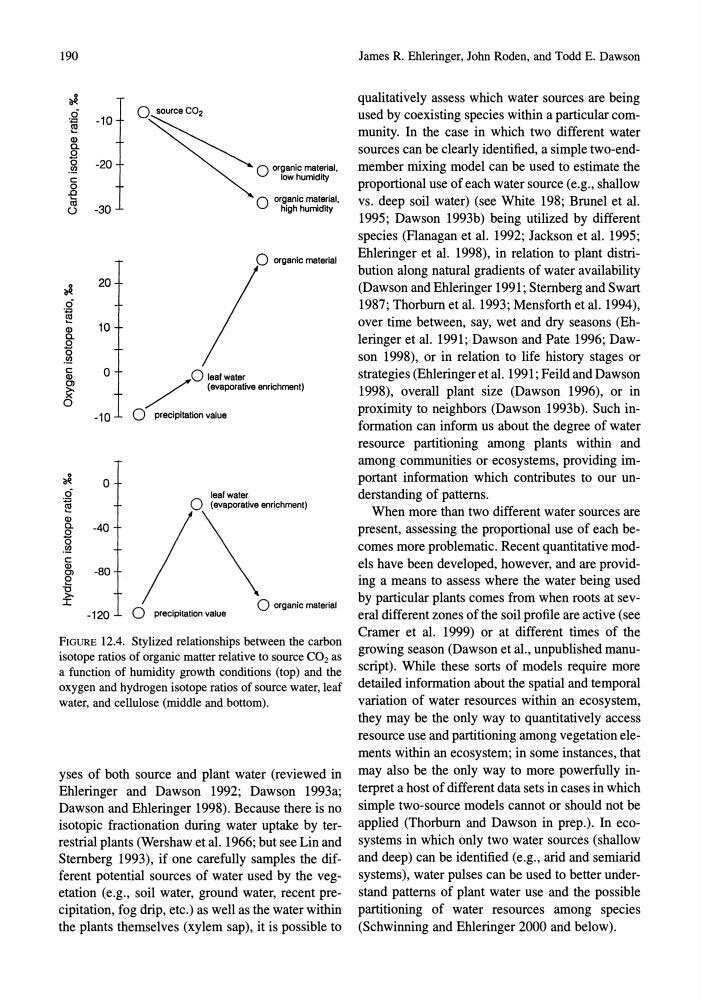
FIGURE 12.4. Stylized relationships between the carbon
isotope ratios of organic matter relative to source CO2 as
a function of humidity growth conditions (top) and the
oxygen and hydrogen isotope ratios of source water, leaf
water, and cellulose (middle and bottom).
yses of both source and plant water (reviewed in
Ehleringer and Dawson 1992; Dawson 1993a;
Dawson and Ehleringer 1998). Because there is no
isotopic fractionation during water uptake by terrestrial plants (Wershaw et al. 1966; but see Lin and
Sternberg 1993), if one carefully samples the different potential sources of water used by the vegetation (e.g., soil water, ground water, recent precipitation, fog drip, etc.) as well as the water within
the plants themselves (xylem sap), it is possible to
James R. Ehleringer, John Roden, and Todd E. Dawson
qualitatively assess which water sources are being
used by coexisting species within a particular community. In the case in which two different water
sources can be clearly identified, a simple two-endmember mixing model can be used to estimate the
proportional use of each water source (e.g., shallow
vs. deep soil water) (see White 198; BruneI et ai.
1995; Dawson 1993b) being utilized by different
species (Flanagan et al. 1992; Jackson et al. 1995;
Ehleringer et al. 1998), in relation to plant distribution along natural gradients of water availability
(Dawson and Ehleringer 1991; Sternberg and Swart
1987; Thorburn et al. 1993; Mensforth et al. 1994),
over time between, say, wet and dry seasons (Ehleringer et al. 1991; Dawson and Pate 1996; Dawson 1998), or in relation to life history stages or
strategies (Ehleringer et al. 1991; Feild and Dawson
1998), overall plant size (Dawson 1996), or in
proximity to neighbors (Dawson 1993b). Such information can inform us about the degree of water
resource partitioning among plants within and
among communities or ecosystems, providing important information which contributes to our understanding of patterns.
When more than two different water sources are
present, assessing the proportional use of each becomes more problematic. Recent quantitative models have been developed, however, and are providing a means to assess where the water being used
by particular plants comes from when roots at several different zones of the soil profile are active (see
Cramer et al. 1999) or at different times of the
growing season (Dawson et aI., unpublished manuscript). While these sorts of models require more
detailed information about the spatial and temporal
variation of water resources within an ecosystem,
they may be the only way to quantitatively access
resource use and partitioning among vegetation elements within an ecosystem; in some instances, that
may also be the only way to more powerfully interpret a host of different data sets in cases in which
simple two-source models cannot or should not be
applied (Thorburn and Dawson in prep.). In ecosystems in which only two water sources (shallow
and deep) can be identified (e.g., arid and semiarid
systems), water pulses can be used to better understand patterns of plant water use and the possible
partitioning of water resources among species
(Schwinning and Ehleringer 2000 and below).
~
~
Q)
a.
.9
0
.~
c:
0
.0 ....
~
0
~
Q)
a.
.9
0
.~
c:
Q)
Ol
>- x
0
~
.2
~
Q)
a.
.~
c Q)
e
!
-10
o source C02
~ 0 ,.,",~",~,
-20
low humidity
-30
o organic material,
high humidity
o organic material
20
10
0
o leaf water
/
(evaporative enrichment)
-10
o precipitation value
o
leaf water
o (evaporative enrichment)
-40
-80
-120
0 precipitation value
FIGURE 12.4. Stylized relationships between the carbon
isotope ratios of organic matter relative to source CO2 as
a function of humidity growth conditions (top) and the
oxygen and hydrogen isotope ratios of source water, leaf
water, and cellulose (middle and bottom).
yses of both source and plant water (reviewed in
Ehleringer and Dawson 1992; Dawson 1993a;
Dawson and Ehleringer 1998). Because there is no
isotopic fractionation during water uptake by terrestrial plants (Wershaw et al. 1966; but see Lin and
Sternberg 1993), if one carefully samples the different potential sources of water used by the vegetation (e.g., soil water, ground water, recent precipitation, fog drip, etc.) as well as the water within
the plants themselves (xylem sap), it is possible to
James R. Ehleringer, John Roden, and Todd E. Dawson
qualitatively assess which water sources are being
used by coexisting species within a particular community. In the case in which two different water
sources can be clearly identified, a simple two-endmember mixing model can be used to estimate the
proportional use of each water source (e.g., shallow
vs. deep soil water) (see White 198; BruneI et ai.
1995; Dawson 1993b) being utilized by different
species (Flanagan et al. 1992; Jackson et al. 1995;
Ehleringer et al. 1998), in relation to plant distribution along natural gradients of water availability
(Dawson and Ehleringer 1991; Sternberg and Swart
1987; Thorburn et al. 1993; Mensforth et al. 1994),
over time between, say, wet and dry seasons (Ehleringer et al. 1991; Dawson and Pate 1996; Dawson 1998), or in relation to life history stages or
strategies (Ehleringer et al. 1991; Feild and Dawson
1998), overall plant size (Dawson 1996), or in
proximity to neighbors (Dawson 1993b). Such information can inform us about the degree of water
resource partitioning among plants within and
among communities or ecosystems, providing important information which contributes to our understanding of patterns.
When more than two different water sources are
present, assessing the proportional use of each becomes more problematic. Recent quantitative models have been developed, however, and are providing a means to assess where the water being used
by particular plants comes from when roots at several different zones of the soil profile are active (see
Cramer et al. 1999) or at different times of the
growing season (Dawson et aI., unpublished manuscript). While these sorts of models require more
detailed information about the spatial and temporal
variation of water resources within an ecosystem,
they may be the only way to quantitatively access
resource use and partitioning among vegetation elements within an ecosystem; in some instances, that
may also be the only way to more powerfully interpret a host of different data sets in cases in which
simple two-source models cannot or should not be
applied (Thorburn and Dawson in prep.). In ecosystems in which only two water sources (shallow
and deep) can be identified (e.g., arid and semiarid
systems), water pulses can be used to better understand patterns of plant water use and the possible
partitioning of water resources among species
(Schwinning and Ehleringer 2000 and below).