

Trophic Conditions and Dystrophy in the Sacca di Goro Lagoon
473
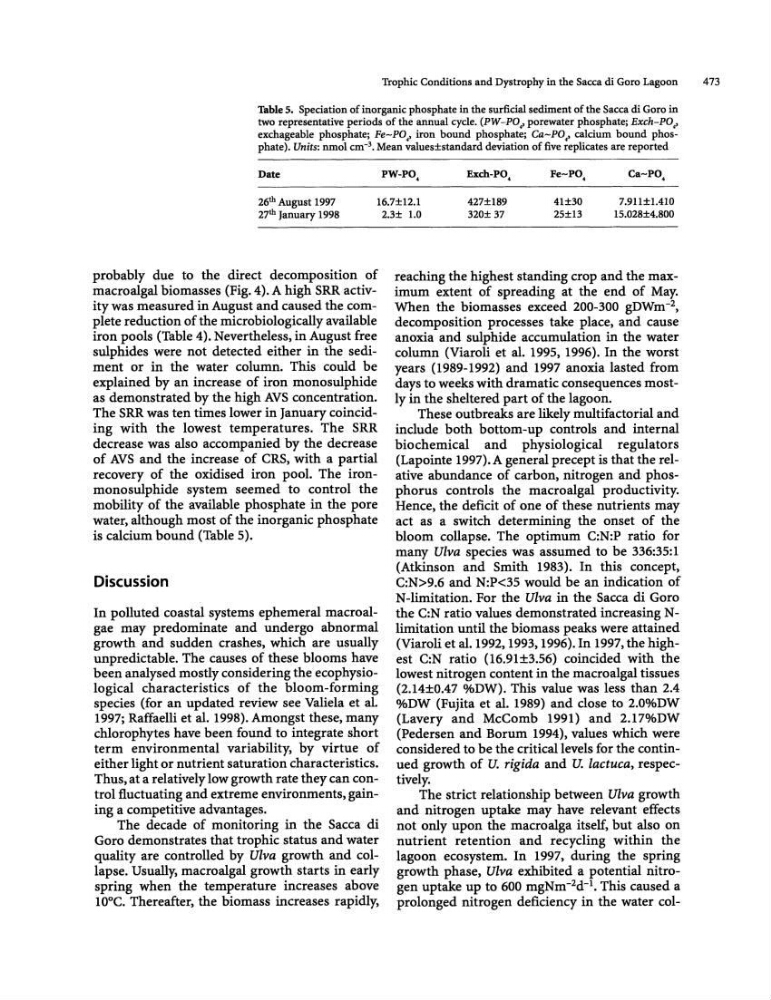
Table 5. Speciation of inorganic phosphate in the surficial sediment of the Sacca di Goro in
two representative periods of the annual cycle. (PW-PO •• porewater phosphate; Exch-PD.,
exchageahle phosphate; Fe-PO., iron bound phosphate; Ca-PD .. calcium bound phosphate). Units: run01 cm- 3 • Mean values±standard deviation of five replicates are reported
Date
pw-PO.
Fe-PO.
26 th August 1997
27 th January 1998
16.7±12.1
2.3± 1.0
427±189
320± 37
41±30
25±13
7.911±1.410
15.028±4.800
probably due to the direct decomposition of
macro algal biomasses (Fig. 4). A high SRR activitywas measured in August and caused the complete reduction of the microbiologically available
iron pools (Table 4). Nevertheless, in August free
sulphides were not detected either in the sediment or in the water column. This could be
explained by an increase of iron monosulphide
as demonstrated by the high AVS concentration.
The SRR was ten times lower in January coinciding with the lowest temperatures. The SRR
decrease was also accompanied by the decrease
of AVS and the increase of CRS, with a partial
recovery of the oxidised iron pool. The ironmono sulphide system seemed to control the
mobility of the available phosphate in the pore
water. although most of the inorganic phosphate
is calcium bound (Table 5).
Discussion
In polluted coastal systems ephemeral macroalgae may predominate and undergo abnormal
growth and sudden crashes, which are usually
unpredictable. The causes of these blooms have
been analysed mostly conSidering the ecophysiological characteristics of the bloom-forming
species (for an updated review see Valie1a et a1.
1997; Raffaelli et al. 1998). Amongst these, many
chlorophytes have been found to integrate short
term environmental variability. by virtue of
either light or nutrient saturation characteristics.
Thus, at a relatively low growth rate they can control fluctuating and extreme environments, gaining a competitive advantages.
The decade of monitoring in the Sacca di
Goro demonstrates that trophic status and water
quality are controlled by Ulva growth and collapse. Usually, macro algal growth starts in early
spring when the temperature increases above
10°C. Thereafter, the biomass increases rapidly,
reaching the highest standing crop and the maximum extent of spreading at the end of May.
When the biomasses exceed 200-300 gDWm- 2 ,
decomposition processes take place, and cause
anoxia and sulphide accumulation in the water
column (Viaroli et al. 1995, 1996). In the worst
years (1989-1992) and 1997 anoxia lasted from
days to weeks with dramatic consequences mostly in the sheltered part of the lagoon.
These outbreaks are likely multifactorial and
include both bottom-up controls and internal
biochemical and physiological regulators
(Lapointe 1997).A general precept is that the relative abundance of carbon, nitrogen and phosphorus controls the macro algal productivity.
Hence, the deficit of one of these nutrients may
act as a switch determining the onset of the
bloom collapse. The optimum C:N:P ratio for
many Ulva species was assumed to be 336:35:1
(Atkinson and Smith 1983). In this concept,
C:N>9.6 and N:P<35 would be an indication of
N-limitation. For the Ulva in the Sacca di Goro
the C:N ratio values demonstrated increasing Nlimitation until the biomass peaks were attained
(Viaroli et al. 1992, 1993,1996). In 1997, the highest C:N ratio (16.91±3.56) coincided with the
lowest nitrogen content in the macro algal tissues
(2.14±0.47 %DW). This value was less than 2.4
%DW (Fujita et a1. 1989) and close to 2.0%DW
(Lavery and McComb 1991) and 2.17%DW
(Pedersen and Borum 1994), values which were
considered to be the critical levels for the continued growth of U. rigida and U. lactuca. respectively.
The strict relationship between Ulva growth
and nitrogen uptake may have relevant effects
not only upon the macroalga itself, but also on
nutrient retention and recycling within the
lagoon ecosystem. In 1997, during the spring
growth phase, Ulva exhibited a potential nitrogen uptake up to 600 mgNm- 2 d- 1 • This caused a
prolonged nitrogen deficiency in the water col-
473
Table 5. Speciation of inorganic phosphate in the surficial sediment of the Sacca di Goro in
two representative periods of the annual cycle. (PW-PO •• porewater phosphate; Exch-PD.,
exchageahle phosphate; Fe-PO., iron bound phosphate; Ca-PD .. calcium bound phosphate). Units: run01 cm- 3 • Mean values±standard deviation of five replicates are reported
Date
pw-PO.
Fe-PO.
26 th August 1997
27 th January 1998
16.7±12.1
2.3± 1.0
427±189
320± 37
41±30
25±13
7.911±1.410
15.028±4.800
probably due to the direct decomposition of
macro algal biomasses (Fig. 4). A high SRR activitywas measured in August and caused the complete reduction of the microbiologically available
iron pools (Table 4). Nevertheless, in August free
sulphides were not detected either in the sediment or in the water column. This could be
explained by an increase of iron monosulphide
as demonstrated by the high AVS concentration.
The SRR was ten times lower in January coinciding with the lowest temperatures. The SRR
decrease was also accompanied by the decrease
of AVS and the increase of CRS, with a partial
recovery of the oxidised iron pool. The ironmono sulphide system seemed to control the
mobility of the available phosphate in the pore
water. although most of the inorganic phosphate
is calcium bound (Table 5).
Discussion
In polluted coastal systems ephemeral macroalgae may predominate and undergo abnormal
growth and sudden crashes, which are usually
unpredictable. The causes of these blooms have
been analysed mostly conSidering the ecophysiological characteristics of the bloom-forming
species (for an updated review see Valie1a et a1.
1997; Raffaelli et al. 1998). Amongst these, many
chlorophytes have been found to integrate short
term environmental variability. by virtue of
either light or nutrient saturation characteristics.
Thus, at a relatively low growth rate they can control fluctuating and extreme environments, gaining a competitive advantages.
The decade of monitoring in the Sacca di
Goro demonstrates that trophic status and water
quality are controlled by Ulva growth and collapse. Usually, macro algal growth starts in early
spring when the temperature increases above
10°C. Thereafter, the biomass increases rapidly,
reaching the highest standing crop and the maximum extent of spreading at the end of May.
When the biomasses exceed 200-300 gDWm- 2 ,
decomposition processes take place, and cause
anoxia and sulphide accumulation in the water
column (Viaroli et al. 1995, 1996). In the worst
years (1989-1992) and 1997 anoxia lasted from
days to weeks with dramatic consequences mostly in the sheltered part of the lagoon.
These outbreaks are likely multifactorial and
include both bottom-up controls and internal
biochemical and physiological regulators
(Lapointe 1997).A general precept is that the relative abundance of carbon, nitrogen and phosphorus controls the macro algal productivity.
Hence, the deficit of one of these nutrients may
act as a switch determining the onset of the
bloom collapse. The optimum C:N:P ratio for
many Ulva species was assumed to be 336:35:1
(Atkinson and Smith 1983). In this concept,
C:N>9.6 and N:P<35 would be an indication of
N-limitation. For the Ulva in the Sacca di Goro
the C:N ratio values demonstrated increasing Nlimitation until the biomass peaks were attained
(Viaroli et al. 1992, 1993,1996). In 1997, the highest C:N ratio (16.91±3.56) coincided with the
lowest nitrogen content in the macro algal tissues
(2.14±0.47 %DW). This value was less than 2.4
%DW (Fujita et a1. 1989) and close to 2.0%DW
(Lavery and McComb 1991) and 2.17%DW
(Pedersen and Borum 1994), values which were
considered to be the critical levels for the continued growth of U. rigida and U. lactuca. respectively.
The strict relationship between Ulva growth
and nitrogen uptake may have relevant effects
not only upon the macroalga itself, but also on
nutrient retention and recycling within the
lagoon ecosystem. In 1997, during the spring
growth phase, Ulva exhibited a potential nitrogen uptake up to 600 mgNm- 2 d- 1 • This caused a
prolonged nitrogen deficiency in the water col-