

Suspended and Sedimentary Organic Matter in the Northern Adriatic
449
Summer
45 r
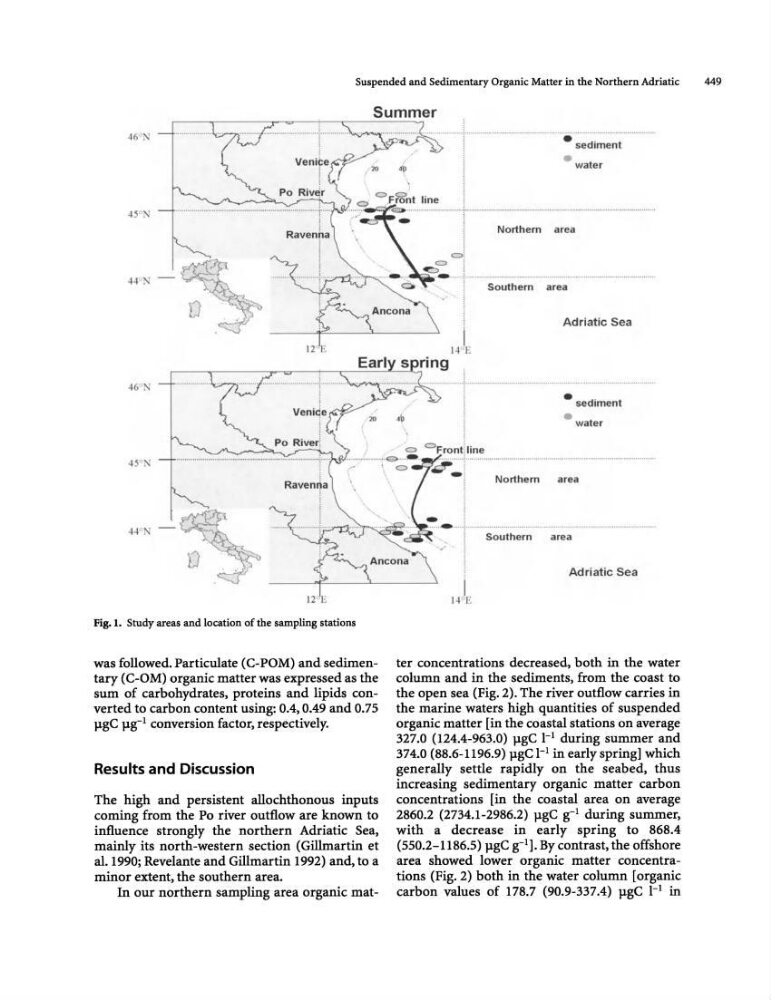
Fig. 1. Study areas and location of the sampling stations
was followed. Particulate (C-POM) and sedimentary (C-OM) organic matter was expressed as the
sum of carbohydrates, proteins and lipids converted to carbon content using: 0.4,0.49 and 0.75
p.gC p.g-l conversion factor, respectively.
Results and Discussion
The high and persistent allochthonous inputs
coming from the Po river outflow are known to
influence strongly the northern Adriatic Sea,
mainly its north-western section (Gillmartin et
al. 1990; Revelante and Gillmartin 1992) and, to a
minor extent, the southern area.
In our northern sampling area organic mat!
_
i
• sediment
water
Northern area
Southern area
Adriatic Sea
• sediment
• water
Northern
area
.. _ .
.... ! .............................................................................................. .
Southern
area
Adriatic Sea
I
1-1 E
ter concentrations decreased, both in the water
column and in the sediments, from the coast to
the open sea (Fig. 2). The river outflow carries in
the marine waters high quantities of suspended
organic matter [in the coastal stations on average
327.0 (124.4-963.0) p.gC 1-1 during summer and
374.0 (88.6-1196.9) p.gC 1-1 in early spring] which
generally settle rapidly on the seabed, thus
increasing sedimentary organic matter carbon
concentrations [in the coastal area on average
2860.2 (2734.1-2986.2) p.gC g-1 during summer,
with a decrease in early spring to 868.4
(550.2-1186.5) p.gC g-1 ]. By contrast, the offshore
area showed lower organic matter concentrations (Fig. 2) both in the water column [organic
carbon values of 178.7 (90.9-337.4) p.gC 1-1 in
449
Summer
45 r
Fig. 1. Study areas and location of the sampling stations
was followed. Particulate (C-POM) and sedimentary (C-OM) organic matter was expressed as the
sum of carbohydrates, proteins and lipids converted to carbon content using: 0.4,0.49 and 0.75
p.gC p.g-l conversion factor, respectively.
Results and Discussion
The high and persistent allochthonous inputs
coming from the Po river outflow are known to
influence strongly the northern Adriatic Sea,
mainly its north-western section (Gillmartin et
al. 1990; Revelante and Gillmartin 1992) and, to a
minor extent, the southern area.
In our northern sampling area organic mat!
_
i
• sediment
water
Northern area
Southern area
Adriatic Sea
• sediment
• water
Northern
area
.. _ .
.... ! .............................................................................................. .
Southern
area
Adriatic Sea
I
1-1 E
ter concentrations decreased, both in the water
column and in the sediments, from the coast to
the open sea (Fig. 2). The river outflow carries in
the marine waters high quantities of suspended
organic matter [in the coastal stations on average
327.0 (124.4-963.0) p.gC 1-1 during summer and
374.0 (88.6-1196.9) p.gC 1-1 in early spring] which
generally settle rapidly on the seabed, thus
increasing sedimentary organic matter carbon
concentrations [in the coastal area on average
2860.2 (2734.1-2986.2) p.gC g-1 during summer,
with a decrease in early spring to 868.4
(550.2-1186.5) p.gC g-1 ]. By contrast, the offshore
area showed lower organic matter concentrations (Fig. 2) both in the water column [organic
carbon values of 178.7 (90.9-337.4) p.gC 1-1 in