

408
P. Picon et al.
POC DIC DOC
W TER
I
S DlMENT
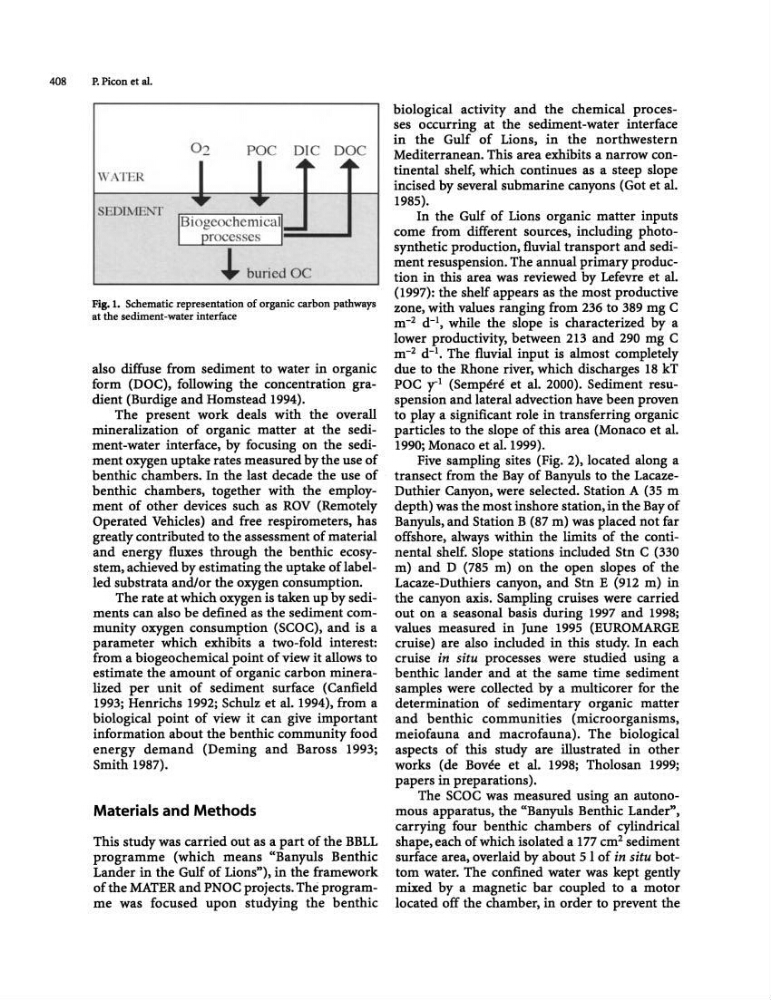
Fig. 1. Schematic representation of organic carbon pathways
at the sediment-water interface
also diffuse from sediment to water in organic
form (DOC), following the concentration gradient (Burdige and Homstead 1994).
The present work deals with the overall
mineralization of organic matter at the sediment-water interface, by focusing on the sediment oxygen uptake rates measured by the use of
benthic chambers. In the last decade the use of .
benthic chambers, together with the employment of other devices such as ROV (Remotely
Operated Vehicles) and free respirometers, has
greatly contributed to the assessment of material
and energy fluxes through the benthic ecosystem, achieved by estimating the uptake of labelled substrata andlor the oxygen consumption.
The rate at which oxygen is taken up by sediments can also be defmed as the sediment community oxygen consumption (SCOC), and is a
parameter which exhibits a two-fold interest:
from a biogeochemical point of view it allows to
estimate the amount of organic carbon mineralized per unit of sediment surface (Canfield
1993; Henrichs 1992; Schulz et al. 1994), from a
biological point of view it can give important
information about the benthic community food
energy demand (Deming and Baross 1993;
Smith 1987).
Materials and Methods
This study was carried out as a part of the BBLL
programme (which means "Banyuls Benthic
Lander in the Gulf of Lions"), in the framework
of the MATER and PNOC projects. The programme was focused upon studying the benthic
biological activity and the chemical processes occurring at the sediment-water interface
in the Gulf of Lions, in the northwestern
Mediterranean. This area exhibits a narrow continental shelf, which continues as a steep slope
incised by several submarine canyons (Got et al.
1985).
In the Gulf of Lions organic matter inputs
come from different sources, including photosynthetic production, fluvial transport and sediment resuspension. The annual primary production in this area was reviewed by Lefevre et al.
(1997): the shelf appears as the most productive
zone, with values ranging from 236 to 389 mg C
m- 2 d- 1 , while the slope is characterized by a
lower productivity, between 213 and 290 mg C
m- 2 d- 1 • The fluvial input is almost completely
due to the Rhone river, which discharges 18 kT
POC y-l (Sempere et al. 2000). Sediment resuspension and lateral advection have been proven
to playa significant role in transferring organic
particles to the slope of this area (Monaco et al.
1990; Monaco et al. 1999).
Five sampling sites (Fig. 2), located along a
transect from the Bay of Banyuls to the LacazeDuthier Canyon, were selected. Station A (35 m
depth) was the most inshore station, in the Bay of
Banyuls. and Station B (87 m) was placed not far
offshore, always within the limits of the continental shelf. Slope stations included Stn C (330
m) and D (785 m) on the open slopes of the
Lacaze-Duthiers canyon, and Stn E (912 m) in
the canyon axis. Sampling cruises were carried
out on a seasonal basis during 1997 and 1998;
values measured in June 1995 (EUROMARGE
cruise) are also included in this study. In each
cruise in situ processes were studied using a
benthic lander and at the same time sediment
samples were collected by a multicorer for the
determination of sedimentary organic matter
and benthic communities (microorganisms,
meiofauna and macrofauna). The biological
aspects of this study are illustrated in other
works (de Bovee et al. 1998; Tholosan 1999;
papers in preparations).
The SCOC was measured using an autonomous apparatus, the "Banyuls Benthic Lander",
carrying four benthic chambers of cylindrical
shape, each of which isolated a 177 cm 2 sediment
surface area, overlaid by about 5 1 of in situ bottom water. The confined water was kept gently
mixed by a magnetic bar coupled to a motor
located off the chamber, in order to prevent the
P. Picon et al.
POC DIC DOC
W TER
I
S DlMENT
Fig. 1. Schematic representation of organic carbon pathways
at the sediment-water interface
also diffuse from sediment to water in organic
form (DOC), following the concentration gradient (Burdige and Homstead 1994).
The present work deals with the overall
mineralization of organic matter at the sediment-water interface, by focusing on the sediment oxygen uptake rates measured by the use of
benthic chambers. In the last decade the use of .
benthic chambers, together with the employment of other devices such as ROV (Remotely
Operated Vehicles) and free respirometers, has
greatly contributed to the assessment of material
and energy fluxes through the benthic ecosystem, achieved by estimating the uptake of labelled substrata andlor the oxygen consumption.
The rate at which oxygen is taken up by sediments can also be defmed as the sediment community oxygen consumption (SCOC), and is a
parameter which exhibits a two-fold interest:
from a biogeochemical point of view it allows to
estimate the amount of organic carbon mineralized per unit of sediment surface (Canfield
1993; Henrichs 1992; Schulz et al. 1994), from a
biological point of view it can give important
information about the benthic community food
energy demand (Deming and Baross 1993;
Smith 1987).
Materials and Methods
This study was carried out as a part of the BBLL
programme (which means "Banyuls Benthic
Lander in the Gulf of Lions"), in the framework
of the MATER and PNOC projects. The programme was focused upon studying the benthic
biological activity and the chemical processes occurring at the sediment-water interface
in the Gulf of Lions, in the northwestern
Mediterranean. This area exhibits a narrow continental shelf, which continues as a steep slope
incised by several submarine canyons (Got et al.
1985).
In the Gulf of Lions organic matter inputs
come from different sources, including photosynthetic production, fluvial transport and sediment resuspension. The annual primary production in this area was reviewed by Lefevre et al.
(1997): the shelf appears as the most productive
zone, with values ranging from 236 to 389 mg C
m- 2 d- 1 , while the slope is characterized by a
lower productivity, between 213 and 290 mg C
m- 2 d- 1 • The fluvial input is almost completely
due to the Rhone river, which discharges 18 kT
POC y-l (Sempere et al. 2000). Sediment resuspension and lateral advection have been proven
to playa significant role in transferring organic
particles to the slope of this area (Monaco et al.
1990; Monaco et al. 1999).
Five sampling sites (Fig. 2), located along a
transect from the Bay of Banyuls to the LacazeDuthier Canyon, were selected. Station A (35 m
depth) was the most inshore station, in the Bay of
Banyuls. and Station B (87 m) was placed not far
offshore, always within the limits of the continental shelf. Slope stations included Stn C (330
m) and D (785 m) on the open slopes of the
Lacaze-Duthiers canyon, and Stn E (912 m) in
the canyon axis. Sampling cruises were carried
out on a seasonal basis during 1997 and 1998;
values measured in June 1995 (EUROMARGE
cruise) are also included in this study. In each
cruise in situ processes were studied using a
benthic lander and at the same time sediment
samples were collected by a multicorer for the
determination of sedimentary organic matter
and benthic communities (microorganisms,
meiofauna and macrofauna). The biological
aspects of this study are illustrated in other
works (de Bovee et al. 1998; Tholosan 1999;
papers in preparations).
The SCOC was measured using an autonomous apparatus, the "Banyuls Benthic Lander",
carrying four benthic chambers of cylindrical
shape, each of which isolated a 177 cm 2 sediment
surface area, overlaid by about 5 1 of in situ bottom water. The confined water was kept gently
mixed by a magnetic bar coupled to a motor
located off the chamber, in order to prevent the