

404
M.C. Gambi and G. Cafiero
25
20
... o .0
groups of scale of increasing age
Posidonia scales represent a unique and preferential microhabitat for some polychaetes, whose
colonisation resulted to be frequent, common to
different meadows and depths and relatively
constant in time.
The role of boring polychaetes in the
Posidonia system is multiple. The feeding and
mechanical action of boring have strong ecological implications in enhancing scale fragmentation and decay by microbial activity. In fact, a
consumption of single scale biomass, with
means ranging from 10.5 to 11.6%, was estimated in a previous study (Gambi et al. 2000). The
galleries formed by boring polychaetes provide
often micro niches for other organisms that colonize the empty burrows. Among them we have
observed many other polychaetes, both sedentary (Terebellidae, Spionidae, Cirratulidae), and
motile (Syllidae, Phyllodocidae, Nereididae,
Glyceridae) forms, as well as sipunculids. Old
galleries are often filled with fecal pellets or sediment.
A preliminary analysis of the gut content of
the two species of Lysidice (Gambi et al. 2000)
ON , unicornis
o L. nineltfl
F2J L. co lIa noS
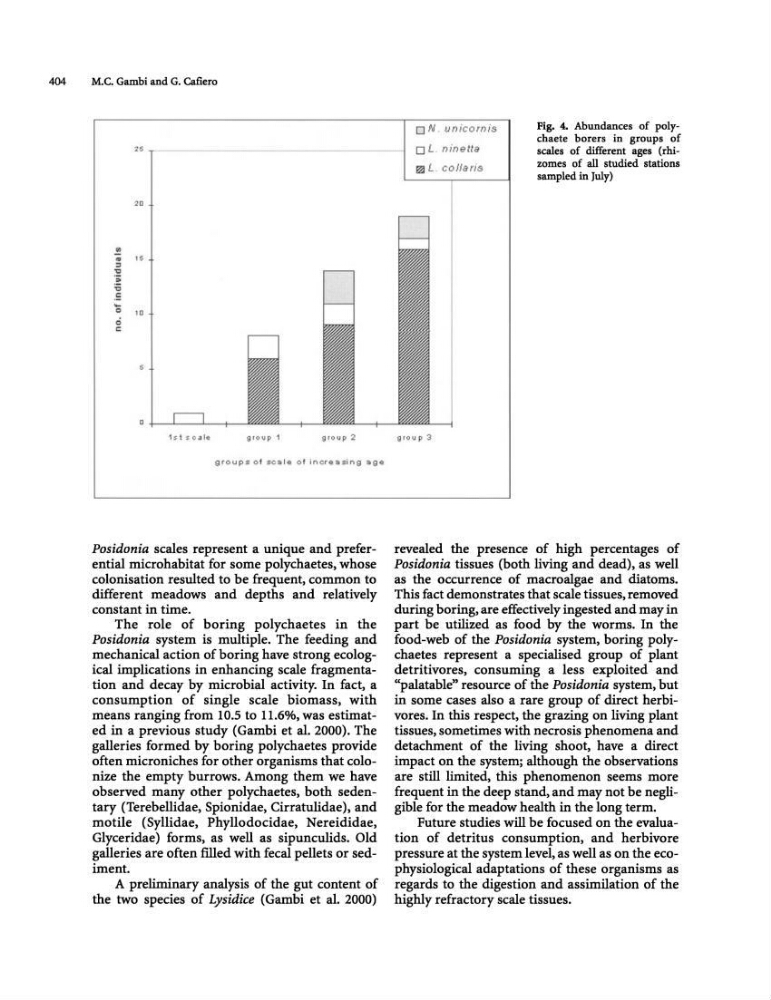
Fig. 4. Abundances of polychaete borers in groups of
scales of different ages (rhizomes of all studied stations
sampled in July)
revealed the presence of high percentages of
Posidonia tissues (both living and dead), as well
as the occurrence of macro algae and diatoms.
This fact demonstrates that scale tissues, removed
during boring. are effectively ingested and may in
part be utilized as food by the worms. In the
food-web of the Posidonia system, boring polychaetes represent a specialised group of plant
detritivores, consuming a less exploited and
"palatable" resource of the Posidonia system, but
in some cases also a rare group of direct herbivores. In this respect, the grazing on living plant
tissues, sometimes with necrosis phenomena and
detachment of the living shoot, have a direct
impact on the system; although the observations
are still limited, this phenomenon seems more
frequent in the deep stand, and may not be negligible for the meadow health in the long term.
Future studies will be focused on the evaluation of detritus consumption, and herbivore
pressure at the system level, as well as on the ecophysiological adaptations of these organisms as
regards to the digestion and assimilation of the
highly refractory scale tissues.
M.C. Gambi and G. Cafiero
25
20
... o .0
groups of scale of increasing age
Posidonia scales represent a unique and preferential microhabitat for some polychaetes, whose
colonisation resulted to be frequent, common to
different meadows and depths and relatively
constant in time.
The role of boring polychaetes in the
Posidonia system is multiple. The feeding and
mechanical action of boring have strong ecological implications in enhancing scale fragmentation and decay by microbial activity. In fact, a
consumption of single scale biomass, with
means ranging from 10.5 to 11.6%, was estimated in a previous study (Gambi et al. 2000). The
galleries formed by boring polychaetes provide
often micro niches for other organisms that colonize the empty burrows. Among them we have
observed many other polychaetes, both sedentary (Terebellidae, Spionidae, Cirratulidae), and
motile (Syllidae, Phyllodocidae, Nereididae,
Glyceridae) forms, as well as sipunculids. Old
galleries are often filled with fecal pellets or sediment.
A preliminary analysis of the gut content of
the two species of Lysidice (Gambi et al. 2000)
ON , unicornis
o L. nineltfl
F2J L. co lIa noS
Fig. 4. Abundances of polychaete borers in groups of
scales of different ages (rhizomes of all studied stations
sampled in July)
revealed the presence of high percentages of
Posidonia tissues (both living and dead), as well
as the occurrence of macro algae and diatoms.
This fact demonstrates that scale tissues, removed
during boring. are effectively ingested and may in
part be utilized as food by the worms. In the
food-web of the Posidonia system, boring polychaetes represent a specialised group of plant
detritivores, consuming a less exploited and
"palatable" resource of the Posidonia system, but
in some cases also a rare group of direct herbivores. In this respect, the grazing on living plant
tissues, sometimes with necrosis phenomena and
detachment of the living shoot, have a direct
impact on the system; although the observations
are still limited, this phenomenon seems more
frequent in the deep stand, and may not be negligible for the meadow health in the long term.
Future studies will be focused on the evaluation of detritus consumption, and herbivore
pressure at the system level, as well as on the ecophysiological adaptations of these organisms as
regards to the digestion and assimilation of the
highly refractory scale tissues.