

388
L. Orsini et al.
VaS
VaA
MeS
MeA 1
FoS
FoA I
I
0
• •
I
10
20
ramets
--------,
,Osharedl
I.Private I
30
40
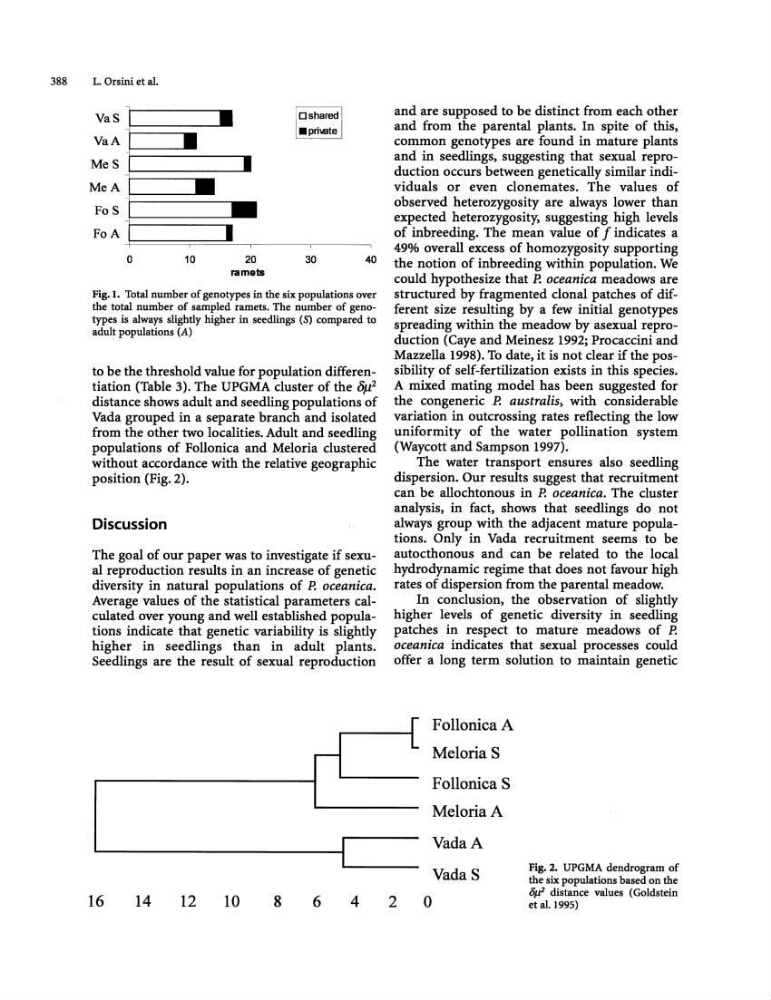
Fig. 1. Total number of genotypes in the six populations over
the total number of sampled ramets. The number of genotypes is always slightly higher in seedlings (S) compared to
adult populations (A)
to be the threshold value for population differentiation (Table 3). The UPGMA cluster of the Df.l2
distance shows adult and seedling populations of
Vada grouped in a separate branch and isolated
from the other two localities. Adult and seedling
populations of Follonica and Meloria clustered
without accordance with the relative geographic
position (Fig. 2).
Discussion
The goal of our paper was to investigate if sexual reproduction results in an increase of genetic
diversity in natural populations of P. oceanica.
Average values of the statistical parameters calculated over young and well established populations indicate that genetic variability is slightly
higher in seedlings than in adult plants.
Seedlings are the result of sexual reproduction
I
I
16
14
12
10
8
6
4
and are supposed to be distinct from each other
and from the parental plants. In spite of this,
common genotypes are found in mature plants
and in seedlings. suggesting that sexual reproduction occurs between genetically similar individuals or even clonemates. The values of
observed heterozygosity are always lower than
expected heterozygosity, suggesting high levels
of inbreeding. The mean value of f indicates a
49% overall excess of homozygosity supporting
the notion of inbreeding within population. We
could hypothesize that P. oceanica meadows are
structured by fragmented donal patches of different size resulting by a few initial genotypes
spreading within the meadow by asexual reproduction (Caye and Meinesz 1992; Procaccini and
Mazzella 1998). To date, it is not clear if the possibility of self-fertilization exists in this species.
A mixed mating model has been suggested for
the congeneric P. australis, with considerable
variation in outcrossing rates reflecting the low
uniformity of the water pollination system
(Waycott and Sampson 1997).
The water transport ensures also seedling
dispersion. Our results suggest that recruitment
can be allochtonous in P. oceanica. The cluster
analysis. in fact, shows that seedlings do not
always group with the adjacent mature populations. Only in Vada recruitment seems to be
autocthonous and can be related to the local
hydrodynamic regime that does not favour high
rates of dispersion from the parental meadow.
In conclusion, the observation of slightly
higher levels of genetic diversity in seedling
patches in respect to mature meadows of P.
oceanica indicates that sexual processes could
offer a long term solution to maintain genetic
2
o
Follomca A
Meloria S
Follonica S
MeloriaA
VadaA
VadaS
Fig. 2. UPGMA dendrogram of
the six populations based on the
/jJl2 distance values (Goldstein
et al. 1995)
L. Orsini et al.
VaS
VaA
MeS
MeA 1
FoS
FoA I
I
0
• •
I
10
20
ramets
--------,
,Osharedl
I.Private I
30
40
Fig. 1. Total number of genotypes in the six populations over
the total number of sampled ramets. The number of genotypes is always slightly higher in seedlings (S) compared to
adult populations (A)
to be the threshold value for population differentiation (Table 3). The UPGMA cluster of the Df.l2
distance shows adult and seedling populations of
Vada grouped in a separate branch and isolated
from the other two localities. Adult and seedling
populations of Follonica and Meloria clustered
without accordance with the relative geographic
position (Fig. 2).
Discussion
The goal of our paper was to investigate if sexual reproduction results in an increase of genetic
diversity in natural populations of P. oceanica.
Average values of the statistical parameters calculated over young and well established populations indicate that genetic variability is slightly
higher in seedlings than in adult plants.
Seedlings are the result of sexual reproduction
I
I
16
14
12
10
8
6
4
and are supposed to be distinct from each other
and from the parental plants. In spite of this,
common genotypes are found in mature plants
and in seedlings. suggesting that sexual reproduction occurs between genetically similar individuals or even clonemates. The values of
observed heterozygosity are always lower than
expected heterozygosity, suggesting high levels
of inbreeding. The mean value of f indicates a
49% overall excess of homozygosity supporting
the notion of inbreeding within population. We
could hypothesize that P. oceanica meadows are
structured by fragmented donal patches of different size resulting by a few initial genotypes
spreading within the meadow by asexual reproduction (Caye and Meinesz 1992; Procaccini and
Mazzella 1998). To date, it is not clear if the possibility of self-fertilization exists in this species.
A mixed mating model has been suggested for
the congeneric P. australis, with considerable
variation in outcrossing rates reflecting the low
uniformity of the water pollination system
(Waycott and Sampson 1997).
The water transport ensures also seedling
dispersion. Our results suggest that recruitment
can be allochtonous in P. oceanica. The cluster
analysis. in fact, shows that seedlings do not
always group with the adjacent mature populations. Only in Vada recruitment seems to be
autocthonous and can be related to the local
hydrodynamic regime that does not favour high
rates of dispersion from the parental meadow.
In conclusion, the observation of slightly
higher levels of genetic diversity in seedling
patches in respect to mature meadows of P.
oceanica indicates that sexual processes could
offer a long term solution to maintain genetic
2
o
Follomca A
Meloria S
Follonica S
MeloriaA
VadaA
VadaS
Fig. 2. UPGMA dendrogram of
the six populations based on the
/jJl2 distance values (Goldstein
et al. 1995)