

Meiofaunal Biodiversity on Hydrothermal Seepage
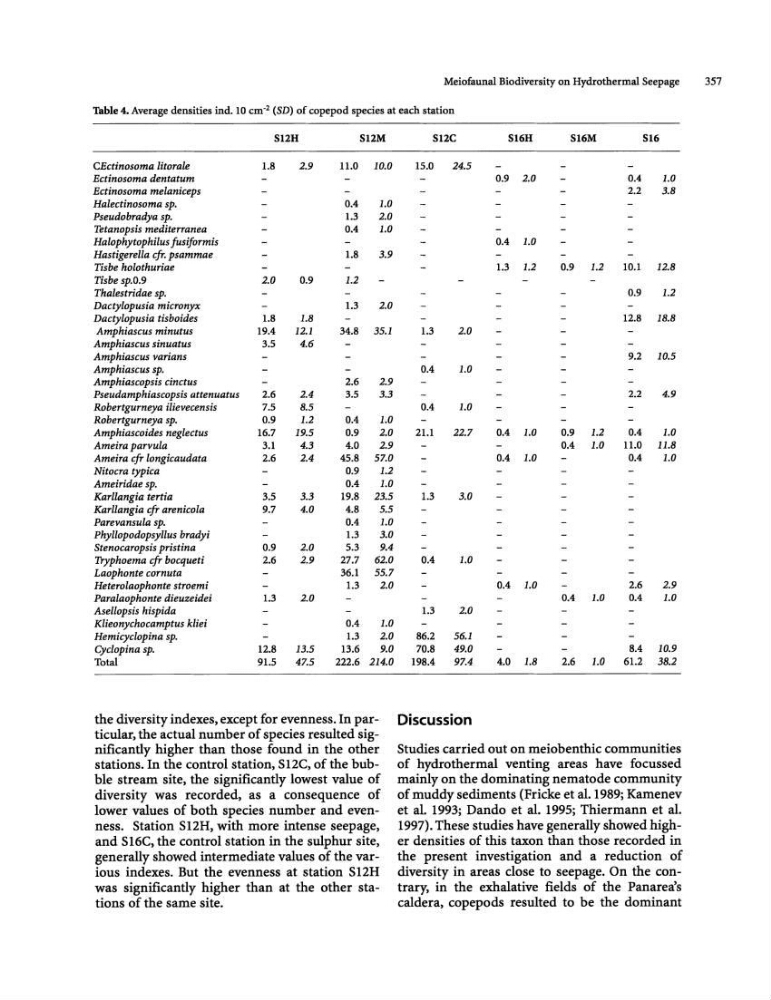
Table 4. Average densities indo 10 cm- l (Sm of copepod species at each station
S12H
812M
CEctinosoma litomle
1.8
2.9
11.0 10.0
Ectinosoma dentatum
Ectinosoma melaniceps
Halectinosoma sp.
0.4
1.0
Pseudobradya sp.
1.3
2.0
Tetanopsis mediterranea
0.4
1.0
Halophytophilus fusiform;s
Hastigerella cfr. psammae
1.8
3.9
Tisbe holothuriae
Tisbe sp.O.9
2.0
0.9
1.2
Thalestridae sp.
Dactylopusia micronyx
1.3
2.0
Dactylopusia tisboides
1.8
1.8
Amphiascus minutus
19.4
12.1
34.8 35.1
Amphiascus sinuatus
3.5
4.6
Amphiascus varian!
Amphiascus sp.
Amphiascopsis cinctus
2.6
2.9
Pseudamphiascopsis attenuatus
2.6
2.4
3.5
3.3
Robertgurneya ilievecensis
7.5
8.5
Robertgurneya sp.
0.9
1.2
0.4
1.0
Amphiascoides neglectus
16.7
19.5
0.9
2.0
Ameira parvula
3.1
4.3
4.0
2.9
Ameira cfr longicaudata
2.6
2.4
45.8 57.0
Nitocra typica
0.9
l.2
Ameiridae sp.
0.4
1.0
KarUangia tertia
3.5
3.3
19.8 23.5
Karllangia cjr arenicola
9.7
4.0
4.8
5.5
Parevansula sp.
0.4
1.0
Phyllopodopsyllus bradyi
1.3
3.0
Stenocaropsis pristina
0.9
2.0
5.3
9.4
Tryphoema eft boequeti
2.6
2.9
27.7 62.0
Laophonte cornutu
36.1 55.7
Heterolaophonte stroemi
1.3
2.0
Paralaophonte dieuzeidei
1.3
2.0
Asellopsis hispida
Klieonychocamptus kliei
0.4
1.0
Hemicyclopina sp.
1.3
2.0
Cyclopina sp.
12.6
13.5
13.6
9.0
Total
91.5
47.5
222.6 214.0
the diversity indexes, except for evenness. In particular, the actual number of species resulted significantly higher than those found in the other
stations. In the control station, S12C, of the bubble stream site, the significantly lowest value of
diversity was recorded. as a consequence of
lower values of both species number and evenness. Station S12H, with more intense seepage,
and SI6C, the control station in the sulphur site,
generally showed intermediate values of the various indexes. But the evenness at station S12H
was significantly higher than at the other stations of the same site.
sue
816H
816M
816
15.0
24.5
0.9 2.0
0.4
1.0
2.2
3.B
0.4 1.0
1.3 1.2
0.9
1.2
10.1
12.B
0.9
1.2
12.8 18.8
1.3
2.0
9.2
10.5
0.4
1.0
2.2
4.9
0.4
1.0
21.1
22.7
0.4 1.0
0.9
1.2
0.4
1.0
0.4
1.0
11.0 11.8
0.4 1.0
0.4
1.0
1.3
3.0
0.4
1.0
0.4 1.0
2.6
2.9
0.4
1.0
0.4
1.0
1.3
2.0
86.2
56.1
70.8
49.0
8.4 10.9
198.4
97.4
4.0 1.8
2.6
1.0
61.2 38.2
Discussion
Studies carried out on meiobenthic communities
of hydrothermal venting areas have focussed
mainly on the dominating nematode community
of muddy sediments (Fricke et al. 1989; Kamenev
et al. 1993; Dando et al. 1995; Thiermann et al.
1997). These studies have generally showed higher densities of this taxon than those recorded in
the present investigation and a reduction of
diversity in areas close to seepage. On the contrary, in the exhalative fields of the Panarea's
caldera, copepods resulted to be the dominant
357
Table 4. Average densities indo 10 cm- l (Sm of copepod species at each station
S12H
812M
CEctinosoma litomle
1.8
2.9
11.0 10.0
Ectinosoma dentatum
Ectinosoma melaniceps
Halectinosoma sp.
0.4
1.0
Pseudobradya sp.
1.3
2.0
Tetanopsis mediterranea
0.4
1.0
Halophytophilus fusiform;s
Hastigerella cfr. psammae
1.8
3.9
Tisbe holothuriae
Tisbe sp.O.9
2.0
0.9
1.2
Thalestridae sp.
Dactylopusia micronyx
1.3
2.0
Dactylopusia tisboides
1.8
1.8
Amphiascus minutus
19.4
12.1
34.8 35.1
Amphiascus sinuatus
3.5
4.6
Amphiascus varian!
Amphiascus sp.
Amphiascopsis cinctus
2.6
2.9
Pseudamphiascopsis attenuatus
2.6
2.4
3.5
3.3
Robertgurneya ilievecensis
7.5
8.5
Robertgurneya sp.
0.9
1.2
0.4
1.0
Amphiascoides neglectus
16.7
19.5
0.9
2.0
Ameira parvula
3.1
4.3
4.0
2.9
Ameira cfr longicaudata
2.6
2.4
45.8 57.0
Nitocra typica
0.9
l.2
Ameiridae sp.
0.4
1.0
KarUangia tertia
3.5
3.3
19.8 23.5
Karllangia cjr arenicola
9.7
4.0
4.8
5.5
Parevansula sp.
0.4
1.0
Phyllopodopsyllus bradyi
1.3
3.0
Stenocaropsis pristina
0.9
2.0
5.3
9.4
Tryphoema eft boequeti
2.6
2.9
27.7 62.0
Laophonte cornutu
36.1 55.7
Heterolaophonte stroemi
1.3
2.0
Paralaophonte dieuzeidei
1.3
2.0
Asellopsis hispida
Klieonychocamptus kliei
0.4
1.0
Hemicyclopina sp.
1.3
2.0
Cyclopina sp.
12.6
13.5
13.6
9.0
Total
91.5
47.5
222.6 214.0
the diversity indexes, except for evenness. In particular, the actual number of species resulted significantly higher than those found in the other
stations. In the control station, S12C, of the bubble stream site, the significantly lowest value of
diversity was recorded. as a consequence of
lower values of both species number and evenness. Station S12H, with more intense seepage,
and SI6C, the control station in the sulphur site,
generally showed intermediate values of the various indexes. But the evenness at station S12H
was significantly higher than at the other stations of the same site.
sue
816H
816M
816
15.0
24.5
0.9 2.0
0.4
1.0
2.2
3.B
0.4 1.0
1.3 1.2
0.9
1.2
10.1
12.B
0.9
1.2
12.8 18.8
1.3
2.0
9.2
10.5
0.4
1.0
2.2
4.9
0.4
1.0
21.1
22.7
0.4 1.0
0.9
1.2
0.4
1.0
0.4
1.0
11.0 11.8
0.4 1.0
0.4
1.0
1.3
3.0
0.4
1.0
0.4 1.0
2.6
2.9
0.4
1.0
0.4
1.0
1.3
2.0
86.2
56.1
70.8
49.0
8.4 10.9
198.4
97.4
4.0 1.8
2.6
1.0
61.2 38.2
Discussion
Studies carried out on meiobenthic communities
of hydrothermal venting areas have focussed
mainly on the dominating nematode community
of muddy sediments (Fricke et al. 1989; Kamenev
et al. 1993; Dando et al. 1995; Thiermann et al.
1997). These studies have generally showed higher densities of this taxon than those recorded in
the present investigation and a reduction of
diversity in areas close to seepage. On the contrary, in the exhalative fields of the Panarea's
caldera, copepods resulted to be the dominant
357