

290
P. Guidetti et al.
coasts of the Southern and north-eastern
Adriatic Sea (Gamulin-Brida 1967; Damiani et al.
1988). The Gulf of Trieste, where there are only
few sparse patches of this plant (Caressa et al.
1995), represents the northernmost distributional area in the Mediterranean Sea. Furthermore,
C. nodosa shows a widespread distribution in
shallow Adriatic areas (Gamulin-Brida 1967),
while Z. marina is confined to the northern portion of the basin (Buia and Marzocchi 1995),
In the frame of a general decay of the environmental quality in the Adriatic Sea, recent
50
45
40
E
~
35
.r::
30
a,
' "
,.S!
25
....
"'
,.S!
20
s::
"' Ql
15
::i
10
5
0
10
8
E
6
""N
SCi:
4
--l
2
0
,
,
.~
Winter
Spring
Summer
.n I
Winter
Spring
Summer
c::=:J Posidonia oceanica
_
Cymodocea nodosa
c:::=::J Zostera marina
investigations revealed a massive regression of
seagrasses in northern Adriatic (Ghirardelli et al.
1975; Zavodnik and Jaldin 1990; Caressa et al.
1995).
Therefore, the present investigation, carried
out in the frame of the national research programme PRISMA 2 (Programma di Ricerca e
Sperimentazione per la Salvaguardia del Mare
Adriatico - Fase 2), was aimed at understanding
some aspects of the dynamics and functional
mechanisms of the ecosystems structured by different seagrass species.
I
Autumn
In
Autumn
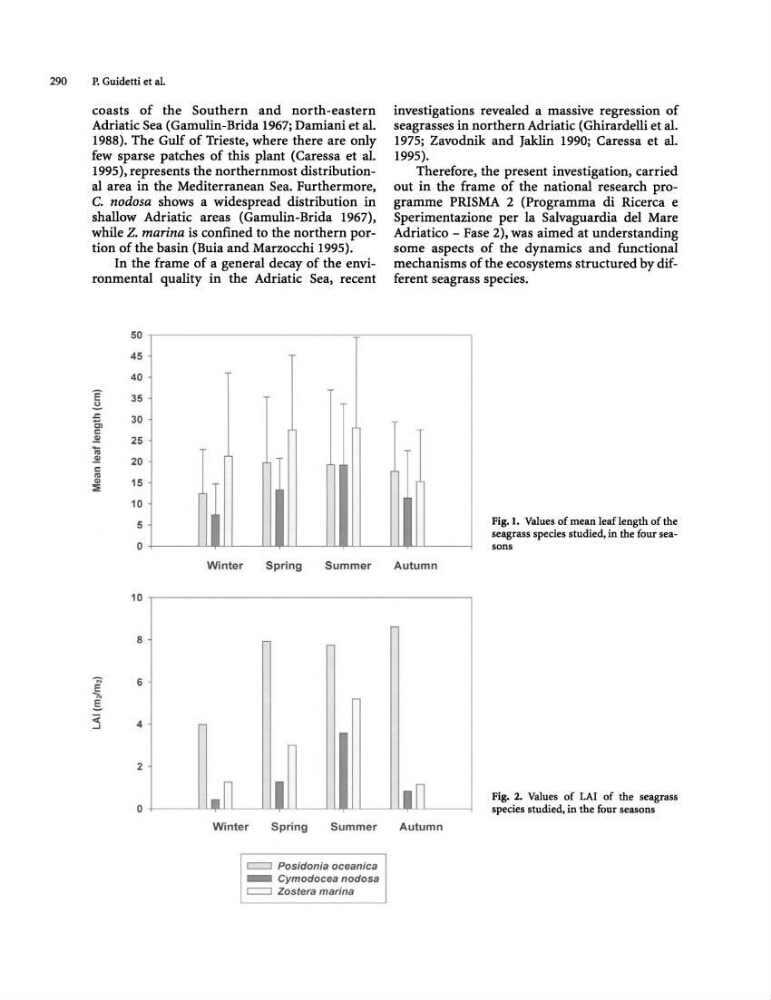
Fig. 1. Values of mean leaf length of the
seagrass species studied, in the four seasons
Fig. 2. Values of LAI of the seagrass
species studied, in the four seasons
P. Guidetti et al.
coasts of the Southern and north-eastern
Adriatic Sea (Gamulin-Brida 1967; Damiani et al.
1988). The Gulf of Trieste, where there are only
few sparse patches of this plant (Caressa et al.
1995), represents the northernmost distributional area in the Mediterranean Sea. Furthermore,
C. nodosa shows a widespread distribution in
shallow Adriatic areas (Gamulin-Brida 1967),
while Z. marina is confined to the northern portion of the basin (Buia and Marzocchi 1995),
In the frame of a general decay of the environmental quality in the Adriatic Sea, recent
50
45
40
E
~
35
.r::
30
a,
' "
,.S!
25
....
"'
,.S!
20
s::
"' Ql
15
::i
10
5
0
10
8
E
6
""N
SCi:
4
--l
2
0
,
,
.~
Winter
Spring
Summer
.n I
Winter
Spring
Summer
c::=:J Posidonia oceanica
_
Cymodocea nodosa
c:::=::J Zostera marina
investigations revealed a massive regression of
seagrasses in northern Adriatic (Ghirardelli et al.
1975; Zavodnik and Jaldin 1990; Caressa et al.
1995).
Therefore, the present investigation, carried
out in the frame of the national research programme PRISMA 2 (Programma di Ricerca e
Sperimentazione per la Salvaguardia del Mare
Adriatico - Fase 2), was aimed at understanding
some aspects of the dynamics and functional
mechanisms of the ecosystems structured by different seagrass species.
I
Autumn
In
Autumn
Fig. 1. Values of mean leaf length of the
seagrass species studied, in the four seasons
Fig. 2. Values of LAI of the seagrass
species studied, in the four seasons