

96
M. Baroli et al.
44"N
4rN
4O"N
38"N
km
o
200
14 E
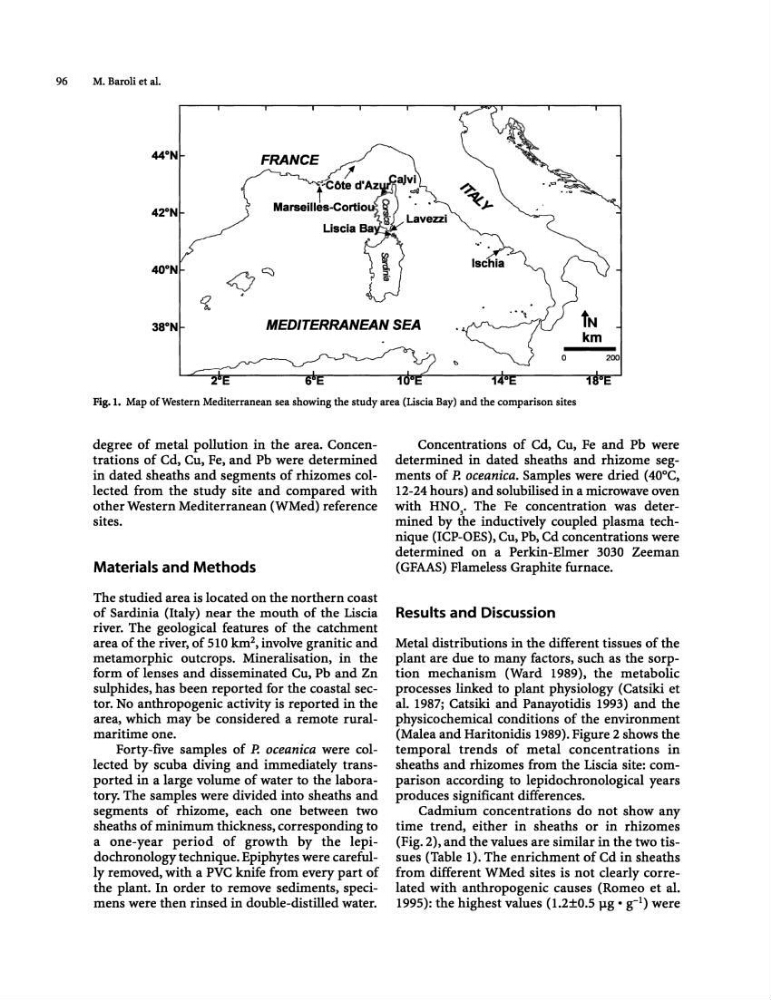
Fig. I. Map of Western Mediterranean sea showing the study area (Lisda Bay) and the comparison sites
degree of metal pollution in the area. Concentrations of Cd, Cu, Fe, and Pb were determined
in dated sheaths and segments of rhizomes collected from the study site and compared with
other Western Mediterranean (WMed) reference
sites.
Materials and Methods
The studied area is located on the northern coast
of Sardinia (Italy) near the mouth of the Usda
river. The geological features of the catchment
area of the river, of 510 km 2 , involve granitic and
metamorphic outcrops. Mineralisation, in the
form of lenses and disseminated Cu, Pb and Zn
sulphides, has been reported for the coastal sector. No anthropogenic activity is reported in the
area, which may be considered a remote ruralmaritime one.
Forty-five samples of P. oceanica were collected by scuba diving and immediately transported in a large volume of water to the laboratory. The samples were divided into sheaths and
segments of rhizome, each one between two
sheaths of minimum thickness, corresponding to
a one-year period of growth by the lepidochronology technique. Epiphytes were carefully removed, with a PVC knife from every part of
the plant. In order to remove sediments, specimens were then rinsed in double-distilled water.
Concentrations of Cd, Cu, Fe and Pb were
determined in dated sheaths and rhizome segments of P. oceanica. Samples were dried (40 D C,
12-24 hours) and solubilised in a microwave oven
with HN0 3 • The Fe concentration was determined by the inductively coupled plasma technique (ICP-OES), Cu, Pb, Cd concentrations were
determined on a Perkin-Elmer 3030 Zeeman
(GFAAS) Flameless Graphite furnace.
Results and Discussion
Metal distributions in the different tissues of the
plant are due to many factors, such as the sorption mechanism (Ward 1989), the metabolic
processes linked to plant physiology (Catsiki et
al. 1987; Catsiki and Panayotidis 1993) and the
physicochemical conditions of the environment
(Malea and Haritonidis 1989). Figure 2 shows the
temporal trends of metal concentrations in
sheaths and rhizomes from the Lisda site: comparison according to lepidochronological years
produces significant differences.
Cadmium concentrations do not show any
time trend, either in sheaths or in rhizomes
(Fig. 2), and the values are similar in the two tissues (Table 1). The enrichment of Cd in sheaths
from different WMed sites is not clearly correlated with anthropogenic causes (Romeo et al.
1995): the highest values (1.2±0.5 }lg. g-l) were
M. Baroli et al.
44"N
4rN
4O"N
38"N
km
o
200
14 E
Fig. I. Map of Western Mediterranean sea showing the study area (Lisda Bay) and the comparison sites
degree of metal pollution in the area. Concentrations of Cd, Cu, Fe, and Pb were determined
in dated sheaths and segments of rhizomes collected from the study site and compared with
other Western Mediterranean (WMed) reference
sites.
Materials and Methods
The studied area is located on the northern coast
of Sardinia (Italy) near the mouth of the Usda
river. The geological features of the catchment
area of the river, of 510 km 2 , involve granitic and
metamorphic outcrops. Mineralisation, in the
form of lenses and disseminated Cu, Pb and Zn
sulphides, has been reported for the coastal sector. No anthropogenic activity is reported in the
area, which may be considered a remote ruralmaritime one.
Forty-five samples of P. oceanica were collected by scuba diving and immediately transported in a large volume of water to the laboratory. The samples were divided into sheaths and
segments of rhizome, each one between two
sheaths of minimum thickness, corresponding to
a one-year period of growth by the lepidochronology technique. Epiphytes were carefully removed, with a PVC knife from every part of
the plant. In order to remove sediments, specimens were then rinsed in double-distilled water.
Concentrations of Cd, Cu, Fe and Pb were
determined in dated sheaths and rhizome segments of P. oceanica. Samples were dried (40 D C,
12-24 hours) and solubilised in a microwave oven
with HN0 3 • The Fe concentration was determined by the inductively coupled plasma technique (ICP-OES), Cu, Pb, Cd concentrations were
determined on a Perkin-Elmer 3030 Zeeman
(GFAAS) Flameless Graphite furnace.
Results and Discussion
Metal distributions in the different tissues of the
plant are due to many factors, such as the sorption mechanism (Ward 1989), the metabolic
processes linked to plant physiology (Catsiki et
al. 1987; Catsiki and Panayotidis 1993) and the
physicochemical conditions of the environment
(Malea and Haritonidis 1989). Figure 2 shows the
temporal trends of metal concentrations in
sheaths and rhizomes from the Lisda site: comparison according to lepidochronological years
produces significant differences.
Cadmium concentrations do not show any
time trend, either in sheaths or in rhizomes
(Fig. 2), and the values are similar in the two tissues (Table 1). The enrichment of Cd in sheaths
from different WMed sites is not clearly correlated with anthropogenic causes (Romeo et al.
1995): the highest values (1.2±0.5 }lg. g-l) were