

I RO
6 Recolonization 01 Tidal Flats Alter Dlsluroance
= experiment
= control
o
2 3 8 14 30 90
davs
800 b) 1994
600
= 6 weeks disturbance
_
azoic
= control
~ 800
"0
d) 1995
= 4 weeks disturbance
c;;:SJ 1 week disturbance
control
~ 600
£:~~l~J~
2
3 4 7 14 29 49
days
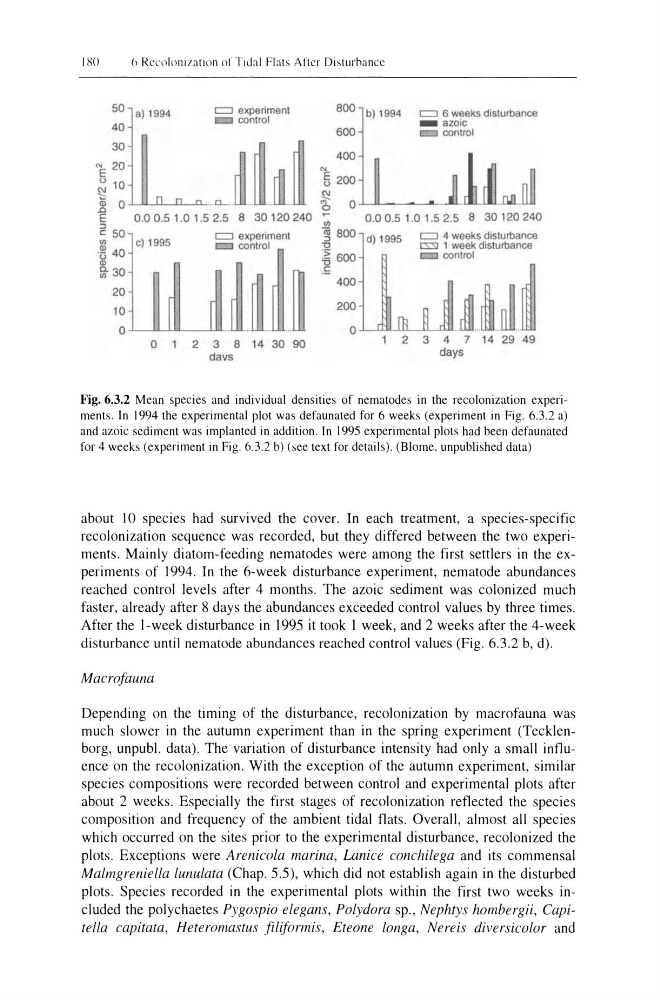
Fig. 6.3.2 Mean species and individual densities of nematodes in the recolonization experiments. In 1994 the experimental plot was defaunated for 6 weeks (experiment In Fig. 6.3.2 a)
and azoic sediment was implanted in addition. In 1995 experimental plots had been defaunated
for 4 weeks (experiment in Fig. 6.3.2 b) (see text for details). (Blome, unpublished data)
about 10 species had survived the cover. In each treatment, a species-specific
recolonization sequence was recorded, but they differed between the two experiments. Mainly diatom-feeding nematodes were among the first settlers in the experiments of 1994. In the 6-week disturbance experiment, nematode abundances
reached control levels after 4 months. The azoic sediment was colonized much
faster, already after 8 days the abundances exceeded control values by three times.
After the I-week disturbance in 1995 it took I week, and 2 weeks after the 4-week
disturbance until nematode abundances reached control values (Fig. 6.3.2 b, d).
Macrofauna
Depending on the timing of the disturbance, recolonization by macrofauna was
much slower in the autumn experiment than in the spring experiment (Tecklenborg, unpubl. data). The variation of disturbance intensity had only a small influence on the recolonization. With the exception of the autumn experiment, similar
species compositions were recorded between control and experimental plots after
about 2 weeks. Especially the first stages of recolonization reflected the species
composition and frequency of the ambient tidal flats. Overall, almost all species
which occurred on the sites prior to the experimental disturbance, recolonized the
plots. Exceptions were Arenicola marina, Lanice conchilega and its commensal
Malmgreniella lunulata (Chap. 5.5), which did not establish again in the disturbed
plots. Species recorded in the experimental plots within the first two weeks included the polychaetes Pygospio elegans, Polydora sp., Nephtys hombergii, Capitella capitata, Heteromastus filiformis, Eteone longa, Nereis diversicolor and
6 Recolonization 01 Tidal Flats Alter Dlsluroance
= experiment
= control
o
2 3 8 14 30 90
davs
800 b) 1994
600
= 6 weeks disturbance
_
azoic
= control
~ 800
"0
d) 1995
= 4 weeks disturbance
c;;:SJ 1 week disturbance
control
~ 600
£:~~l~J~
2
3 4 7 14 29 49
days
Fig. 6.3.2 Mean species and individual densities of nematodes in the recolonization experiments. In 1994 the experimental plot was defaunated for 6 weeks (experiment In Fig. 6.3.2 a)
and azoic sediment was implanted in addition. In 1995 experimental plots had been defaunated
for 4 weeks (experiment in Fig. 6.3.2 b) (see text for details). (Blome, unpublished data)
about 10 species had survived the cover. In each treatment, a species-specific
recolonization sequence was recorded, but they differed between the two experiments. Mainly diatom-feeding nematodes were among the first settlers in the experiments of 1994. In the 6-week disturbance experiment, nematode abundances
reached control levels after 4 months. The azoic sediment was colonized much
faster, already after 8 days the abundances exceeded control values by three times.
After the I-week disturbance in 1995 it took I week, and 2 weeks after the 4-week
disturbance until nematode abundances reached control values (Fig. 6.3.2 b, d).
Macrofauna
Depending on the timing of the disturbance, recolonization by macrofauna was
much slower in the autumn experiment than in the spring experiment (Tecklenborg, unpubl. data). The variation of disturbance intensity had only a small influence on the recolonization. With the exception of the autumn experiment, similar
species compositions were recorded between control and experimental plots after
about 2 weeks. Especially the first stages of recolonization reflected the species
composition and frequency of the ambient tidal flats. Overall, almost all species
which occurred on the sites prior to the experimental disturbance, recolonized the
plots. Exceptions were Arenicola marina, Lanice conchilega and its commensal
Malmgreniella lunulata (Chap. 5.5), which did not establish again in the disturbed
plots. Species recorded in the experimental plots within the first two weeks included the polychaetes Pygospio elegans, Polydora sp., Nephtys hombergii, Capitella capitata, Heteromastus filiformis, Eteone longa, Nereis diversicolor and