

S.h Sile Frequency. Distnoution ami Colour Variation of C(lrcinLls maCI1(1S
Ih7
The sex ratio of adult crabs was male-dominated (I : 0.52 based on the survey
1994; 55-65 (70 of all crabs caught were male), but almost equal in the small crabs
caught in the subtidal.
The average size was 47 mm carapace width (CW) for male and 37 mm CW
for female crabs (Fig. 5.6.2). Not a single crab < 15 mm CW was caught in any of
the samples taken with the epibenthos sledge in the subtidal.
Size frequency and sex distribution of shore crabs in the intertidal
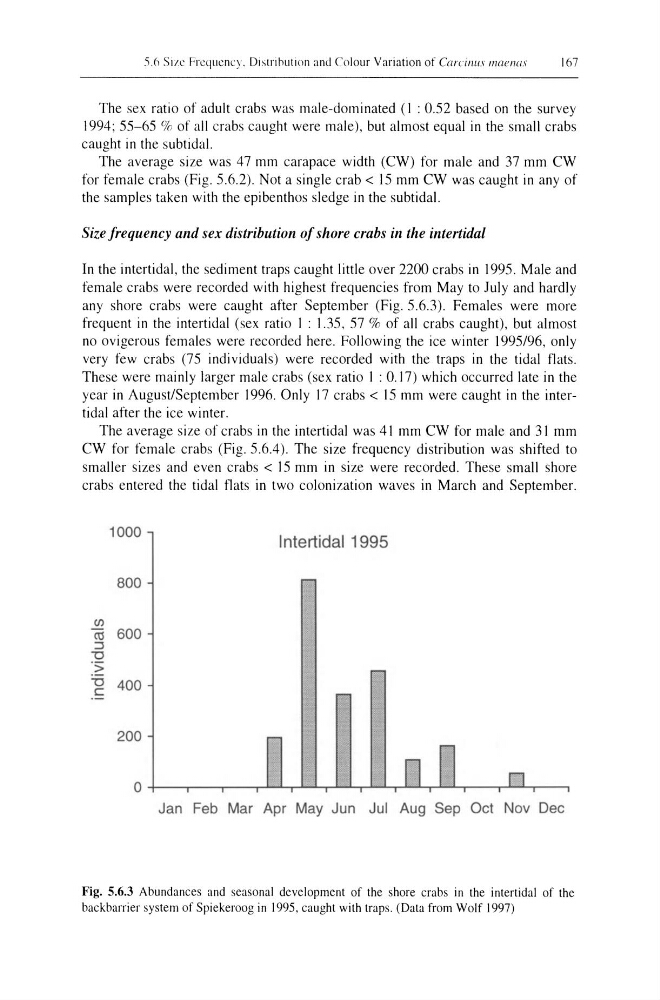
In the intertidal, the sediment traps caught little over 2200 crabs in 1995. Male and
female crabs were recorded with highest frequencies from May to July and hardly
any shore crabs were caught after September (Fig. 5.6.3). Females were more
frequent in the intertidal (sex ratio I : 1.35, 57 % of all crabs caught), but almost
no ovigerous females were recorded here. Following the ice winter 1995/96, only
very few crabs (75 individuals) were recorded with the traps in the tidal tlats.
These were mainly larger male crabs (sex ratio I : 0.17) which occurred late in the
year in August/September 1996. Only 17 crabs < 15 mm were caught in the intertidal after the ice winter.
The average size of crabs in the intertidal was 41 mm CW for male and 31 mm
CW for female crabs (Fig. 5.6.4). The size frequency distribution was shifted to
smaller sizes and even crabs < 15 mm in size were recorded. These small shore
crabs entered the tidal tlats in two colonization waves in March and September.
1000
800
CJ)
(OJ 600
::::l
"0
:~
"0 400
c
200
Intertidal 1995
Jan Feb Mar Apr May Jun Jul Aug Sep Oct Nov Dec
Fig. 5.6.3 Abundances and seasonal development of the shore crabs in the intertidal of the
backbarrier system of Spickeroog in 1995, caught with traps. (Data from Wolf 1997)
Ih7
The sex ratio of adult crabs was male-dominated (I : 0.52 based on the survey
1994; 55-65 (70 of all crabs caught were male), but almost equal in the small crabs
caught in the subtidal.
The average size was 47 mm carapace width (CW) for male and 37 mm CW
for female crabs (Fig. 5.6.2). Not a single crab < 15 mm CW was caught in any of
the samples taken with the epibenthos sledge in the subtidal.
Size frequency and sex distribution of shore crabs in the intertidal
In the intertidal, the sediment traps caught little over 2200 crabs in 1995. Male and
female crabs were recorded with highest frequencies from May to July and hardly
any shore crabs were caught after September (Fig. 5.6.3). Females were more
frequent in the intertidal (sex ratio I : 1.35, 57 % of all crabs caught), but almost
no ovigerous females were recorded here. Following the ice winter 1995/96, only
very few crabs (75 individuals) were recorded with the traps in the tidal tlats.
These were mainly larger male crabs (sex ratio I : 0.17) which occurred late in the
year in August/September 1996. Only 17 crabs < 15 mm were caught in the intertidal after the ice winter.
The average size of crabs in the intertidal was 41 mm CW for male and 31 mm
CW for female crabs (Fig. 5.6.4). The size frequency distribution was shifted to
smaller sizes and even crabs < 15 mm in size were recorded. These small shore
crabs entered the tidal tlats in two colonization waves in March and September.
1000
800
CJ)
(OJ 600
::::l
"0
:~
"0 400
c
200
Intertidal 1995
Jan Feb Mar Apr May Jun Jul Aug Sep Oct Nov Dec
Fig. 5.6.3 Abundances and seasonal development of the shore crabs in the intertidal of the
backbarrier system of Spickeroog in 1995, caught with traps. (Data from Wolf 1997)