

104
5 Spatial and Temporal DistributIOn Patterns
1_0ct
2_0ct
1_Mayf------.---2_July
2_Mayl-------------~.
1_July
4_0ct
5_0ct
---==~
.
3_0ct f - - - - - -
-
6_0ct f - - - - - - - - - - - - - ,
6_July
~-------'
3_Mayf-----.--.... -:=~:~f-----=r-------------,
6_Mayr---3_July f----4_July f - - - - - - - - - - . - - !
5_July 1 - - - - - - -
--}---------"
~--~-------~o
0.2
0.4
0.6
0.8
1.0
1.2
linkage: Ward's method, distance measure: 1-Pearson r
1.4
1.6
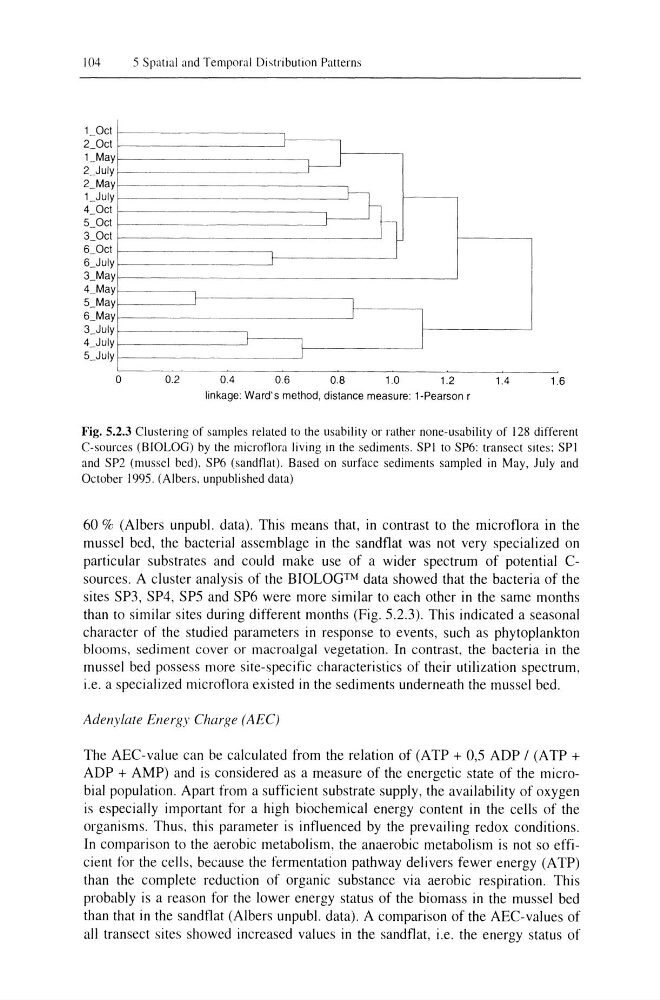
Fig. 5.2.3 Clustering of samples related to the usability or rather none-usability of 128 different
C-sources (BIOLOG) by the microflora living in the sediments. SPI to SP6: transect sites: SPI
and SP2 (mussel bed). SP6 (sandtlat). Based on surface sediments sampled in May, July and
October 1995. (Albers, unpublished data)
60 % (Albers unpubl. data). This means that, in contrast to the microtlora in the
mussel bed, the bacterial assemblage in the sandflat was not very specialized on
particular substrates and could make use of a wider spectrum of potential Csources. A cluster analysis of the BIOLOGTM data showed that the bacteria of the
sites SP3, SP4, SPS and SP6 were more similar to each other in the same months
than to similar sites during different months (Fig. 5.2.3). This indicated a seasonal
character of the studied parameters in response to events, such as phytoplankton
blooms, sediment cover or macroalgal vegetation. In contrast. the bacteria in the
mussel bed possess more site-specific characteristics of their utilization spectrum,
i.e. a specialized microtlora existed in the sediments underneath the mussel bed.
Adenylate Energy Charge (AEC)
The ABC-value can be calculated from the relation of (ATP + 0,5 ADP / (ATP +
ADP + AMP) and is considered as a measure of the energetic state of the microbial population. Apart from a sufficient substrate supply, the availability of oxygen
is especially important for a high biochemical energy content in the cells of the
organisms. Thus. this parameter is influenced by the prevailing redox conditions.
In comparison to the aerobic metabolism, the anaerobic metabolism is not so efficient for the cells, because the fermentation pathway delivers fewer energy (ATP)
than the complete reduction of organic substance via aerobic respiration. This
probably is a reason for the lower energy status of the biomass in the mussel bed
than that in the sandtlat (Albers unpubl. data). A comparison of the ABC-values of
all transect sites showed increased values in the sandflat, i.e. the energy status of
5 Spatial and Temporal DistributIOn Patterns
1_0ct
2_0ct
1_Mayf------.---2_July
2_Mayl-------------~.
1_July
4_0ct
5_0ct
---==~
.
3_0ct f - - - - - -
-
6_0ct f - - - - - - - - - - - - - ,
6_July
~-------'
3_Mayf-----.--.... -:=~:~f-----=r-------------,
6_Mayr---3_July f----4_July f - - - - - - - - - - . - - !
5_July 1 - - - - - - -
--}---------"
~--~-------~o
0.2
0.4
0.6
0.8
1.0
1.2
linkage: Ward's method, distance measure: 1-Pearson r
1.4
1.6
Fig. 5.2.3 Clustering of samples related to the usability or rather none-usability of 128 different
C-sources (BIOLOG) by the microflora living in the sediments. SPI to SP6: transect sites: SPI
and SP2 (mussel bed). SP6 (sandtlat). Based on surface sediments sampled in May, July and
October 1995. (Albers, unpublished data)
60 % (Albers unpubl. data). This means that, in contrast to the microtlora in the
mussel bed, the bacterial assemblage in the sandflat was not very specialized on
particular substrates and could make use of a wider spectrum of potential Csources. A cluster analysis of the BIOLOGTM data showed that the bacteria of the
sites SP3, SP4, SPS and SP6 were more similar to each other in the same months
than to similar sites during different months (Fig. 5.2.3). This indicated a seasonal
character of the studied parameters in response to events, such as phytoplankton
blooms, sediment cover or macroalgal vegetation. In contrast. the bacteria in the
mussel bed possess more site-specific characteristics of their utilization spectrum,
i.e. a specialized microtlora existed in the sediments underneath the mussel bed.
Adenylate Energy Charge (AEC)
The ABC-value can be calculated from the relation of (ATP + 0,5 ADP / (ATP +
ADP + AMP) and is considered as a measure of the energetic state of the microbial population. Apart from a sufficient substrate supply, the availability of oxygen
is especially important for a high biochemical energy content in the cells of the
organisms. Thus. this parameter is influenced by the prevailing redox conditions.
In comparison to the aerobic metabolism, the anaerobic metabolism is not so efficient for the cells, because the fermentation pathway delivers fewer energy (ATP)
than the complete reduction of organic substance via aerobic respiration. This
probably is a reason for the lower energy status of the biomass in the mussel bed
than that in the sandtlat (Albers unpubl. data). A comparison of the ABC-values of
all transect sites showed increased values in the sandflat, i.e. the energy status of