

5.1 Nutrients, Algae and Zooplankton
l) I
5.1.8
Resuspension of Benthic Algae
Species of microalgae, living in and upon the sediment, belong to the microphytobenthos. The dominant group are diatoms (e.g. species genera Amphora, Cymatosira, Melosira, Cylindrotheca, Navicula, Nitzschia, Odontella), cyanobacteria
(species of Merismopedia and Oscillatoria) were found only sporadically. According to their mode of living, the benthic diatoms were classified as a) sessile b)
mobile c) solitary or d) colony-building types. The relative contribution of these
groups to the microphytobenthic assemblage varied strongly.
Bloom-building diatoms, which occurred in the water body, were also found on
the sediment (e.g. Asterionellopsis glacialis, Coscinodiscus concinnus, Ditylum
brightwellii, Eucampia zodiacus). Diatoms, which usually occurred in the sediment, were also found in the water body and reached highest densities during
tlood- and ebb-flow (e.g. Cylindrotheca closterium, Paralia sulcata). During calm
weather, sediment surface layers detached from the ground when the tide came in
and floated as a film on the water surface. This film dissolved with the next high
tide. Diatom species usually found in the surface films were Cylindrotheca closterium, Cymatosira belgica and species of the genera Navicula, Nitzschia, Paralia,
Odontella and Amphora. A qualitative comparison of the diatoms in the sediment
and in the detached surface film showed that both consisted mainly out of species
which were dominant in the sediment. Since all categories of microphytobenthos
(mobile, sessile, solitary and colony-building) were found in the tloating material,
it is assumed that the surface layer is mechanically detached and not made up by
mobile diatoms actively entering the water column.
Altogether, 66 genera with 162 species (26 species thereof could not be identified) were found (Fig. 5.1.7). A comparison of the species lists of benthic and
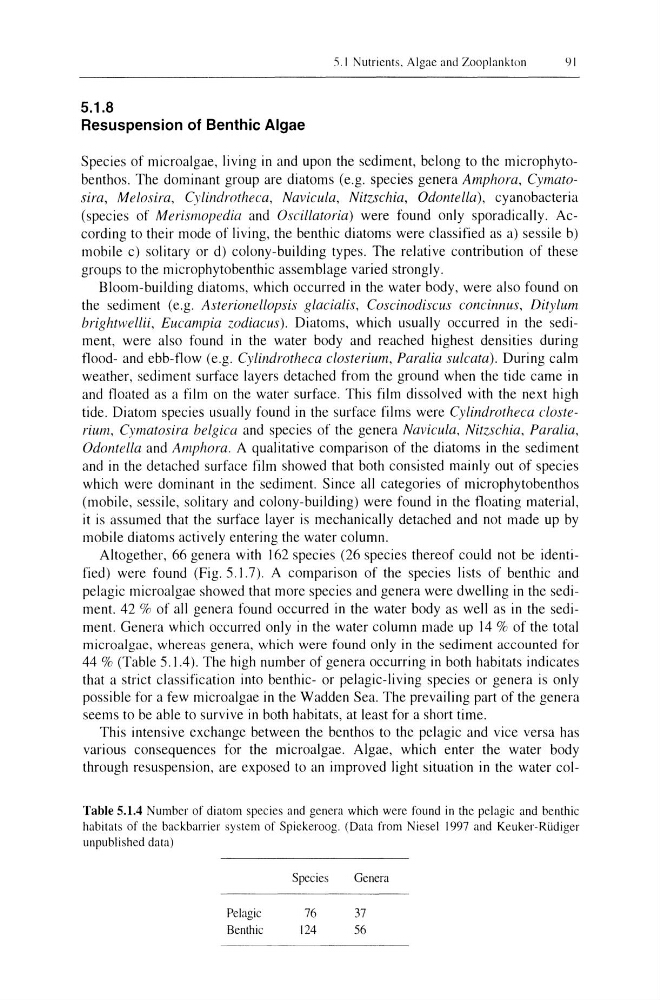
pelagic microalgae showed that more species and genera were dwelling in the sediment. 42 % of all genera found occurred in the water body as well as in the sediment. Genera which occurred only in the water column made up 14 % of the total
microalgae, whereas genera, which were found only in the sediment accounted for
44 % (Table 5.IA). The high number of genera occurring in both habitats indicates
that a strict classification into benthic- or pelagic-living species or genera is only
possible for a few microalgae in the Wadden Sea. The prevailing part of the genera
seems to be able to survive in both habitats, at least for a short time.
This intensive exchange between the benthos to the pelagic and vice versa has
various consequences for the microalgae. Algae, which enter the water body
through resuspension, are exposed to an improved light situation in the water colTable 5.1.4 Number of diatom species and genera which were found in the pelagic and benthic
habitats of the hackbarrier system of Spiekeroog. (Data from Niesel 1997 and Keuker-Riidiger
unpuhlished data)
Pelagic
Benthic
Species
76
124
Genera
37
56
l) I
5.1.8
Resuspension of Benthic Algae
Species of microalgae, living in and upon the sediment, belong to the microphytobenthos. The dominant group are diatoms (e.g. species genera Amphora, Cymatosira, Melosira, Cylindrotheca, Navicula, Nitzschia, Odontella), cyanobacteria
(species of Merismopedia and Oscillatoria) were found only sporadically. According to their mode of living, the benthic diatoms were classified as a) sessile b)
mobile c) solitary or d) colony-building types. The relative contribution of these
groups to the microphytobenthic assemblage varied strongly.
Bloom-building diatoms, which occurred in the water body, were also found on
the sediment (e.g. Asterionellopsis glacialis, Coscinodiscus concinnus, Ditylum
brightwellii, Eucampia zodiacus). Diatoms, which usually occurred in the sediment, were also found in the water body and reached highest densities during
tlood- and ebb-flow (e.g. Cylindrotheca closterium, Paralia sulcata). During calm
weather, sediment surface layers detached from the ground when the tide came in
and floated as a film on the water surface. This film dissolved with the next high
tide. Diatom species usually found in the surface films were Cylindrotheca closterium, Cymatosira belgica and species of the genera Navicula, Nitzschia, Paralia,
Odontella and Amphora. A qualitative comparison of the diatoms in the sediment
and in the detached surface film showed that both consisted mainly out of species
which were dominant in the sediment. Since all categories of microphytobenthos
(mobile, sessile, solitary and colony-building) were found in the tloating material,
it is assumed that the surface layer is mechanically detached and not made up by
mobile diatoms actively entering the water column.
Altogether, 66 genera with 162 species (26 species thereof could not be identified) were found (Fig. 5.1.7). A comparison of the species lists of benthic and
pelagic microalgae showed that more species and genera were dwelling in the sediment. 42 % of all genera found occurred in the water body as well as in the sediment. Genera which occurred only in the water column made up 14 % of the total
microalgae, whereas genera, which were found only in the sediment accounted for
44 % (Table 5.IA). The high number of genera occurring in both habitats indicates
that a strict classification into benthic- or pelagic-living species or genera is only
possible for a few microalgae in the Wadden Sea. The prevailing part of the genera
seems to be able to survive in both habitats, at least for a short time.
This intensive exchange between the benthos to the pelagic and vice versa has
various consequences for the microalgae. Algae, which enter the water body
through resuspension, are exposed to an improved light situation in the water colTable 5.1.4 Number of diatom species and genera which were found in the pelagic and benthic
habitats of the hackbarrier system of Spiekeroog. (Data from Niesel 1997 and Keuker-Riidiger
unpuhlished data)
Pelagic
Benthic
Species
76
124
Genera
37
56