

305
5
Is the French Oyster Farming
Resilient?
5.1
Questions About Resilience
5.1.1 The Resilience of Ecosystems
That Produce Shellfi sh
and Support Shellfi sh Farming
Shellfi sh farming is an activity practiced in highly
dynamic ecosystems, at all time scales: millenary
(last glaciation, sea level rise, siltation of estuaries, strong currents, sediment movements, etc.),
annual-seasonal (winter storms, etc.), monthly
(tide coeffi cient), and daily-semidiurnal (tides).
These geomorphological changes (Bertin and
Chaumillon 2006 ; Kervella 2009 ) have shaped
ecosystems, providing habitat for shellfi sh.
Analyzing the resilience of oyster farming leads
to consider many questions: (1) about the resilience
of these ecosystems; (2) conversely, about the
impacts of oyster farming on the ecosystem and its
resilience; (3) and some about the necessary management of natural oyster beds as reservoirs of
genetic biodiversity used by oyster farming.
5.1.2 Disturbances of Shellfi sh
Farming and Ability to Adapt
The ability of adaptation of oyster farming to disturbances is linked to several facts: the farming
devices may be affected but are fl exible enough
to avoid a real destruction; the farm buildings on
seaside are often able to accept accidental sea rise
because they are already built and used in conditions of level variations due to tides; and the oyster, biologically, is fl exible, and, for instance,
able to overcome some pollution events, through
self-purifi cation as a fi lter feeder.
Animal health appears as a special issue:
disease outbreaks occur often, but a frequent situation is the presence of pathogens with no
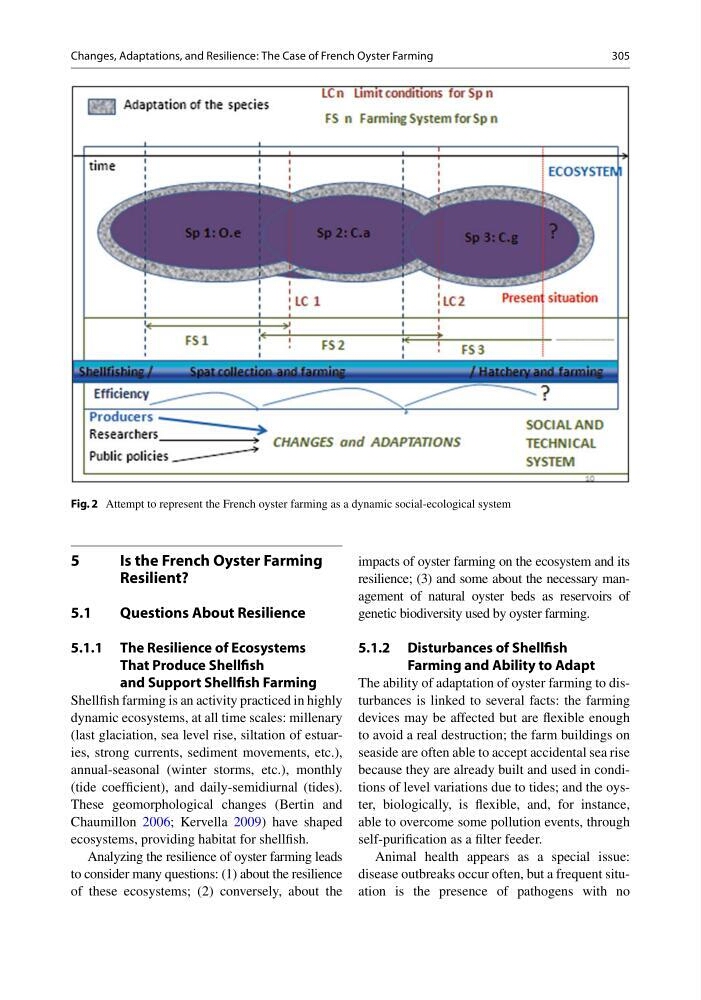
Fig. 2 Attempt to represent the French oyster farming as a dynamic social-ecological system
Changes, Adaptations, and Resilience: The Case of French Oyster Farming
5
Is the French Oyster Farming
Resilient?
5.1
Questions About Resilience
5.1.1 The Resilience of Ecosystems
That Produce Shellfi sh
and Support Shellfi sh Farming
Shellfi sh farming is an activity practiced in highly
dynamic ecosystems, at all time scales: millenary
(last glaciation, sea level rise, siltation of estuaries, strong currents, sediment movements, etc.),
annual-seasonal (winter storms, etc.), monthly
(tide coeffi cient), and daily-semidiurnal (tides).
These geomorphological changes (Bertin and
Chaumillon 2006 ; Kervella 2009 ) have shaped
ecosystems, providing habitat for shellfi sh.
Analyzing the resilience of oyster farming leads
to consider many questions: (1) about the resilience
of these ecosystems; (2) conversely, about the
impacts of oyster farming on the ecosystem and its
resilience; (3) and some about the necessary management of natural oyster beds as reservoirs of
genetic biodiversity used by oyster farming.
5.1.2 Disturbances of Shellfi sh
Farming and Ability to Adapt
The ability of adaptation of oyster farming to disturbances is linked to several facts: the farming
devices may be affected but are fl exible enough
to avoid a real destruction; the farm buildings on
seaside are often able to accept accidental sea rise
because they are already built and used in conditions of level variations due to tides; and the oyster, biologically, is fl exible, and, for instance,
able to overcome some pollution events, through
self-purifi cation as a fi lter feeder.
Animal health appears as a special issue:
disease outbreaks occur often, but a frequent situation is the presence of pathogens with no
Fig. 2 Attempt to represent the French oyster farming as a dynamic social-ecological system
Changes, Adaptations, and Resilience: The Case of French Oyster Farming