

124
in 1994, the abundance of this species decreased
and more eurythermal and euryhaline as well as
marine species like Scrippsiella sp. were able to
develop (Malkassian 2012 ). Gymnodinium sp. ,
Akashiwo sanguinea , Prorocentrum micans ,
and several other species of nanofl agellates are
also present in the lagoon (identifi ed by microscopy by the monthly monitoring supervised by
the GIPREB). Like A. sanguinea , able to grow at
temperatures between 10 and 30 °C and salinities
between 10 and 40 (Matsubara et al. 2007 ), these
species are well adapted to the important
hydrological variations of the lagoon (Nérini
et al. 2001 ).
In the literature, A. sanguinea has been
referred as a potentially toxic species (Tindall
et al. 1984 ), harmful for fi shes, marine birds,
mollusks, and human after consumption of
contaminated shellfi sh and corals (Cardwell et al.
1979 ; Botes et al. 2003 ; Jessup et al. 2009 ;
Vazquez et al. 2011 ). However, no biotoxin have
been isolated yet and evidences of a direct
mortality mode have only been reported recently
in case of seabird’s stranding with no current toxins
involved (Jessup et al. 2009 ). For Du et al. ( 2011 ),
a massive red tide dominated by A. sanguinea
in concentration at only 400 cells/cm
3 was
responsible for the mortality of several seabird
species. The saponifi cation of their feathers’ oil
caused by the massive production of surfactant
amino acids (MAAs) has led to hypothermia and
ultimately to the death of the birds.
In addition to the direct mortality caused by
secondary metabolites, harmful algal bloom
species can also be indirectly noxious through
the exceptional concentration and biomass they
reach, especially for benthic species needing
oxygen and light. Proliferation of some phytoplanktonic species can be important enough to
clog shellfi sh gills and thus asphyxiate organisms
even if the oxygen concentration in the environment is suffi cient. The substantial release of
phytoplanktonic organic matter derived from the
blooms may also favor the oxygen depletion in
the water column induced by the respiration of
the aerobic heterotrophic prokaryotes.
This compartment is indeed the major responsible for the organic matter remineralization. Manté
and Michez ( 2010 ) have demonstrated that species richness of the benthic macrofauna of the
Berre lagoon is lower than in other Mediterranean
lagoons due to frequent anoxia. The thermic or
haline stratifi cation of the water column prevents
the reoxygenation of the deep layers by gas
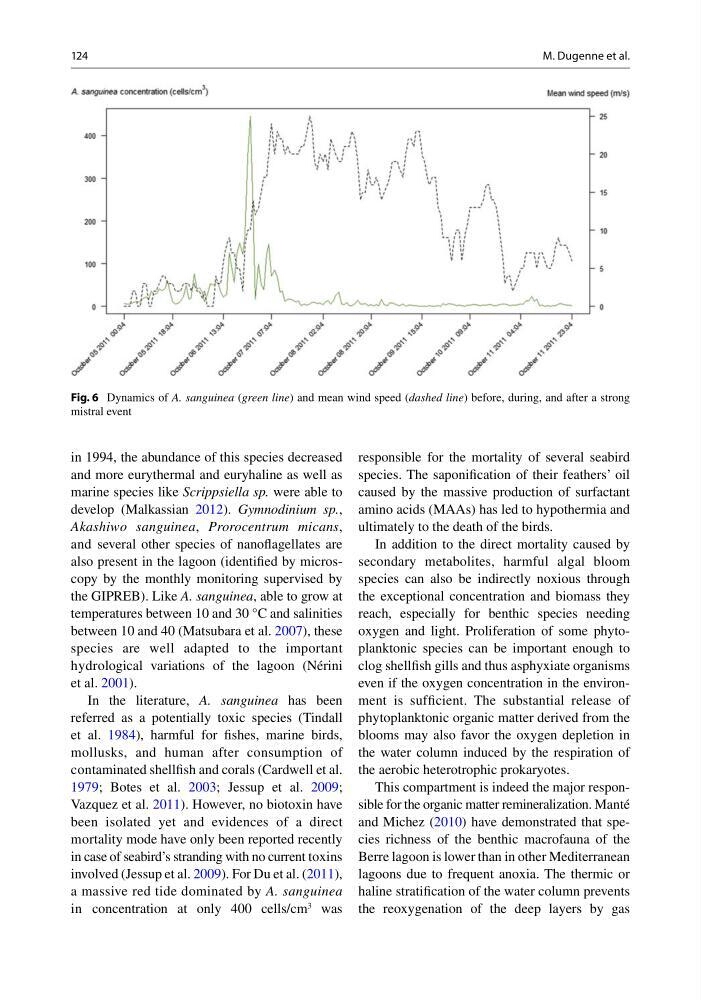
Fig. 6 Dynamics of A. sanguinea ( green line ) and mean wind speed ( dashed line ) before, during, and after a strong
mistral event
M. Dugenne et al.
in 1994, the abundance of this species decreased
and more eurythermal and euryhaline as well as
marine species like Scrippsiella sp. were able to
develop (Malkassian 2012 ). Gymnodinium sp. ,
Akashiwo sanguinea , Prorocentrum micans ,
and several other species of nanofl agellates are
also present in the lagoon (identifi ed by microscopy by the monthly monitoring supervised by
the GIPREB). Like A. sanguinea , able to grow at
temperatures between 10 and 30 °C and salinities
between 10 and 40 (Matsubara et al. 2007 ), these
species are well adapted to the important
hydrological variations of the lagoon (Nérini
et al. 2001 ).
In the literature, A. sanguinea has been
referred as a potentially toxic species (Tindall
et al. 1984 ), harmful for fi shes, marine birds,
mollusks, and human after consumption of
contaminated shellfi sh and corals (Cardwell et al.
1979 ; Botes et al. 2003 ; Jessup et al. 2009 ;
Vazquez et al. 2011 ). However, no biotoxin have
been isolated yet and evidences of a direct
mortality mode have only been reported recently
in case of seabird’s stranding with no current toxins
involved (Jessup et al. 2009 ). For Du et al. ( 2011 ),
a massive red tide dominated by A. sanguinea
in concentration at only 400 cells/cm
3 was
responsible for the mortality of several seabird
species. The saponifi cation of their feathers’ oil
caused by the massive production of surfactant
amino acids (MAAs) has led to hypothermia and
ultimately to the death of the birds.
In addition to the direct mortality caused by
secondary metabolites, harmful algal bloom
species can also be indirectly noxious through
the exceptional concentration and biomass they
reach, especially for benthic species needing
oxygen and light. Proliferation of some phytoplanktonic species can be important enough to
clog shellfi sh gills and thus asphyxiate organisms
even if the oxygen concentration in the environment is suffi cient. The substantial release of
phytoplanktonic organic matter derived from the
blooms may also favor the oxygen depletion in
the water column induced by the respiration of
the aerobic heterotrophic prokaryotes.
This compartment is indeed the major responsible for the organic matter remineralization. Manté
and Michez ( 2010 ) have demonstrated that species richness of the benthic macrofauna of the
Berre lagoon is lower than in other Mediterranean
lagoons due to frequent anoxia. The thermic or
haline stratifi cation of the water column prevents
the reoxygenation of the deep layers by gas
Fig. 6 Dynamics of A. sanguinea ( green line ) and mean wind speed ( dashed line ) before, during, and after a strong
mistral event
M. Dugenne et al.