

113
octopunctata were captured from the innermost
part of Tokyo Bay and kept in a healthy condition. In addition, nauplii of Artemia were obtained
from canned cysts.
2.3
Video Recording
A fl at-drum chamber (100 mm diameter, 25 mm
thick) made of Plexiglas fi lled with fi ltered seawater was used to perform direct observations on
the feeding of ephyra on each kind of zooplankton. Holding the fl at surface upright, while
slowly rotating the chamber (1 revolution per
minute) containing the ephyra and a limited
number of one kind of zooplankton, recordings
were done with a Sony Handycam video (30
frames per second).
Transparent cells of 40 mm cube and also
cells for absorbance meter (10 mm × 10 mm
and 50 mm tall) fi lled with fi ltered seawater
and standing still were also used to make
closer view of the prey and predators’ behavior.
Video images were analyzed frame by frame
afterwards.
3
Results
3.1
Oithona
Live adult of Oithona davisae did not show any
special behavior while the ephyras were not in
the vicinity. However, once the ephyras were came
near, they easily escaped. As a consequence of
such behavior, almost no Oithona was captured
by ephyra (Fig. 3 ).
3.2
Acartia
Acartia which is larger in size than Oithona is
expected to swim faster and thus thought to be
able to escape better than Oithona . However,
unlike the case of Oithona , Acartia did not always
succeed to escape, but sometimes were in contact
with ephyra and eventually eaten (Fig. 4 ).
3.3
Cypris
Cypris larvae of barnacles were very often
into contact with ephyra , but never eaten.
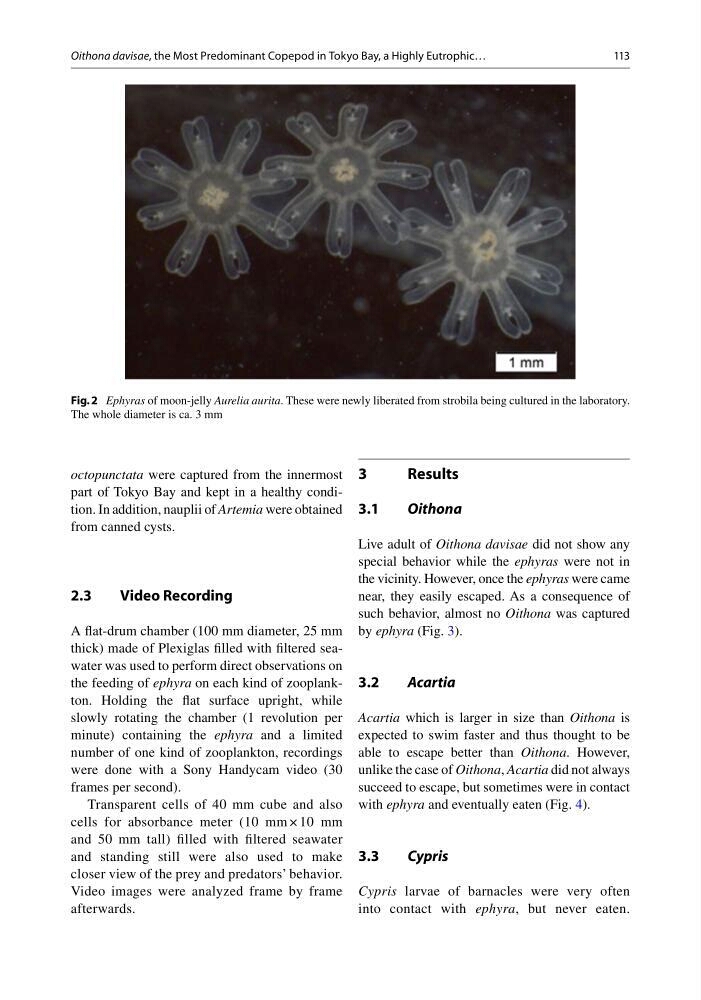
Fig. 2 Ephyras of moon-jelly Aurelia aurita . These were newly liberated from strobila being cultured in the laboratory.
The whole diameter is ca. 3 mm
Oithona davisae, the Most Predominant Copepod in Tokyo Bay, a Highly Eutrophic…
octopunctata were captured from the innermost
part of Tokyo Bay and kept in a healthy condition. In addition, nauplii of Artemia were obtained
from canned cysts.
2.3
Video Recording
A fl at-drum chamber (100 mm diameter, 25 mm
thick) made of Plexiglas fi lled with fi ltered seawater was used to perform direct observations on
the feeding of ephyra on each kind of zooplankton. Holding the fl at surface upright, while
slowly rotating the chamber (1 revolution per
minute) containing the ephyra and a limited
number of one kind of zooplankton, recordings
were done with a Sony Handycam video (30
frames per second).
Transparent cells of 40 mm cube and also
cells for absorbance meter (10 mm × 10 mm
and 50 mm tall) fi lled with fi ltered seawater
and standing still were also used to make
closer view of the prey and predators’ behavior.
Video images were analyzed frame by frame
afterwards.
3
Results
3.1
Oithona
Live adult of Oithona davisae did not show any
special behavior while the ephyras were not in
the vicinity. However, once the ephyras were came
near, they easily escaped. As a consequence of
such behavior, almost no Oithona was captured
by ephyra (Fig. 3 ).
3.2
Acartia
Acartia which is larger in size than Oithona is
expected to swim faster and thus thought to be
able to escape better than Oithona . However,
unlike the case of Oithona , Acartia did not always
succeed to escape, but sometimes were in contact
with ephyra and eventually eaten (Fig. 4 ).
3.3
Cypris
Cypris larvae of barnacles were very often
into contact with ephyra , but never eaten.
Fig. 2 Ephyras of moon-jelly Aurelia aurita . These were newly liberated from strobila being cultured in the laboratory.
The whole diameter is ca. 3 mm
Oithona davisae, the Most Predominant Copepod in Tokyo Bay, a Highly Eutrophic…