

82
periods by the upstream inputs, the WWTP which
treats the wastewater from Paris and its suburbs
(about fi ve million inhabitants) being located
120 km upstream the Dam of Poses (Fig. 2 ).
However, in a period of low fl ow, intra-estuary
supplies are predominant with a contamination
from tributaries close to 76 % (Garcia-Armisen
et al. 2005 ). In the mouth of the estuary, where
the microbiological quality of the water infl uences that of the mussels from the coastal zone,
there is a permanent contamination by fecal bacteria mainly due to the input of the Risle tributary
(Touron et al. 2007 ).
The goal of this study was to have a better
understanding of the fate of antibiotics, antibioticresistant bacteria, and the corresponding genes,
from the human reservoirs to the estuary. However,
the multiplicity of intra-estuary supplies combined
with the hydrosedimentary dynamic makes the
studies diffi cult to interpret in this aquatic environment. So, to better analyze the data observed
in the seine estuary, in particular to analyze more
fi nely the relationship that exists between the
consumption of antibiotics and the contamination
of water, a small-scale survey has been conducted
on a medical center–WWTP–river continuum,
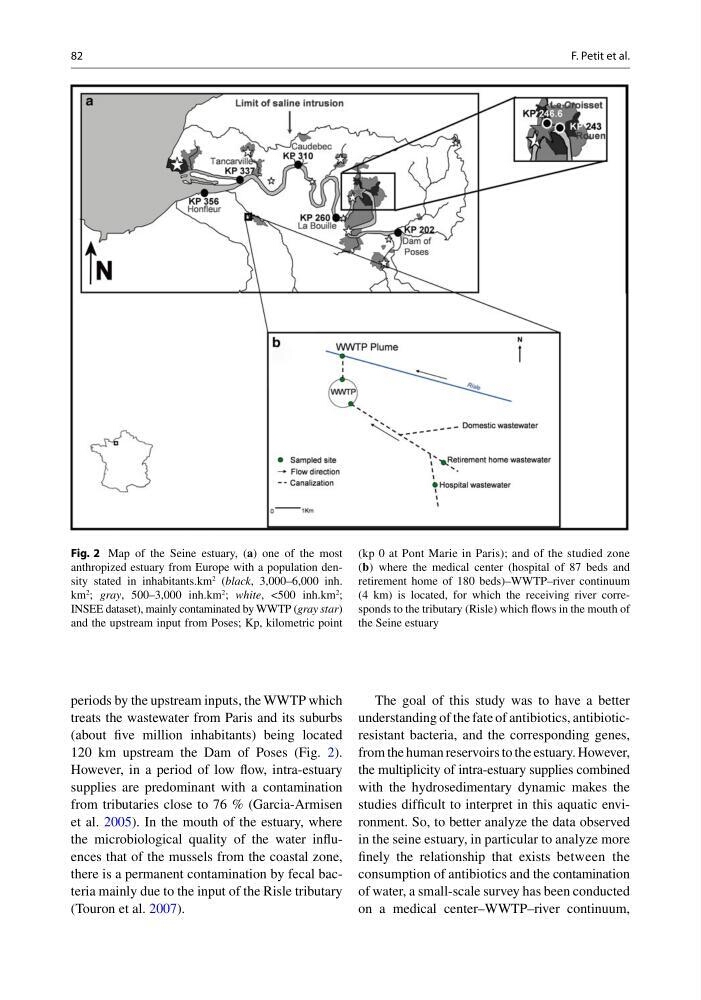
Fig. 2 Map of the Seine estuary, ( a ) one of the most
anthropized estuary from Europe with a population density stated in inhabitants.km
2 ( black , 3,000–6,000 inh.
km
2
; gray , 500–3,000 inh.km
2 ; white , <500 inh.km
2 ;
INSEE dataset), mainly contaminated by WWTP ( gray star )
and the upstream input from Poses; Kp, kilometric point
(kp 0 at Pont Marie in Paris); and of the studied zone
( b ) where the medical center (hospital of 87 beds and
retirement home of 180 beds)–WWTP–river continuum
(4 km) is located, for which the receiving river corresponds to the tributary (Risle) which fl ows in the mouth of
the Seine estuary
F. Petit et al.
periods by the upstream inputs, the WWTP which
treats the wastewater from Paris and its suburbs
(about fi ve million inhabitants) being located
120 km upstream the Dam of Poses (Fig. 2 ).
However, in a period of low fl ow, intra-estuary
supplies are predominant with a contamination
from tributaries close to 76 % (Garcia-Armisen
et al. 2005 ). In the mouth of the estuary, where
the microbiological quality of the water infl uences that of the mussels from the coastal zone,
there is a permanent contamination by fecal bacteria mainly due to the input of the Risle tributary
(Touron et al. 2007 ).
The goal of this study was to have a better
understanding of the fate of antibiotics, antibioticresistant bacteria, and the corresponding genes,
from the human reservoirs to the estuary. However,
the multiplicity of intra-estuary supplies combined
with the hydrosedimentary dynamic makes the
studies diffi cult to interpret in this aquatic environment. So, to better analyze the data observed
in the seine estuary, in particular to analyze more
fi nely the relationship that exists between the
consumption of antibiotics and the contamination
of water, a small-scale survey has been conducted
on a medical center–WWTP–river continuum,
Fig. 2 Map of the Seine estuary, ( a ) one of the most
anthropized estuary from Europe with a population density stated in inhabitants.km
2 ( black , 3,000–6,000 inh.
km
2
; gray , 500–3,000 inh.km
2 ; white , <500 inh.km
2 ;
INSEE dataset), mainly contaminated by WWTP ( gray star )
and the upstream input from Poses; Kp, kilometric point
(kp 0 at Pont Marie in Paris); and of the studied zone
( b ) where the medical center (hospital of 87 beds and
retirement home of 180 beds)–WWTP–river continuum
(4 km) is located, for which the receiving river corresponds to the tributary (Risle) which fl ows in the mouth of
the Seine estuary
F. Petit et al.