

3.4 Incentives for the Conservation of PGRFA
69
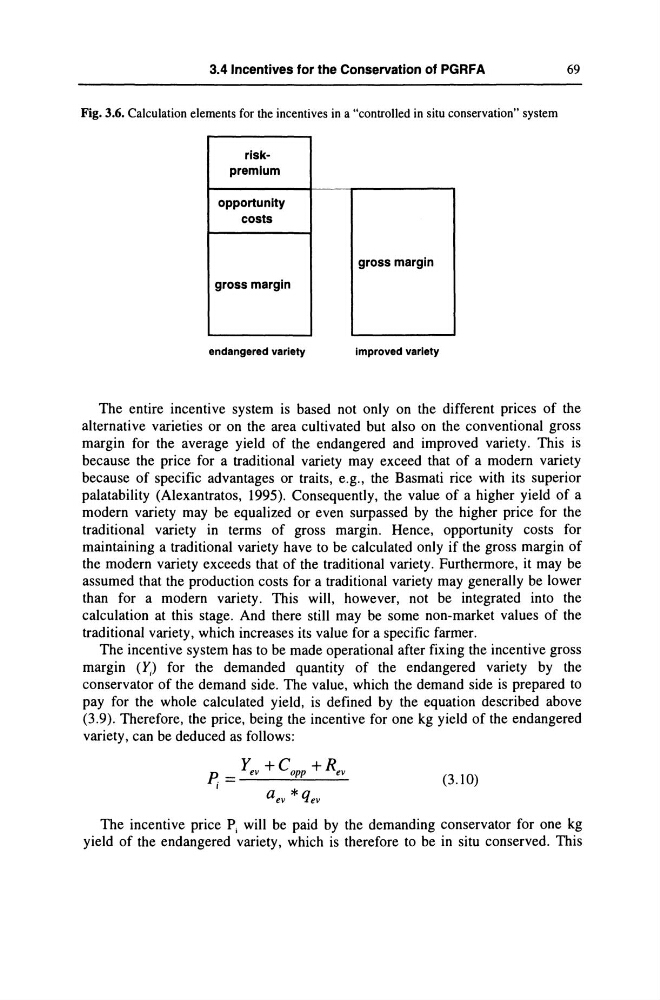
Fig. 3.6. Calculation elements for the incentives in a "controlled in situ conservation" system
riskpremium
opportunity
costs
gross margin
gross margin
endangered variety
improved variety
The entire incentive system is based not only on the different prices of the
alternative varieties or on the area cultivated but also on the conventional gross
margin for the average yield of the endangered and improved variety. This is
because the price for a traditional variety may exceed that of a modem variety
because of specific advantages or traits, e.g., the Basmati rice with its superior
palatability (Alexantratos, 1995). Consequently, the value of a higher yield of a
modern variety may be equalized or even surpassed by the higher price for the
traditional variety in terms of gross margin. Hence, opportunity costs for
maintaining a traditional variety have to be calculated only if the gross margin of
the modern variety exceeds that of the traditional variety. Furthermore, it may be
assumed that the production costs for a traditional variety may generally be lower
than for a modern variety. This will, however, not be integrated into the
calculation at this stage. And there still may be some non-market values of the
traditional variety, which increases its value for a specific farmer.
The incentive system has to be made operational after fixing the incentive gross
margin (Y) for the demanded quantity of the endangered variety by the
conservator of the demand side. The value, which the demand side is prepared to
pay for the whole calculated yield, is defined by the equation described above
(3.9). Therefore, the price, being the incentive for one kg yield of the endangered
variety, can be deduced as follows:
(3.10)
The incentive price Pi will be paid by the demanding conservator for one kg
yield of the endangered variety, which is therefore to be in situ conserved. This
69
Fig. 3.6. Calculation elements for the incentives in a "controlled in situ conservation" system
riskpremium
opportunity
costs
gross margin
gross margin
endangered variety
improved variety
The entire incentive system is based not only on the different prices of the
alternative varieties or on the area cultivated but also on the conventional gross
margin for the average yield of the endangered and improved variety. This is
because the price for a traditional variety may exceed that of a modem variety
because of specific advantages or traits, e.g., the Basmati rice with its superior
palatability (Alexantratos, 1995). Consequently, the value of a higher yield of a
modern variety may be equalized or even surpassed by the higher price for the
traditional variety in terms of gross margin. Hence, opportunity costs for
maintaining a traditional variety have to be calculated only if the gross margin of
the modern variety exceeds that of the traditional variety. Furthermore, it may be
assumed that the production costs for a traditional variety may generally be lower
than for a modern variety. This will, however, not be integrated into the
calculation at this stage. And there still may be some non-market values of the
traditional variety, which increases its value for a specific farmer.
The incentive system has to be made operational after fixing the incentive gross
margin (Y) for the demanded quantity of the endangered variety by the
conservator of the demand side. The value, which the demand side is prepared to
pay for the whole calculated yield, is defined by the equation described above
(3.9). Therefore, the price, being the incentive for one kg yield of the endangered
variety, can be deduced as follows:
(3.10)
The incentive price Pi will be paid by the demanding conservator for one kg
yield of the endangered variety, which is therefore to be in situ conserved. This