

2.2 Extent and Determinants of Genetic Extinction
25
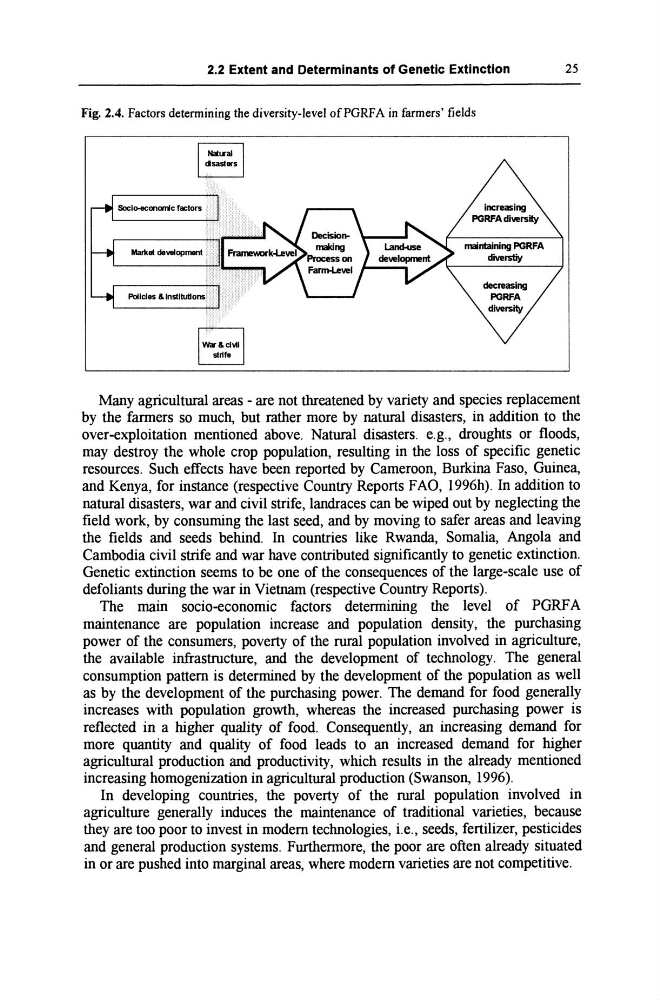
Fig. 2.4. Factors detennining the diversity-level ofPGRFA in fanners' fields
Many agricultural areas - are not threatened by variety and species replacement
by the farmers so much, but rather more by natural disasters, in addition to the
over-exploitation mentioned above. Natural disasters. e.g., droughts or floods,
may destroy the whole crop population, resulting in the loss of specific genetic
resources. Such effects have been reported by Cameroon, Burkina Faso, Guinea,
and Kenya, for instance (respective Country Reports F AO, 1996h). In addition to
natural disasters, war and civil strife, landraces can be wiped out by neglecting the
field work, by consuming the last seed, and by moving to safer areas and leaving
the fields and seeds behind. In countries like Rwanda, Somalia, Angola and
Cambodia civil strife and war have contributed significantly to genetic extinction.
Genetic extinction seems to be one of the consequences of the large-scale use of
defoliants during the war in Vietnam (respective Country Reports).
The main socio-econornic factors determining the level of PGRF A
maintenance are population increase and population density, the purchasing
power of the consumers, poverty of the rural population involved in agriculture,
the available infrastructure, and the development of technology. The general
consumption pattern is determined by the development of the population as well
as by the development of the purchasing power. The demand for food generally
increases with population growth, whereas the increased purchasing power is
reflected in a higher quality of food. Consequently, an increasing demand for
more quantity and quality of food leads to an increased demand for higher
agricultural production and productivity, which results in the already mentioned
increasing homogenization in agricultural production (Swanson, 1996).
In developing countries, the poverty of the rural population involved in
agriculture generally induces the maintenance of traditional varieties, because
they are too poor to invest in modem technologies, i.e., seeds, fertilizer, pesticides
and general production systems. Furthermore, the poor are often already situated
in or are pushed into marginal areas, where modem varieties are not competitive.
25
Fig. 2.4. Factors detennining the diversity-level ofPGRFA in fanners' fields
Many agricultural areas - are not threatened by variety and species replacement
by the farmers so much, but rather more by natural disasters, in addition to the
over-exploitation mentioned above. Natural disasters. e.g., droughts or floods,
may destroy the whole crop population, resulting in the loss of specific genetic
resources. Such effects have been reported by Cameroon, Burkina Faso, Guinea,
and Kenya, for instance (respective Country Reports F AO, 1996h). In addition to
natural disasters, war and civil strife, landraces can be wiped out by neglecting the
field work, by consuming the last seed, and by moving to safer areas and leaving
the fields and seeds behind. In countries like Rwanda, Somalia, Angola and
Cambodia civil strife and war have contributed significantly to genetic extinction.
Genetic extinction seems to be one of the consequences of the large-scale use of
defoliants during the war in Vietnam (respective Country Reports).
The main socio-econornic factors determining the level of PGRF A
maintenance are population increase and population density, the purchasing
power of the consumers, poverty of the rural population involved in agriculture,
the available infrastructure, and the development of technology. The general
consumption pattern is determined by the development of the population as well
as by the development of the purchasing power. The demand for food generally
increases with population growth, whereas the increased purchasing power is
reflected in a higher quality of food. Consequently, an increasing demand for
more quantity and quality of food leads to an increased demand for higher
agricultural production and productivity, which results in the already mentioned
increasing homogenization in agricultural production (Swanson, 1996).
In developing countries, the poverty of the rural population involved in
agriculture generally induces the maintenance of traditional varieties, because
they are too poor to invest in modem technologies, i.e., seeds, fertilizer, pesticides
and general production systems. Furthermore, the poor are often already situated
in or are pushed into marginal areas, where modem varieties are not competitive.