

156
6 Two Country Examples of PGRFA Conservation Systems
houses as well as some training programs, research collaboration, and joint
collections in and outside ofIndia (Chandel, 1996).
On the institutional level, India has ratified the Convention on Biological
Diversity and is a member ofFAO's Commission on Genetic Resources for Food
and Agriculture (CGRF A). India adheres to the International Undertaking and
strongly supports Farmers' Rights. India is a member of the International Plant
Protection Convention. This convention determines the quarantine level and its
code of conduct for the import and export of germplasm. India has a seed
certification legislation as a seed quality control. Furthermore, India is a member
in the plant genetic resources network for South Asia. (FAO, 1996a). India's
government is committed to the free exchange of germplasm resources for their
active use related to the national and international exchange of PGRF A (ICR,
1996), whereas the Indian policy for microorganism differs significantly. Service
charges (amounting to approximately US $ 850) are charged for the identification
and testing of soil samples. Furthermore, the export of soil, which must be
certified, has been noticeably restricted (Sarbhoy, 1996).
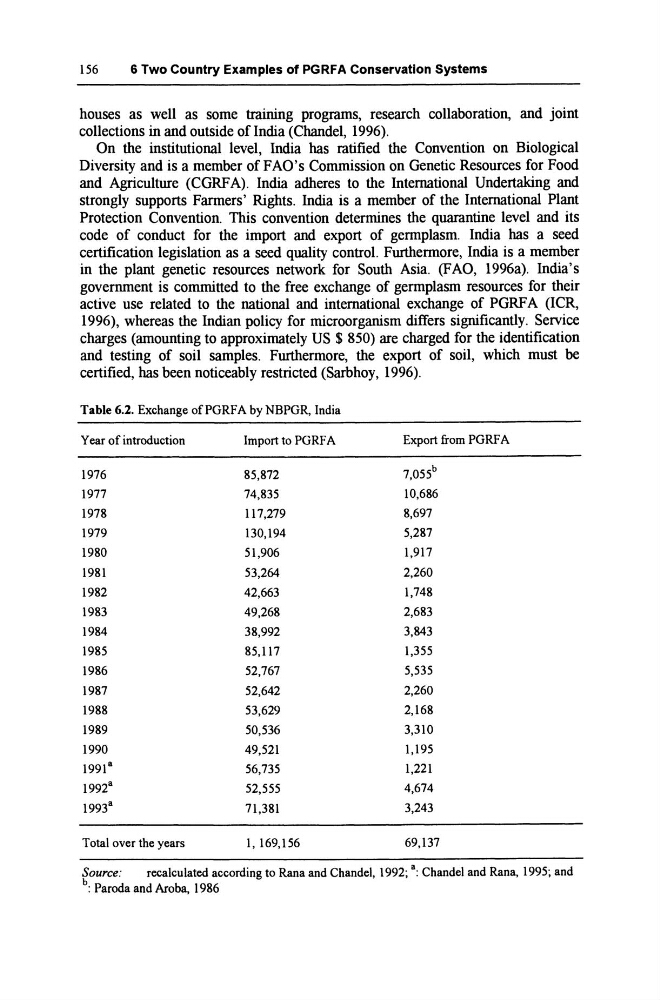
Table 6.2. Exchange ofPGRFA byNBPGR, India
Year of introduction
Import to PGRFA
Export from PGRF A
1976
85,872
7,055 b
1977
74,835
10,686
1978
117,279
8,697
1979
130,194
5,287
1980
51,906
1,917
1981
53,264
2,260
1982
42,663
1,748
1983
49,268
2,683
1984
38,992
3,843
1985
85,117
1,355
1986
52,767
5,535
1987
52,642
2,260
1988
53,629
2,168
1989
50,536
3,310
1990
49,521
1,195
1991"
56,735
1,221
1992"
52,555
4,674
1993 a
71,381
3,243
Total over the years
1,169,156
69,137
Source:
recalculated according to Rana and Chandel, 1992; a: Chandel and Rana, 1995; and
b: Paroda and Aroba, 1986
6 Two Country Examples of PGRFA Conservation Systems
houses as well as some training programs, research collaboration, and joint
collections in and outside ofIndia (Chandel, 1996).
On the institutional level, India has ratified the Convention on Biological
Diversity and is a member ofFAO's Commission on Genetic Resources for Food
and Agriculture (CGRF A). India adheres to the International Undertaking and
strongly supports Farmers' Rights. India is a member of the International Plant
Protection Convention. This convention determines the quarantine level and its
code of conduct for the import and export of germplasm. India has a seed
certification legislation as a seed quality control. Furthermore, India is a member
in the plant genetic resources network for South Asia. (FAO, 1996a). India's
government is committed to the free exchange of germplasm resources for their
active use related to the national and international exchange of PGRF A (ICR,
1996), whereas the Indian policy for microorganism differs significantly. Service
charges (amounting to approximately US $ 850) are charged for the identification
and testing of soil samples. Furthermore, the export of soil, which must be
certified, has been noticeably restricted (Sarbhoy, 1996).
Table 6.2. Exchange ofPGRFA byNBPGR, India
Year of introduction
Import to PGRFA
Export from PGRF A
1976
85,872
7,055 b
1977
74,835
10,686
1978
117,279
8,697
1979
130,194
5,287
1980
51,906
1,917
1981
53,264
2,260
1982
42,663
1,748
1983
49,268
2,683
1984
38,992
3,843
1985
85,117
1,355
1986
52,767
5,535
1987
52,642
2,260
1988
53,629
2,168
1989
50,536
3,310
1990
49,521
1,195
1991"
56,735
1,221
1992"
52,555
4,674
1993 a
71,381
3,243
Total over the years
1,169,156
69,137
Source:
recalculated according to Rana and Chandel, 1992; a: Chandel and Rana, 1995; and
b: Paroda and Aroba, 1986