

5.3 Analysis ofthe International Expenditures In 1995
129
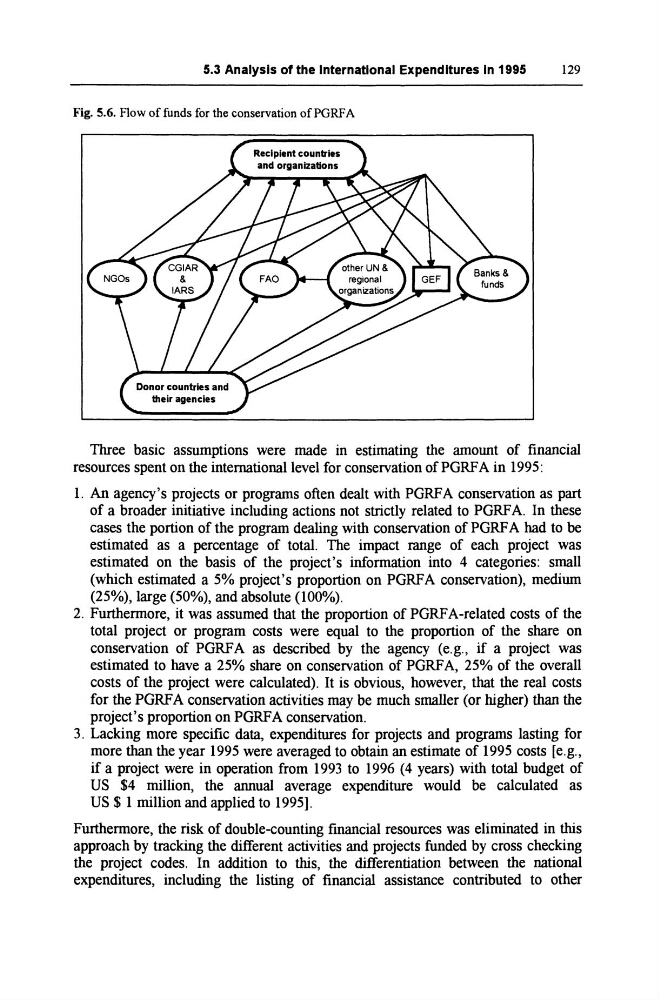
Fig. 5.6. Flow of funds for the conservation ofPGRFA
Three basic assumptions were made in estimating the amount of financial
resources spent on the international level for conservation ofPGRFA in 1995:
l. An agency's projects or programs often dealt with PGRF A conservation as part
of a broader initiative including actions not strictly related to PGRF A. In these
cases the portion of the program dealing with conservation of PGRF A had to be
estimated as a percentage of total. The impact range of each project was
estimated on the basis of the project's information into 4 categories: small
(which estimated a 5% project's proportion on PGRFA conservation), medium
(25%), large (50%), and absolute (100%).
2. Furthermore, it was assumed that the proportion of PGRFA-related costs of the
total project or program costs were equal to the proportion of the share on
conservation of PGRFA as described by the agency (e.g., if a project was
estimated to have a 25% share on conservation of PGRF A, 25% of the overall
costs of the project were calculated). It is obvious, however, that the real costs
for the PGRF A conservation activities may be much smaller (or higher) than the
project's proportion on PGRF A conservation.
3. Lacking more specific data, expenditures for projects and programs lasting for
more than the year 1995 were averaged to obtain an estimate of 1995 costs [e.g.,
if a project were in operation from 1993 to 1996 (4 years) with total budget of
US $4 million, the annual average expenditure would be calculated as
US $ 1 million and applied to 1995}.
Furthermore, the risk of double-counting financial resources was eliminated in this
approach by tracking the different activities and projects funded by cross checking
the project codes. In addition to this, the differentiation between the national
expenditures, including the listing of financial assistance contributed to other
129
Fig. 5.6. Flow of funds for the conservation ofPGRFA
Three basic assumptions were made in estimating the amount of financial
resources spent on the international level for conservation ofPGRFA in 1995:
l. An agency's projects or programs often dealt with PGRF A conservation as part
of a broader initiative including actions not strictly related to PGRF A. In these
cases the portion of the program dealing with conservation of PGRF A had to be
estimated as a percentage of total. The impact range of each project was
estimated on the basis of the project's information into 4 categories: small
(which estimated a 5% project's proportion on PGRFA conservation), medium
(25%), large (50%), and absolute (100%).
2. Furthermore, it was assumed that the proportion of PGRFA-related costs of the
total project or program costs were equal to the proportion of the share on
conservation of PGRFA as described by the agency (e.g., if a project was
estimated to have a 25% share on conservation of PGRF A, 25% of the overall
costs of the project were calculated). It is obvious, however, that the real costs
for the PGRF A conservation activities may be much smaller (or higher) than the
project's proportion on PGRF A conservation.
3. Lacking more specific data, expenditures for projects and programs lasting for
more than the year 1995 were averaged to obtain an estimate of 1995 costs [e.g.,
if a project were in operation from 1993 to 1996 (4 years) with total budget of
US $4 million, the annual average expenditure would be calculated as
US $ 1 million and applied to 1995}.
Furthermore, the risk of double-counting financial resources was eliminated in this
approach by tracking the different activities and projects funded by cross checking
the project codes. In addition to this, the differentiation between the national
expenditures, including the listing of financial assistance contributed to other