

5.1 Analysis of the Costs for PGRFA Conservation
103
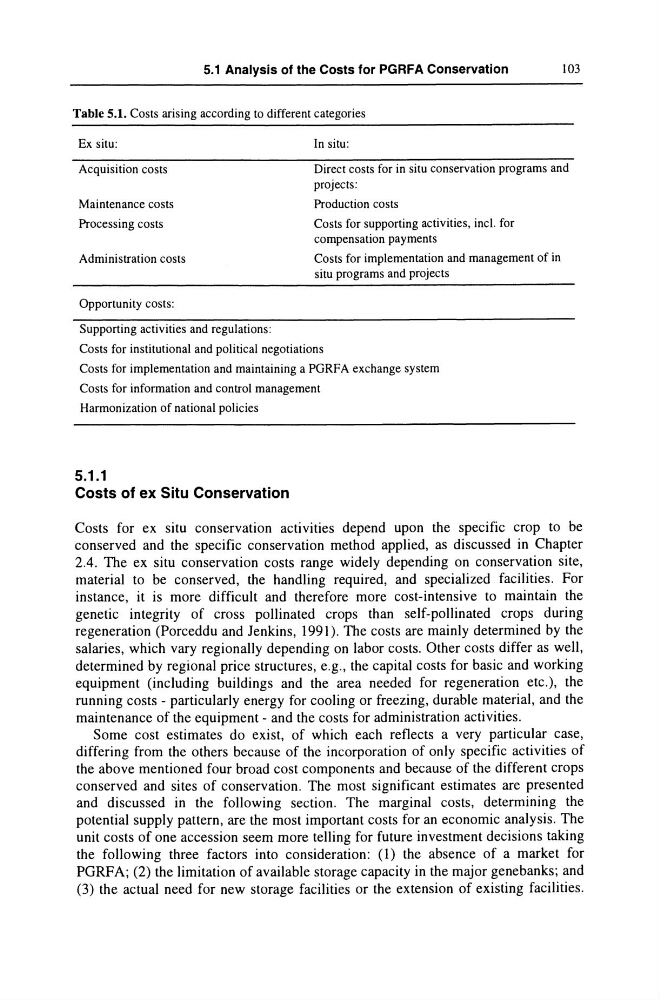
Table 5.1. Costs arising according to different categories
Ex situ:
Acquisition costs
Maintenance costs
Processing costs
Administration costs
Opportunity costs:
Supporting activities and regulations:
In situ:
Direct costs for in situ conservation programs and
projects:
Production costs
Costs for supporting activities, incl. for
compensation payments
Costs for implementation and management of in
situ programs and projects
Costs for institutional and political negotiations
Costs for implementation and maintaining a PGRFA exchange system
Costs for information and control management
Harmonization of national policies
5.1.1
Costs of ex Situ Conservation
Costs for ex situ conservation activities depend upon the specific crop to be
conserved and the specific conservation method applied, as discussed in Chapter
2.4. The ex situ conservation costs range widely depending on conservation site,
material to be conserved, the handling required, and specialized facilities. For
instance, it is more difficult and therefore more cost-intensive to maintain the
genetic integrity of cross pollinated crops than self-pollinated crops during
regeneration (Porceddu and Jenkins, 1991). The costs are mainly determined by the
salaries, which vary regionally depending on labor costs. Other costs differ as well,
determined by regional price structures, e.g., the capital costs for basic and working
equipment (including buildings and the area needed for regeneration etc.), the
running costs - particularly energy for cooling or freezing, durable material, and the
maintenance of the equipment - and the costs for administration activities.
Some cost estimates do exist, of which each reflects a very particular case,
differing from the others because of the incorporation of only specific activities of
the above mentioned four broad cost components and because of the different crops
conserved and sites of conservation. The most significant estimates are presented
and discussed in the following section. The marginal costs, determining the
potential supply pattern, are the most important costs for an economic analysis. The
unit costs of one accession seem more telling for future investment decisions taking
the following three factors into consideration: (1) the absence of a market for
PGRFA; (2) the limitation of available storage capacity in the major genebanks; and
(3) the actual need for new storage facilities or the extension of existing facilities.
103
Table 5.1. Costs arising according to different categories
Ex situ:
Acquisition costs
Maintenance costs
Processing costs
Administration costs
Opportunity costs:
Supporting activities and regulations:
In situ:
Direct costs for in situ conservation programs and
projects:
Production costs
Costs for supporting activities, incl. for
compensation payments
Costs for implementation and management of in
situ programs and projects
Costs for institutional and political negotiations
Costs for implementation and maintaining a PGRFA exchange system
Costs for information and control management
Harmonization of national policies
5.1.1
Costs of ex Situ Conservation
Costs for ex situ conservation activities depend upon the specific crop to be
conserved and the specific conservation method applied, as discussed in Chapter
2.4. The ex situ conservation costs range widely depending on conservation site,
material to be conserved, the handling required, and specialized facilities. For
instance, it is more difficult and therefore more cost-intensive to maintain the
genetic integrity of cross pollinated crops than self-pollinated crops during
regeneration (Porceddu and Jenkins, 1991). The costs are mainly determined by the
salaries, which vary regionally depending on labor costs. Other costs differ as well,
determined by regional price structures, e.g., the capital costs for basic and working
equipment (including buildings and the area needed for regeneration etc.), the
running costs - particularly energy for cooling or freezing, durable material, and the
maintenance of the equipment - and the costs for administration activities.
Some cost estimates do exist, of which each reflects a very particular case,
differing from the others because of the incorporation of only specific activities of
the above mentioned four broad cost components and because of the different crops
conserved and sites of conservation. The most significant estimates are presented
and discussed in the following section. The marginal costs, determining the
potential supply pattern, are the most important costs for an economic analysis. The
unit costs of one accession seem more telling for future investment decisions taking
the following three factors into consideration: (1) the absence of a market for
PGRFA; (2) the limitation of available storage capacity in the major genebanks; and
(3) the actual need for new storage facilities or the extension of existing facilities.