

m Applications in Oncology
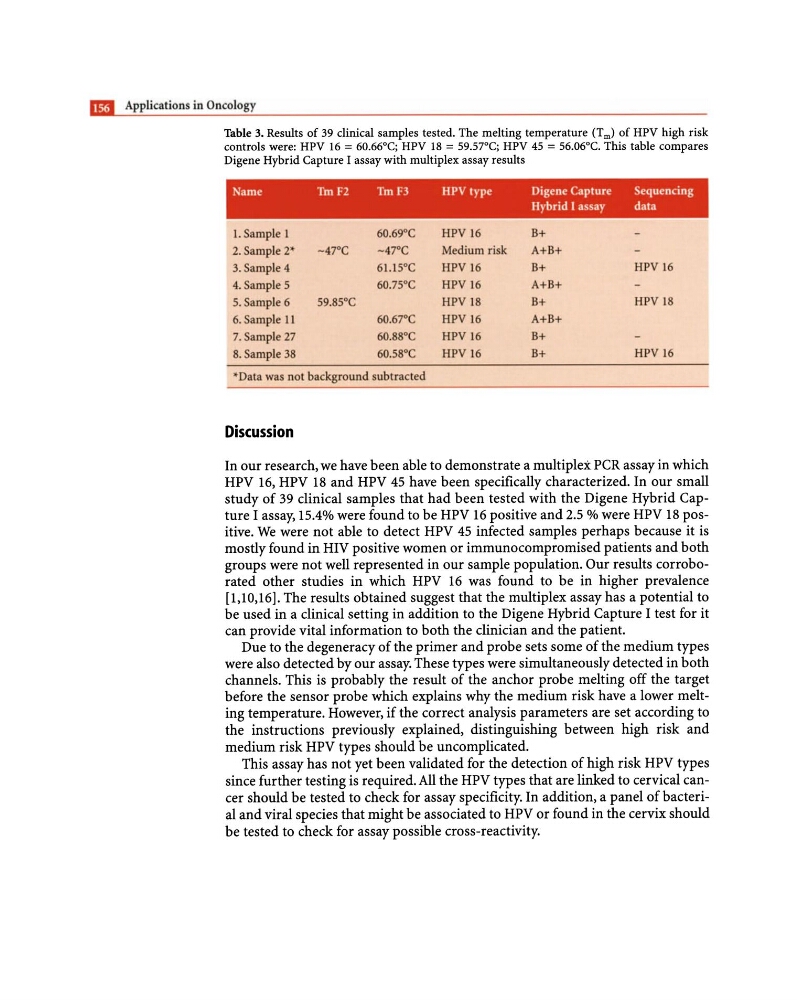
Table 3. Results of 39 clinical samples tested. The melting temperature (T m) of HPV high risk
controls were: HPV 16 = 60.66°C; HPV 18 = 59.57°C; HPV 45 = 56.06°C. This table compares
Digene Hybrid Capture I assay with multiplex assay results
Name
Tm F2
Tm F3
HPV Iype
Digene Capture
Sequencing
Hybrid I assay
data
I. Sample I
60.69°C
HPVI6
B+
2. Sample 2"
-47°C
-47°C
Medium risk
A+B+
3. Sample 4
61.l5°C
HPV 16
B+
HPVI6
4. Sample 5
60.75°C
HPVI6
A+B+
5. Sample 6
59.85°C
HPV 18
B+
HPV18
6. Sample II
60.67°C
HPV 16
A+B+
7. Sample 27
60.88°C
HPV 16
B+
8. Sample 38
60.58°C
HPV 16
B+
HPV 16
"Data was not background subtracted
Discussion
In our research, we have been able to demonstrate a multiplex PCR assay in which
HPV 16, HPV 18 and HPV 45 have been specifically characterized. In our small
study of 39 clinical samples that had been tested with the Digene Hybrid Capture I assay, 15.4% were found to be HPV 16 positive and 2.5 % were HPV 18 positive. We were not able to detect HPV 45 infected samples perhaps because it is
mostly found in HIV positive women or immunocompromised patients and both
groups were not well represented in our sample population. Our results corroborated other studies in which HPV 16 was found to be in higher prevalence
[1,10,16). The results obtained suggest that the multiplex assay has a potential to
be used in a clinical setting in addition to the Digene Hybrid Capture I test for it
can provide vital information to both the clinician and the patient.
Due to the degeneracy of the primer and probe sets some of the medium types
were also detected by our assay. These types were simultaneously detected in both
channels. This is probably the result of the anchor probe melting off the target
before the sensor probe which explains why the medium risk have a lower melting temperature. However, if the correct analysis parameters are set according to
the instructions previously explained, distinguishing between high risk and
medium risk HPV types should be uncomplicated.
This assay has not yet been validated for the detection of high risk HPV types
since further testing is required. All the HPV types that are linked to cervical cancer should be tested to check for assay specificity. In addition, a panel of bacterial and viral species that might be associated to HPV or found in the cervix should
be tested to check for assay possible cross-reactivity.
Table 3. Results of 39 clinical samples tested. The melting temperature (T m) of HPV high risk
controls were: HPV 16 = 60.66°C; HPV 18 = 59.57°C; HPV 45 = 56.06°C. This table compares
Digene Hybrid Capture I assay with multiplex assay results
Name
Tm F2
Tm F3
HPV Iype
Digene Capture
Sequencing
Hybrid I assay
data
I. Sample I
60.69°C
HPVI6
B+
2. Sample 2"
-47°C
-47°C
Medium risk
A+B+
3. Sample 4
61.l5°C
HPV 16
B+
HPVI6
4. Sample 5
60.75°C
HPVI6
A+B+
5. Sample 6
59.85°C
HPV 18
B+
HPV18
6. Sample II
60.67°C
HPV 16
A+B+
7. Sample 27
60.88°C
HPV 16
B+
8. Sample 38
60.58°C
HPV 16
B+
HPV 16
"Data was not background subtracted
Discussion
In our research, we have been able to demonstrate a multiplex PCR assay in which
HPV 16, HPV 18 and HPV 45 have been specifically characterized. In our small
study of 39 clinical samples that had been tested with the Digene Hybrid Capture I assay, 15.4% were found to be HPV 16 positive and 2.5 % were HPV 18 positive. We were not able to detect HPV 45 infected samples perhaps because it is
mostly found in HIV positive women or immunocompromised patients and both
groups were not well represented in our sample population. Our results corroborated other studies in which HPV 16 was found to be in higher prevalence
[1,10,16). The results obtained suggest that the multiplex assay has a potential to
be used in a clinical setting in addition to the Digene Hybrid Capture I test for it
can provide vital information to both the clinician and the patient.
Due to the degeneracy of the primer and probe sets some of the medium types
were also detected by our assay. These types were simultaneously detected in both
channels. This is probably the result of the anchor probe melting off the target
before the sensor probe which explains why the medium risk have a lower melting temperature. However, if the correct analysis parameters are set according to
the instructions previously explained, distinguishing between high risk and
medium risk HPV types should be uncomplicated.
This assay has not yet been validated for the detection of high risk HPV types
since further testing is required. All the HPV types that are linked to cervical cancer should be tested to check for assay specificity. In addition, a panel of bacterial and viral species that might be associated to HPV or found in the cervix should
be tested to check for assay possible cross-reactivity.