

Programmed Cell Death and Its Regulation in C. e/egans
49
iSomatic Tissuei
CENTRAL PATHWAY
egl-l ~
ced-9-lced-4 -ced-3 -Cell Death
7 /
~LillC]
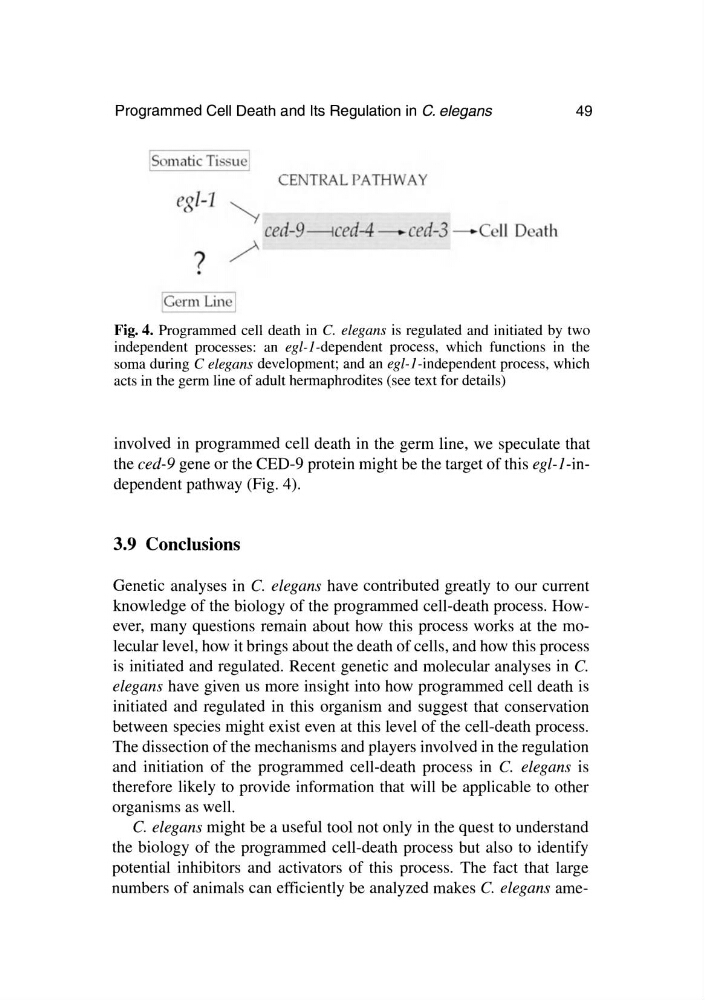
Fig. 4. Programmed cell death in C. elegans is regulated and initiated by two
independent processes: an egl-l-dependent process, which functions in the
soma during C elegans development; and an egl-l-independent process, which
acts in the germ line of adult hermaphrodites (see text for details)
involved in programmed cell death in the germ line, we speculate that
the ced-9 gene or the CED-9 protein might be the target of this egl-l-independent pathway (Fig. 4).
3.9 Conclusions
Genetic analyses in C. elegans have contributed greatly to our current
knowledge of the biology of the programmed cell-death process. However, many questions remain about how this process works at the molecular level, how it brings about the death of cells, and how this process
is initiated and regulated. Recent genetic and molecular analyses in C.
elegans have given us more insight into how programmed cell death is
initiated and regulated in this organism and suggest that conservation
between species might exist even at this level of the cell-death process.
The dissection of the mechanisms and players involved in the regulation
and initiation of the programmed cell-death process in C. elegans is
therefore likely to provide information that will be applicable to other
organisms as well.
C. elegans might be a useful tool not only in the quest to understand
the biology of the programmed cell-death process but also to identify
potential inhibitors and activators of this process. The fact that large
numbers of animals can efficiently be analyzed makes C. elegans ame-
49
iSomatic Tissuei
CENTRAL PATHWAY
egl-l ~
ced-9-lced-4 -ced-3 -Cell Death
7 /
~LillC]
Fig. 4. Programmed cell death in C. elegans is regulated and initiated by two
independent processes: an egl-l-dependent process, which functions in the
soma during C elegans development; and an egl-l-independent process, which
acts in the germ line of adult hermaphrodites (see text for details)
involved in programmed cell death in the germ line, we speculate that
the ced-9 gene or the CED-9 protein might be the target of this egl-l-independent pathway (Fig. 4).
3.9 Conclusions
Genetic analyses in C. elegans have contributed greatly to our current
knowledge of the biology of the programmed cell-death process. However, many questions remain about how this process works at the molecular level, how it brings about the death of cells, and how this process
is initiated and regulated. Recent genetic and molecular analyses in C.
elegans have given us more insight into how programmed cell death is
initiated and regulated in this organism and suggest that conservation
between species might exist even at this level of the cell-death process.
The dissection of the mechanisms and players involved in the regulation
and initiation of the programmed cell-death process in C. elegans is
therefore likely to provide information that will be applicable to other
organisms as well.
C. elegans might be a useful tool not only in the quest to understand
the biology of the programmed cell-death process but also to identify
potential inhibitors and activators of this process. The fact that large
numbers of animals can efficiently be analyzed makes C. elegans ame-