

20
8. Lipids and Essential Fatty Acids in Aquatic Food Webs
187
..
-Ft:
Seawater
Freshwater
. . . . . :g-.~.;
.:;; ..;. t ·
'---_ _ ---'
.;t-.: .... :0:,.
. .!' ... 't .
... --.... .
:: .. :i" . I
-.-.
-... " .
.. ".
::.~' ...
.. . .. : .
• -: :-;_ •• o.
...
10
100
1,000
10,000
Individual weight (g fresh weight)
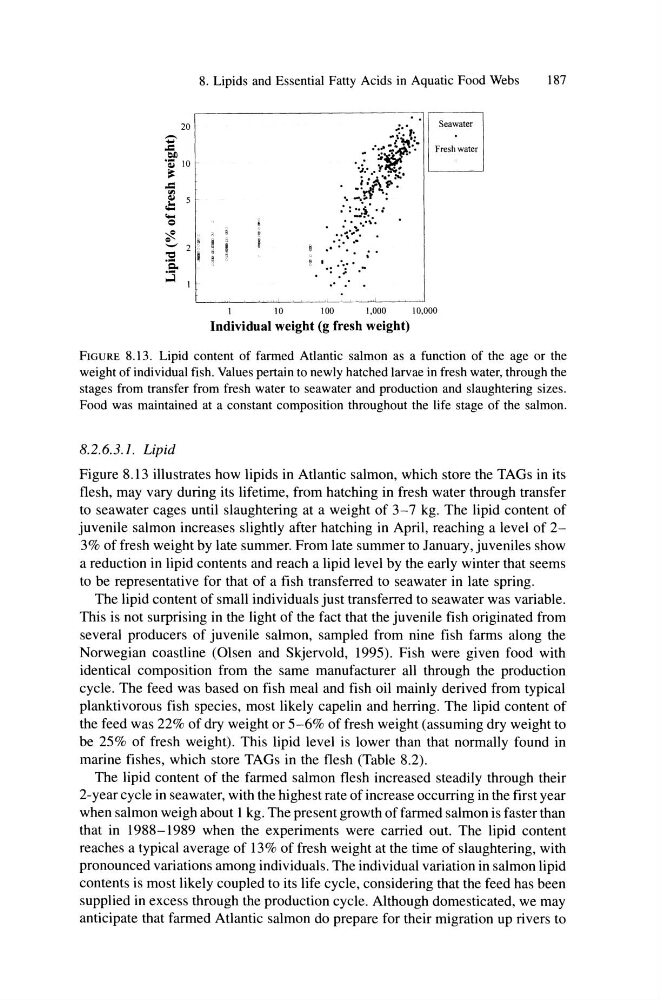
FIGURE 8.13. Lipid content of fanned Atlantic salmon as a function of the age or the
weight of individual fish. Values pertain to newly hatched larvae in fresh water, through the
stages from transfer from fresh water to seawater and production and slaughtering sizes.
Food was maintained at a constant composition throughout the life stage of the salmon.
8.2.6.3.1. Lipid
Figure 8.13 illustrates how lipids in Atlantic salmon, which store the TAGs in its
flesh, may vary during its lifetime, from hatching in fresh water through transfer
to seawater cages until slaughtering at a weight of 3-7 kg. The lipid content of
juvenile salmon increases slightly after hatching in April, reaching a level of 23% of fresh weight by late summer. From late summerto January, juveniles show
a reduction in lipid contents and reach a lipid level by the early winter that seems
to be representative for that of a fish transferred to seawater in late spring.
The lipid content of small individuals just transferred to seawater was variable.
This is not surprising in the light of the fact that the juvenile fish originated from
several producers of juvenile salmon, sampled from nine fish farms along the
Norwegian coastline (Olsen and Skjervold, 1995). Fish were given food with
identical composition from the same manufacturer all through the production
cycle. The feed was based on fish meal and fish oil mainly derived from typical
planktivorous fish species, most likely capelin and herring. The lipid content of
the feed was 22% of dry weight or 5-6% of fresh weight (assuming dry weight to
be 25% of fresh weight). This lipid level is lower than that normally found in
marine fishes, which store TAGs in the flesh (Table 8.2).
The lipid content of the farmed salmon flesh increased steadily through their
2-year cycle in seawater, with the highest rate of increase occurring in the first year
when salmon weigh about 1 kg. The present growth of farmed salmon is faster than
that in 1988-1989 when the experiments were carried out. The lipid content
reaches a typical average of 13% offresh weight at the time of slaughtering, with
pronounced variations among individuals. The individual variation in salmon lipid
contents is most likely coupled to its life cycle, considering that the feed has been
supplied in excess through the production cycle. Although domesticated, we may
anticipate that farmed Atlantic salmon do prepare for their migration up rivers to
8. Lipids and Essential Fatty Acids in Aquatic Food Webs
187
..
-Ft:
Seawater
Freshwater
. . . . . :g-.~.;
.:;; ..;. t ·
'---_ _ ---'
.;t-.: .... :0:,.
. .!' ... 't .
... --.... .
:: .. :i" . I
-.-.
-... " .
.. ".
::.~' ...
.. . .. : .
• -: :-;_ •• o.
...
10
100
1,000
10,000
Individual weight (g fresh weight)
FIGURE 8.13. Lipid content of fanned Atlantic salmon as a function of the age or the
weight of individual fish. Values pertain to newly hatched larvae in fresh water, through the
stages from transfer from fresh water to seawater and production and slaughtering sizes.
Food was maintained at a constant composition throughout the life stage of the salmon.
8.2.6.3.1. Lipid
Figure 8.13 illustrates how lipids in Atlantic salmon, which store the TAGs in its
flesh, may vary during its lifetime, from hatching in fresh water through transfer
to seawater cages until slaughtering at a weight of 3-7 kg. The lipid content of
juvenile salmon increases slightly after hatching in April, reaching a level of 23% of fresh weight by late summer. From late summerto January, juveniles show
a reduction in lipid contents and reach a lipid level by the early winter that seems
to be representative for that of a fish transferred to seawater in late spring.
The lipid content of small individuals just transferred to seawater was variable.
This is not surprising in the light of the fact that the juvenile fish originated from
several producers of juvenile salmon, sampled from nine fish farms along the
Norwegian coastline (Olsen and Skjervold, 1995). Fish were given food with
identical composition from the same manufacturer all through the production
cycle. The feed was based on fish meal and fish oil mainly derived from typical
planktivorous fish species, most likely capelin and herring. The lipid content of
the feed was 22% of dry weight or 5-6% of fresh weight (assuming dry weight to
be 25% of fresh weight). This lipid level is lower than that normally found in
marine fishes, which store TAGs in the flesh (Table 8.2).
The lipid content of the farmed salmon flesh increased steadily through their
2-year cycle in seawater, with the highest rate of increase occurring in the first year
when salmon weigh about 1 kg. The present growth of farmed salmon is faster than
that in 1988-1989 when the experiments were carried out. The lipid content
reaches a typical average of 13% offresh weight at the time of slaughtering, with
pronounced variations among individuals. The individual variation in salmon lipid
contents is most likely coupled to its life cycle, considering that the feed has been
supplied in excess through the production cycle. Although domesticated, we may
anticipate that farmed Atlantic salmon do prepare for their migration up rivers to