

13
completely, thereby reducing the requirement of hemicellulases. Nevertheless,
hemicellulases are a major component of the biomass-hydrolyzing enzymes, since
the pretreatment methods are seldom capable of complete removal of hemicellulose, and there are multitudes of pretreatment regimes that result in intact or near
intact hemicellulose component. Also the understanding of hemicellulases cannot
be regarded as complete and we still have hemicellulose-active enzymes whose role
and mode of action is ambiguous (Tenkanen et al. 2013).
1.2.1.8 Lignin-Degrading Enzymes
Most of the cellulolytic organisms produce oxidoreductases as part of the lignocellulolytic machinery and the main function of these enzymes is considered to be
degradation of lignin (Sweeney and Xu 2012). Lignin degradation is important for
access of cellulases and hemicellulases to the carbohydrate polymers and also in
diminishing the inactivation of these enzymes through nonproductive binding on
lignin. In biofuel production, the major applications of lignin-degrading enzymes
are considered to be delignification and detoxification. Delignification applies to the
pretreatment of biomass to remove lignin, whereas the detoxification is relevant in
the context of post-hydrolysis processing of biomass to remove potential inhibitors
of fermentation (Placido and Capareda 2015). While there are different
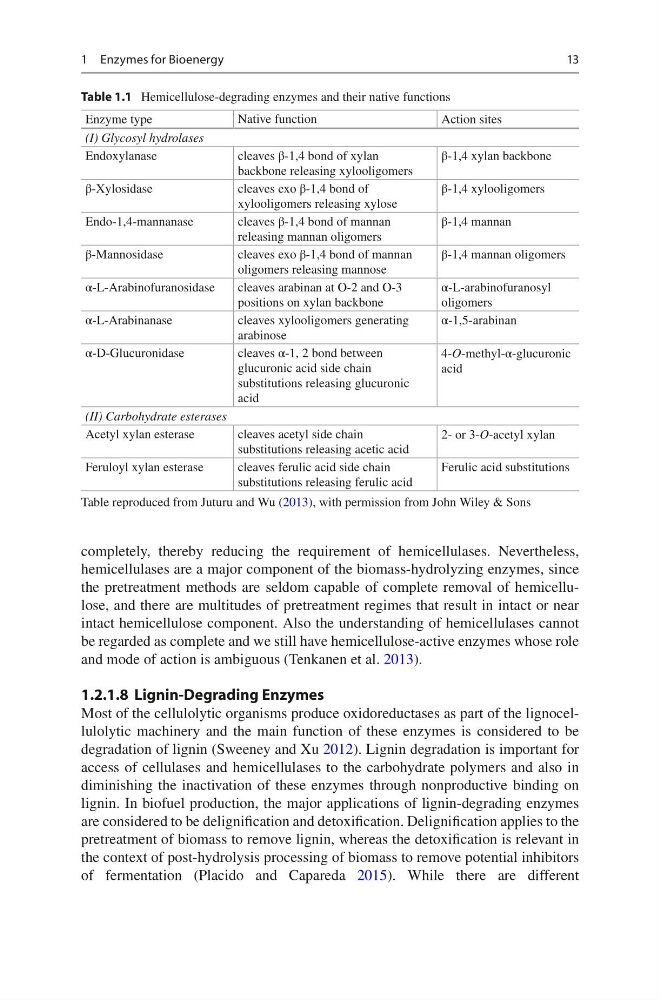
Table 1.1 Hemicellulose-degrading enzymes and their native functions
Enzyme type
Native function
Action sites
(I) Glycosyl hydrolases
Endoxylanase
cleaves β-1,4 bond of xylan
backbone releasing xylooligomers
β-1,4 xylan backbone
β-Xylosidase
cleaves exo β-1,4 bond of
xylooligomers releasing xylose
β-1,4 xylooligomers
Endo-1,4-mannanase
cleaves β-1,4 bond of mannan
releasing mannan oligomers
β-1,4 mannan
β-Mannosidase
cleaves exo β-1,4 bond of mannan
oligomers releasing mannose
β-1,4 mannan oligomers
α-L-Arabinofuranosidase
cleaves arabinan at O-2 and O-3
positions on xylan backbone
α-L-arabinofuranosyl
oligomers
α-L-Arabinanase
cleaves xylooligomers generating
arabinose
α-1,5-arabinan
α-D-Glucuronidase
cleaves α-1, 2 bond between
glucuronic acid side chain
substitutions releasing glucuronic
acid
4-O-methyl-α-glucuronic
acid
(II) Carbohydrate esterases
Acetyl xylan esterase
cleaves acetyl side chain
substitutions releasing acetic acid
2- or 3-O-acetyl xylan
Feruloyl xylan esterase
cleaves ferulic acid side chain
substitutions releasing ferulic acid
Ferulic acid substitutions
Table reproduced from Juturu and Wu (2013), with permission from John Wiley & Sons
1 Enzymes for Bioenergy
completely, thereby reducing the requirement of hemicellulases. Nevertheless,
hemicellulases are a major component of the biomass-hydrolyzing enzymes, since
the pretreatment methods are seldom capable of complete removal of hemicellulose, and there are multitudes of pretreatment regimes that result in intact or near
intact hemicellulose component. Also the understanding of hemicellulases cannot
be regarded as complete and we still have hemicellulose-active enzymes whose role
and mode of action is ambiguous (Tenkanen et al. 2013).
1.2.1.8 Lignin-Degrading Enzymes
Most of the cellulolytic organisms produce oxidoreductases as part of the lignocellulolytic machinery and the main function of these enzymes is considered to be
degradation of lignin (Sweeney and Xu 2012). Lignin degradation is important for
access of cellulases and hemicellulases to the carbohydrate polymers and also in
diminishing the inactivation of these enzymes through nonproductive binding on
lignin. In biofuel production, the major applications of lignin-degrading enzymes
are considered to be delignification and detoxification. Delignification applies to the
pretreatment of biomass to remove lignin, whereas the detoxification is relevant in
the context of post-hydrolysis processing of biomass to remove potential inhibitors
of fermentation (Placido and Capareda 2015). While there are different
Table 1.1 Hemicellulose-degrading enzymes and their native functions
Enzyme type
Native function
Action sites
(I) Glycosyl hydrolases
Endoxylanase
cleaves β-1,4 bond of xylan
backbone releasing xylooligomers
β-1,4 xylan backbone
β-Xylosidase
cleaves exo β-1,4 bond of
xylooligomers releasing xylose
β-1,4 xylooligomers
Endo-1,4-mannanase
cleaves β-1,4 bond of mannan
releasing mannan oligomers
β-1,4 mannan
β-Mannosidase
cleaves exo β-1,4 bond of mannan
oligomers releasing mannose
β-1,4 mannan oligomers
α-L-Arabinofuranosidase
cleaves arabinan at O-2 and O-3
positions on xylan backbone
α-L-arabinofuranosyl
oligomers
α-L-Arabinanase
cleaves xylooligomers generating
arabinose
α-1,5-arabinan
α-D-Glucuronidase
cleaves α-1, 2 bond between
glucuronic acid side chain
substitutions releasing glucuronic
acid
4-O-methyl-α-glucuronic
acid
(II) Carbohydrate esterases
Acetyl xylan esterase
cleaves acetyl side chain
substitutions releasing acetic acid
2- or 3-O-acetyl xylan
Feruloyl xylan esterase
cleaves ferulic acid side chain
substitutions releasing ferulic acid
Ferulic acid substitutions
Table reproduced from Juturu and Wu (2013), with permission from John Wiley & Sons
1 Enzymes for Bioenergy