

Alpha [40]. Addressing this concern is likely to require innovative research on
separation processes that require a body force but will function independently
of the gravitational vector, yet possibly be enhanced by gravitational unloading.
Continuous collection and processing of blood samples from animals and
crew members is best done by analyzing samples for cell types when the
samples are fresh. Methods available for separating cells for characterization
are sedimentation, flow cytometry, electrophoresis, differential adsorption, and
magnetic separation [41]. Sedimentation can provide only a binary separation
unless elutriation or a density gradient is used. Elutriation is complicated and
requires fraction collecting capability. Density gradients are difficult to form in
low gravity and on a centrifuge while it is operating at moderate speed for cell
separation, and, in any case, differential sedimentation would be a multistep
process. Flow sorting produces small sample sizes and requires unnecessarily
complex and expensive equipment ($200,000 on the ground). Electrophoresis,
like sedimentation, separates cells on the basis of an intrinsic physical property.
Adsorption and magnetic separations are usually based on affinity ligands
immobilized to adsorbents in the former case and magnetic microspheres in
the latter.
It is easy to argue that magnetic cell separation methods are the easiest to implement in low gravity, and that they can be made quantitative; that is, cells with
low amounts of microspheres bound by ligand can be separated from cells with
high amounts of microspheres bound by ligand.
2.1.2
Multistage Magnetic Method
Magnetic field gradients can be set up as shown in Fig. 2, but many configurations of magnetic poles can be used to create the gradient; for example, N
and S poles could be placed on opposite sides of the upper cavity, and a metal
hairpin could hang into the cavity to create a gradient around the hairpin [38].
Additional configurations are considered below.
The development of user-friendly devices that are capable of separating
particles according to quantity of ligand on their surfaces appears to be the area
of greatest need in improving magnetically-assisted separation devices. The
148
K.S.M.S. Raghavarao et al.
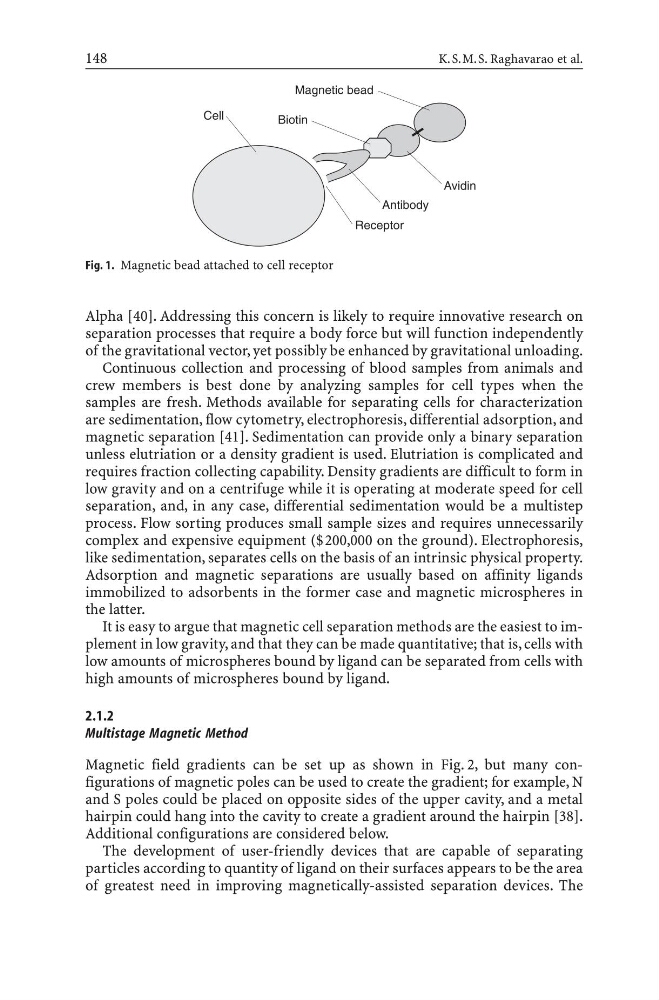
Fig. 1. Magnetic bead attached to cell receptor
separation processes that require a body force but will function independently
of the gravitational vector, yet possibly be enhanced by gravitational unloading.
Continuous collection and processing of blood samples from animals and
crew members is best done by analyzing samples for cell types when the
samples are fresh. Methods available for separating cells for characterization
are sedimentation, flow cytometry, electrophoresis, differential adsorption, and
magnetic separation [41]. Sedimentation can provide only a binary separation
unless elutriation or a density gradient is used. Elutriation is complicated and
requires fraction collecting capability. Density gradients are difficult to form in
low gravity and on a centrifuge while it is operating at moderate speed for cell
separation, and, in any case, differential sedimentation would be a multistep
process. Flow sorting produces small sample sizes and requires unnecessarily
complex and expensive equipment ($200,000 on the ground). Electrophoresis,
like sedimentation, separates cells on the basis of an intrinsic physical property.
Adsorption and magnetic separations are usually based on affinity ligands
immobilized to adsorbents in the former case and magnetic microspheres in
the latter.
It is easy to argue that magnetic cell separation methods are the easiest to implement in low gravity, and that they can be made quantitative; that is, cells with
low amounts of microspheres bound by ligand can be separated from cells with
high amounts of microspheres bound by ligand.
2.1.2
Multistage Magnetic Method
Magnetic field gradients can be set up as shown in Fig. 2, but many configurations of magnetic poles can be used to create the gradient; for example, N
and S poles could be placed on opposite sides of the upper cavity, and a metal
hairpin could hang into the cavity to create a gradient around the hairpin [38].
Additional configurations are considered below.
The development of user-friendly devices that are capable of separating
particles according to quantity of ligand on their surfaces appears to be the area
of greatest need in improving magnetically-assisted separation devices. The
148
K.S.M.S. Raghavarao et al.
Fig. 1. Magnetic bead attached to cell receptor