

have been found experimentally [139]. This axial temperature gradient means
that the water carrying capacity of the air increases as it travels up the bed.
Therefore, even though saturated air is typically used to aerate packed bed
bioreactors, it is impossible to prevent evaporation from occurring in this
design [140]. Despite the fact that this evaporation contributes significantly to
heat removal, being responsible for 65–78% of overall heat removal, it is
undesirable due to the difficulty of replenishing water evenly within a packed
bed [140, 141]. In contrast, in packed beds below 15 cm diameter and in
the Zymotis bioreactor there is the extra heat removal mechanism of conduction normal to the direction of the air flow. As described below, this reduces
axial temperature gradients and therefore reduces the amount of evaporation
which occurs.
Biochemical Engineering Aspects of Solid State Bioprocessing
107
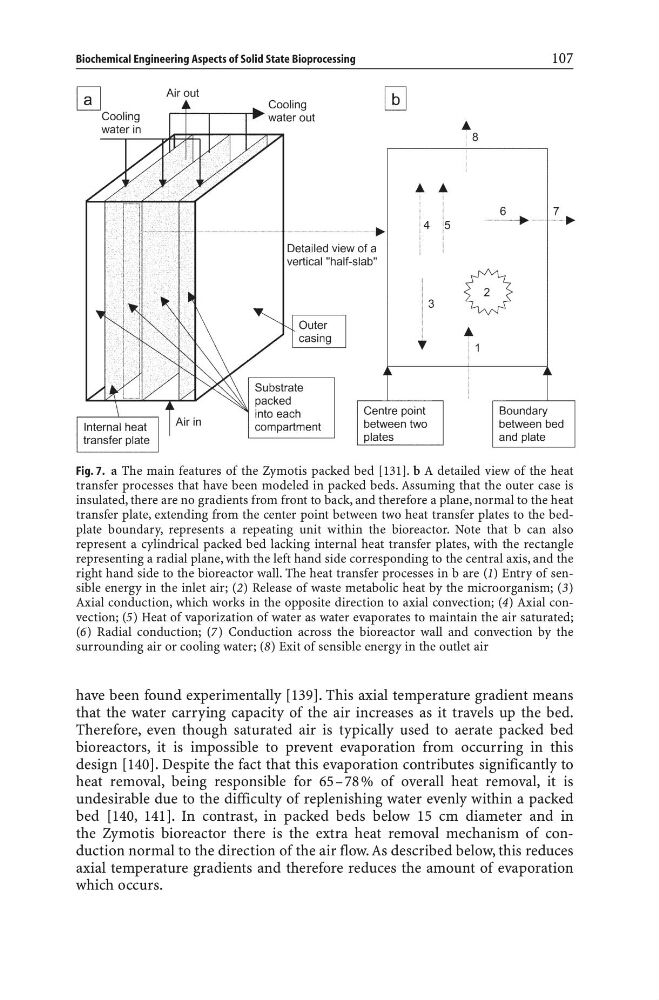
Fig. 7. a The main features of the Zymotis packed bed [131]. b A detailed view of the heat
transfer processes that have been modeled in packed beds. Assuming that the outer case is
insulated, there are no gradients from front to back, and therefore a plane, normal to the heat
transfer plate, extending from the center point between two heat transfer plates to the bedplate boundary, represents a repeating unit within the bioreactor. Note that b can also
represent a cylindrical packed bed lacking internal heat transfer plates, with the rectangle
representing a radial plane, with the left hand side corresponding to the central axis, and the
right hand side to the bioreactor wall. The heat transfer processes in b are (1) Entry of sensible energy in the inlet air; (2) Release of waste metabolic heat by the microorganism; (3)
Axial conduction, which works in the opposite direction to axial convection; (4) Axial convection; (5) Heat of vaporization of water as water evaporates to maintain the air saturated;
(6) Radial conduction; (7) Conduction across the bioreactor wall and convection by the
surrounding air or cooling water; (8) Exit of sensible energy in the outlet air
that the water carrying capacity of the air increases as it travels up the bed.
Therefore, even though saturated air is typically used to aerate packed bed
bioreactors, it is impossible to prevent evaporation from occurring in this
design [140]. Despite the fact that this evaporation contributes significantly to
heat removal, being responsible for 65–78% of overall heat removal, it is
undesirable due to the difficulty of replenishing water evenly within a packed
bed [140, 141]. In contrast, in packed beds below 15 cm diameter and in
the Zymotis bioreactor there is the extra heat removal mechanism of conduction normal to the direction of the air flow. As described below, this reduces
axial temperature gradients and therefore reduces the amount of evaporation
which occurs.
Biochemical Engineering Aspects of Solid State Bioprocessing
107
Fig. 7. a The main features of the Zymotis packed bed [131]. b A detailed view of the heat
transfer processes that have been modeled in packed beds. Assuming that the outer case is
insulated, there are no gradients from front to back, and therefore a plane, normal to the heat
transfer plate, extending from the center point between two heat transfer plates to the bedplate boundary, represents a repeating unit within the bioreactor. Note that b can also
represent a cylindrical packed bed lacking internal heat transfer plates, with the rectangle
representing a radial plane, with the left hand side corresponding to the central axis, and the
right hand side to the bioreactor wall. The heat transfer processes in b are (1) Entry of sensible energy in the inlet air; (2) Release of waste metabolic heat by the microorganism; (3)
Axial conduction, which works in the opposite direction to axial convection; (4) Axial convection; (5) Heat of vaporization of water as water evaporates to maintain the air saturated;
(6) Radial conduction; (7) Conduction across the bioreactor wall and convection by the
surrounding air or cooling water; (8) Exit of sensible energy in the outlet air