

334
P. M. RUDD et al.
T-c 11
lnf ct dell
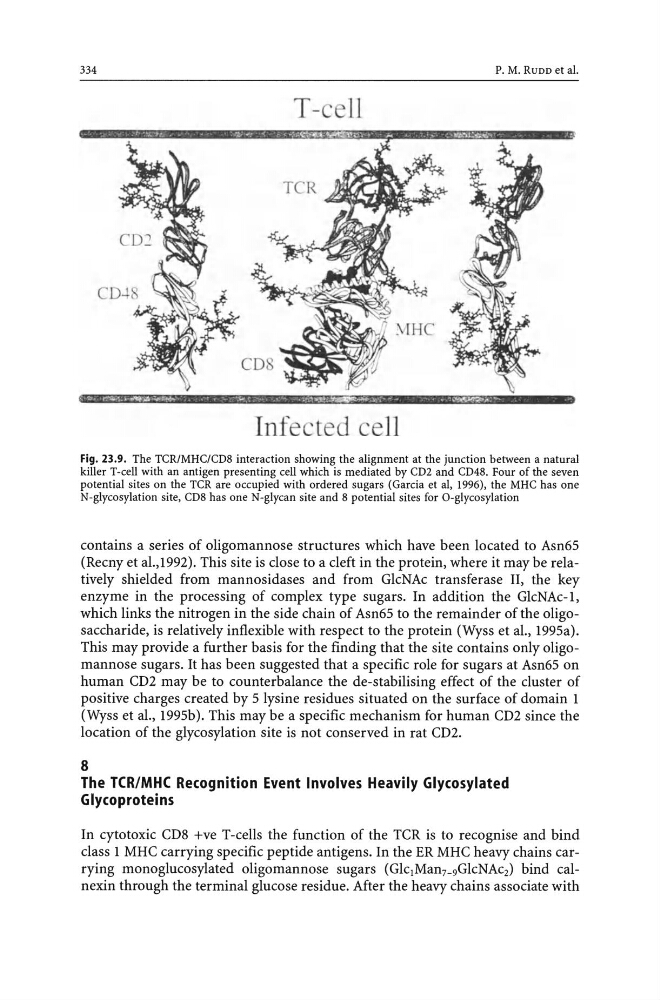
Fig. 23.9. The TCR/MHCICDS interaction showing the alignment at the junction between a natural
killer T-cell with an antigen presenting cell which is mediated by CD2 and CD4S. Four of the seven
potential sites on the TCR are occupied with ordered sugars (Garcia et ai, 1996), the MHC has one
N-glycosylation site, CDS has one N-glycan site and S potential sites for O-glycosylation
contains a series of oligomannose structures which have been located to Asn65
(Recny et al.,1992). This site is close to a cleft in the protein, where it may be relatively shielded from mannosidases and from GlcNAc transferase II, the key
enzyme in the processing of complex type sugars. In addition the GlcNAc-l,
which links the nitrogen in the side chain of Asn65 to the remainder of the oligosaccharide, is relatively inflexible with respect to the protein (Wyss et al., 1995a).
This may provide a further basis for the finding that the site contains only oligomannose sugars. It has been suggested that a specific role for sugars at Asn65 on
human CD2 may be to counterbalance the de-stabilising effect of the cluster of
positive charges created by 5 lysine residues situated on the surface of domain 1
(Wyss et al., 1995b). This may be a specific mechanism for human CD2 since the
location of the glycosylation site is not conserved in rat CD2.
8
The TCR/MHC Recognition Event Involves Heavily Glycosylated
Glycoproteins
In cytotoxic CD8 +ve T-cells the function of the TCR is to recognise and bind
class 1 MHC carrying specific peptide antigens. In the ER MHC heavy chains carrying monoglucosylated oligomannose sugars (GlcjMan7_9GlcNAc2) bind calnexin through the terminal glucose residue. After the heavy chains associate with
P. M. RUDD et al.
T-c 11
lnf ct dell
Fig. 23.9. The TCR/MHCICDS interaction showing the alignment at the junction between a natural
killer T-cell with an antigen presenting cell which is mediated by CD2 and CD4S. Four of the seven
potential sites on the TCR are occupied with ordered sugars (Garcia et ai, 1996), the MHC has one
N-glycosylation site, CDS has one N-glycan site and S potential sites for O-glycosylation
contains a series of oligomannose structures which have been located to Asn65
(Recny et al.,1992). This site is close to a cleft in the protein, where it may be relatively shielded from mannosidases and from GlcNAc transferase II, the key
enzyme in the processing of complex type sugars. In addition the GlcNAc-l,
which links the nitrogen in the side chain of Asn65 to the remainder of the oligosaccharide, is relatively inflexible with respect to the protein (Wyss et al., 1995a).
This may provide a further basis for the finding that the site contains only oligomannose sugars. It has been suggested that a specific role for sugars at Asn65 on
human CD2 may be to counterbalance the de-stabilising effect of the cluster of
positive charges created by 5 lysine residues situated on the surface of domain 1
(Wyss et al., 1995b). This may be a specific mechanism for human CD2 since the
location of the glycosylation site is not conserved in rat CD2.
8
The TCR/MHC Recognition Event Involves Heavily Glycosylated
Glycoproteins
In cytotoxic CD8 +ve T-cells the function of the TCR is to recognise and bind
class 1 MHC carrying specific peptide antigens. In the ER MHC heavy chains carrying monoglucosylated oligomannose sugars (GlcjMan7_9GlcNAc2) bind calnexin through the terminal glucose residue. After the heavy chains associate with