

optical purity because the cyanohydrin product is spontaneously racemized as it is
in equilibrium with the corresponding aldehyde and hydrocyanic acid at values
above pH ~ 4 (Scheme 2.65). In the absence of water, however, the cyanohydrins
are stable and can be isolated in high optical and chemical yields (Scheme 3.15)
[25, 236]. In this manner, both enantiomers are accessible.
The kinetic resolution of cyanohydrins via enantioselective acylation may be
converted into a dynamic process by making use of the chemical instability of
cyanohydrins (Scheme 3.15) [237]. Thus, racemic cyanohydrins were generated
from an aldehyde and acetone cyanohydrin (as a relatively safe source of hydrogen
cyanide) under catalysis by an anion exchange resin. The latter also served as
catalytic base for the in-situ racemization. Enantioselective acylation using PSL
and i-propenyl acetate led to the exclusive formation of the corresponding (S)cyanohydrin acetates in 47–91% optical purity.
An α-acetoxysulfide shown in Scheme 3.16 was used as central chiral building
block for the synthesis of Lamivudine, a drug candidate for the treatment of HIV
and HBV infections. Due to the different toxicities of the two enantiomers, an
enantioselective route was required. Furthermore, applicability to large-scale synthesis and absence of any ‘unwanted’ enantiomers were important issues. The
solution was found by using an approach which is closely related to the dynamic
resolution of cyanohydrins, i.e., a lipase-catalyzed enantioselective esterification
employing vinyl acetate as acyl donor [238]. Dynamic resolution was attempted by
making use of the inherent instability of the racemic hemithioacetal substrate,
which is in equilibrium with the corresponding aldehyde and thiol. Initially, the
Pseudomonas sp. lipase catalyzed acyl transfer reaction spontaneously stopped at
50% conversion, indicating an insufficient in-situ racemization of the substrate. The
H
H
M
O
H
R 1
OH
Nu
R
1
OH
Nu
R
1
O
R 2
R
1
OH
R
2
R
1
OH
R
2
R 1
H-Nu
OR
2
NHR
2 SR
2
OC
CO
OC
CO
H
Ru
Ru
Ph
Ph
Ph
Ph
O
H
Ph
Ph
Ph
O
Ph
OC
CO
X
Ru
Ph
Ph
Ph
R
Ph
+
+ M
+ M
[- 2H]
[+ 2H]
Racemisation via transition-metal catalysed hydrogen-transfer
Racemisation via elimination-addition
+
M = Transition metal complex
C≡N
1
st Generation (Shvo) catalyst
2
nd Generation catalysts
Activation:
R = Ph, i-Pr-NH
X = Cl
X = O-t-Bu
KCl
t-BuOK
Nu
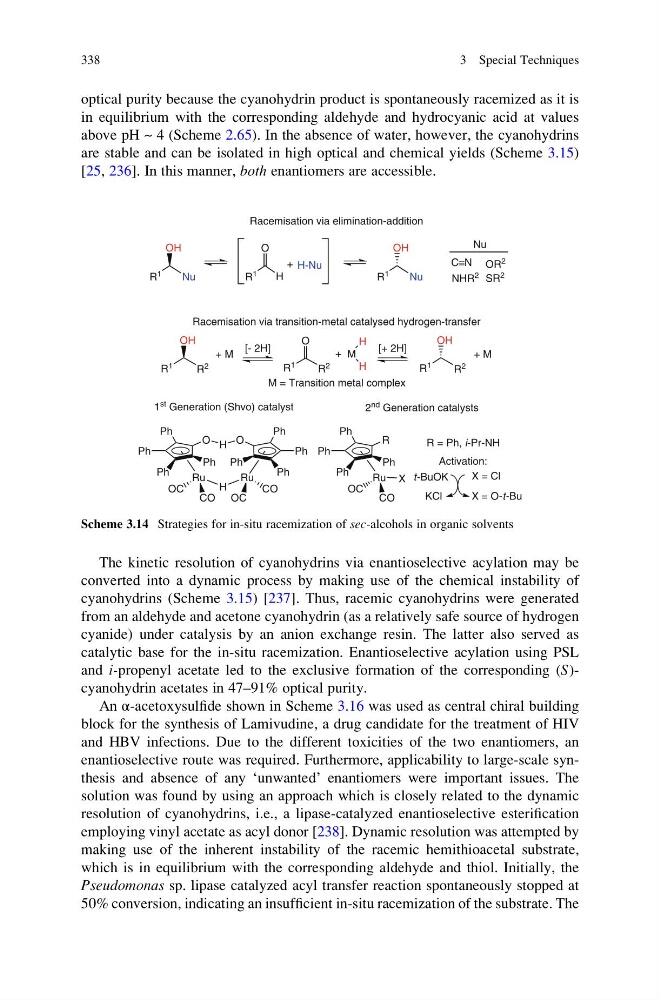
Scheme 3.14 Strategies for in-situ racemization of sec-alcohols in organic solvents
338
3 Special Techniques
in equilibrium with the corresponding aldehyde and hydrocyanic acid at values
above pH ~ 4 (Scheme 2.65). In the absence of water, however, the cyanohydrins
are stable and can be isolated in high optical and chemical yields (Scheme 3.15)
[25, 236]. In this manner, both enantiomers are accessible.
The kinetic resolution of cyanohydrins via enantioselective acylation may be
converted into a dynamic process by making use of the chemical instability of
cyanohydrins (Scheme 3.15) [237]. Thus, racemic cyanohydrins were generated
from an aldehyde and acetone cyanohydrin (as a relatively safe source of hydrogen
cyanide) under catalysis by an anion exchange resin. The latter also served as
catalytic base for the in-situ racemization. Enantioselective acylation using PSL
and i-propenyl acetate led to the exclusive formation of the corresponding (S)cyanohydrin acetates in 47–91% optical purity.
An α-acetoxysulfide shown in Scheme 3.16 was used as central chiral building
block for the synthesis of Lamivudine, a drug candidate for the treatment of HIV
and HBV infections. Due to the different toxicities of the two enantiomers, an
enantioselective route was required. Furthermore, applicability to large-scale synthesis and absence of any ‘unwanted’ enantiomers were important issues. The
solution was found by using an approach which is closely related to the dynamic
resolution of cyanohydrins, i.e., a lipase-catalyzed enantioselective esterification
employing vinyl acetate as acyl donor [238]. Dynamic resolution was attempted by
making use of the inherent instability of the racemic hemithioacetal substrate,
which is in equilibrium with the corresponding aldehyde and thiol. Initially, the
Pseudomonas sp. lipase catalyzed acyl transfer reaction spontaneously stopped at
50% conversion, indicating an insufficient in-situ racemization of the substrate. The
H
H
M
O
H
R 1
OH
Nu
R
1
OH
Nu
R
1
O
R 2
R
1
OH
R
2
R
1
OH
R
2
R 1
H-Nu
OR
2
NHR
2 SR
2
OC
CO
OC
CO
H
Ru
Ru
Ph
Ph
Ph
Ph
O
H
Ph
Ph
Ph
O
Ph
OC
CO
X
Ru
Ph
Ph
Ph
R
Ph
+
+ M
+ M
[- 2H]
[+ 2H]
Racemisation via transition-metal catalysed hydrogen-transfer
Racemisation via elimination-addition
+
M = Transition metal complex
C≡N
1
st Generation (Shvo) catalyst
2
nd Generation catalysts
Activation:
R = Ph, i-Pr-NH
X = Cl
X = O-t-Bu
KCl
t-BuOK
Nu
Scheme 3.14 Strategies for in-situ racemization of sec-alcohols in organic solvents
338
3 Special Techniques