

YADH and HLADH are less useful for the asymmetric reduction of openchain ketones, but this gap is efficiently covered by a range of alcohol
dehydrogenases from mesophilic bacteria, such as Rhodococcus (ADH-A)
and Lactobacillus (LBADH, LKADH), and thermophilic Thermoanaerobacter
[886] and Thermoanaerobium (TBADH) strains (Scheme 2.116) [311, 887–890].
Some of these enzymes are remarkably thermostable (up to 85
C) and can
tolerate the presence of organic solvents such as isopropanol, which serves
as hydrogen-donor for NADP-recycling in a coupled-substrate approach
[891–893].
H
H
O
O
OH
H
H
O
O
H
H
O
OH
O
H
H
O
O
OH
O
e.e. >98%
e.e. >98%
e.e. >98%
HLADH
NADH-recycling
HLADH
NADH-recycling
HLADH
NADH-recycling
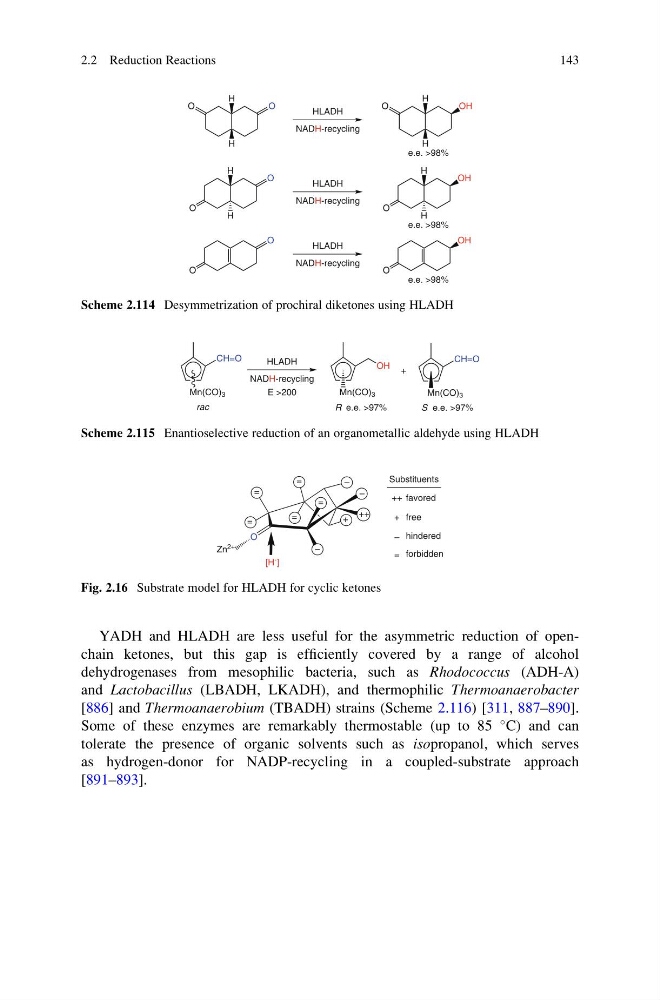
Scheme 2.114 Desymmetrization of prochiral diketones using HLADH
Mn(CO) 3
CH=O
Mn(CO) 3
CH=O
Mn(CO) 3
OH
rac
HLADH
NADH-recycling
+
R e.e. >97%
S e.e. >97%
E >200
Scheme 2.115 Enantioselective reduction of an organometallic aldehyde using HLADH
O
=
=
=
=
–
–
=
–
++
+
–
++
+
=
Substituents
forbidden
hindered
free
favored
Zn
2+
[H
- ]
Fig. 2.16 Substrate model for HLADH for cyclic ketones
2.2 Reduction Reactions
143
dehydrogenases from mesophilic bacteria, such as Rhodococcus (ADH-A)
and Lactobacillus (LBADH, LKADH), and thermophilic Thermoanaerobacter
[886] and Thermoanaerobium (TBADH) strains (Scheme 2.116) [311, 887–890].
Some of these enzymes are remarkably thermostable (up to 85
C) and can
tolerate the presence of organic solvents such as isopropanol, which serves
as hydrogen-donor for NADP-recycling in a coupled-substrate approach
[891–893].
H
H
O
O
OH
H
H
O
O
H
H
O
OH
O
H
H
O
O
OH
O
e.e. >98%
e.e. >98%
e.e. >98%
HLADH
NADH-recycling
HLADH
NADH-recycling
HLADH
NADH-recycling
Scheme 2.114 Desymmetrization of prochiral diketones using HLADH
Mn(CO) 3
CH=O
Mn(CO) 3
CH=O
Mn(CO) 3
OH
rac
HLADH
NADH-recycling
+
R e.e. >97%
S e.e. >97%
E >200
Scheme 2.115 Enantioselective reduction of an organometallic aldehyde using HLADH
O
=
=
=
=
–
–
=
–
++
+
–
++
+
=
Substituents
forbidden
hindered
free
favored
Zn
2+
[H
- ]
Fig. 2.16 Substrate model for HLADH for cyclic ketones
2.2 Reduction Reactions
143