

68
P.-E. E. BERGNER
Steady state
o Time of sojourn e[O, t 1)
o
Q Time of sojourn> t2
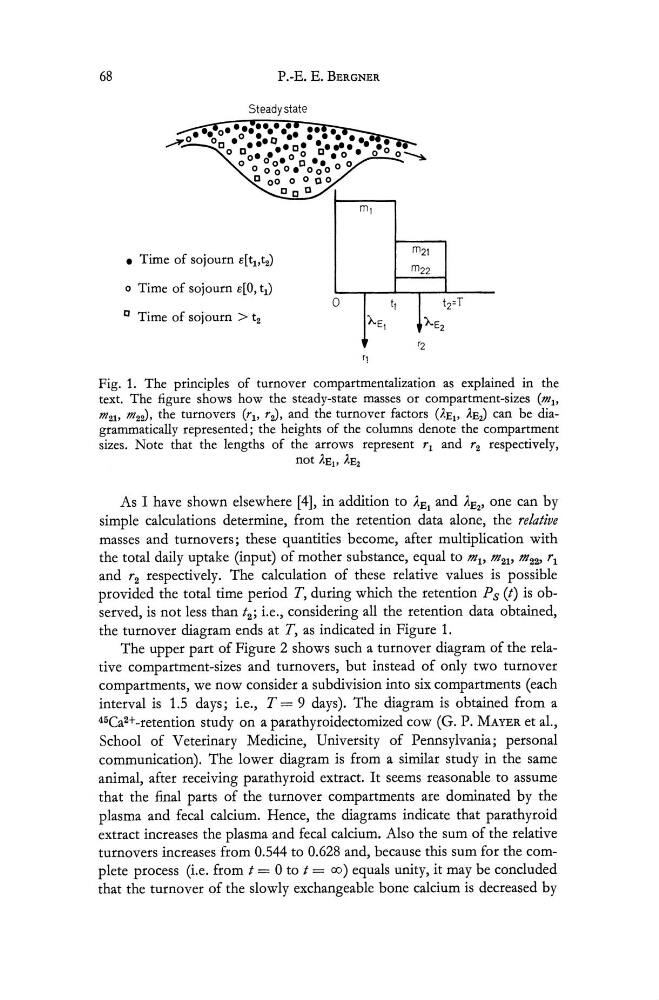
Fig. 1. The principles of turnover compartmentalization as explained in the
text. The figure shows how the steady-state masses or compartment-sizes (ml'
m21, m22), the turnovers ('1> '2), and the turnover factors (AE!, AE2) can be diagrammatically represented; the heights of the columns denote the compartment
sizes. Note that the lengths of the arrows represent ' 1 and ' 2 respectively,
not AE!, AE2
As I have shown elsewhere [4], in addition to .I.E! and AE2' one can by
simple calculations determine, from the retention data alone, the relative
masses and turnovers; these quantities become, after multiplication with
the total daily uptake (input) of mother substance, equal to m 1 , m 21 , m 22 , r 1
and r 2 respectively. The calculation of these relative values is possible
provided the total time period T, during which the retention P s (t) is observed, is not less than t 2 ; i.e., considering all the retention data obtained,
the turnover diagram ends at T, as indicated in Figure 1.
The upper part of Figure 2 shows such a turnover diagram of the relative compartment-sizes and turnovers, but instead of only two turnover
compartments, we now consider a subdivision into six compartments (each
interval is 1.5 days; i.e., T = 9 days). The diagram is obtained from a
45Ca 2 +-retention study on a parathyroidectomized cow (G. P. MAYER et aI.,
School of Veterinary Medicine, University of Pennsylvania; personal
communication). The lower diagram is from a similar study in the same
animal, after receiving parathyroid extract. It seems reasonable to assume
that the final parts of the turnover compartments are dominated by the
plasma and fecal calcium. Hence, the diagrams indicate that parathyroid
extract increases the plasma and fecal calcium. Also the sum of the relative
turnovers increases from 0.544 to 0.628 and, because this sum for the complete process (i.e. from t = 0 to t = (0) equals unity, it may be concluded
that the turnover of the slowly exchangeable bone calcium is decreased by
P.-E. E. BERGNER
Steady state
o Time of sojourn e[O, t 1)
o
Q Time of sojourn> t2
Fig. 1. The principles of turnover compartmentalization as explained in the
text. The figure shows how the steady-state masses or compartment-sizes (ml'
m21, m22), the turnovers ('1> '2), and the turnover factors (AE!, AE2) can be diagrammatically represented; the heights of the columns denote the compartment
sizes. Note that the lengths of the arrows represent ' 1 and ' 2 respectively,
not AE!, AE2
As I have shown elsewhere [4], in addition to .I.E! and AE2' one can by
simple calculations determine, from the retention data alone, the relative
masses and turnovers; these quantities become, after multiplication with
the total daily uptake (input) of mother substance, equal to m 1 , m 21 , m 22 , r 1
and r 2 respectively. The calculation of these relative values is possible
provided the total time period T, during which the retention P s (t) is observed, is not less than t 2 ; i.e., considering all the retention data obtained,
the turnover diagram ends at T, as indicated in Figure 1.
The upper part of Figure 2 shows such a turnover diagram of the relative compartment-sizes and turnovers, but instead of only two turnover
compartments, we now consider a subdivision into six compartments (each
interval is 1.5 days; i.e., T = 9 days). The diagram is obtained from a
45Ca 2 +-retention study on a parathyroidectomized cow (G. P. MAYER et aI.,
School of Veterinary Medicine, University of Pennsylvania; personal
communication). The lower diagram is from a similar study in the same
animal, after receiving parathyroid extract. It seems reasonable to assume
that the final parts of the turnover compartments are dominated by the
plasma and fecal calcium. Hence, the diagrams indicate that parathyroid
extract increases the plasma and fecal calcium. Also the sum of the relative
turnovers increases from 0.544 to 0.628 and, because this sum for the complete process (i.e. from t = 0 to t = (0) equals unity, it may be concluded
that the turnover of the slowly exchangeable bone calcium is decreased by