

250
R. FISCHER
more data can be experienced within a chronological time unit. Remember
that during the psilocybin-LSD-mescalin produced excitatory states,
sensory acuity is increased, i.e. one needs less sensory in-formation (see
Table 1). These findings [10, 12, 18], are in line with the observations of an
increase in neural firing in sensory pathways independent of sensed inputs
during the psilocybin or LSD-produced excitation [30, 40]. The shortening
a)
b)
c)
2
.'
2
3
.' \
3
....
\
4
&:..
\
-v:::.:
\
5
t!....
m
!.: .'
.
\
6
~.... invariant \
I .
_
\
8
.~ . .'
stimulus
\
fonfiguration \ \
10
"object"
/ 9
3
2
3
4
5 .. _
6 0> . . . -. . . . . . . __ . . . . . . . m
1) ",
.............
8
10
~.....
....... ...... - .......
<;I,;:;....
I.sc.
- __
0"
2
~ 3
3
a.tlo\l ... ...... /
\0\(1' ......
/
.. \~:-:........
/m
I.s.c
/
10
8
10
8
10
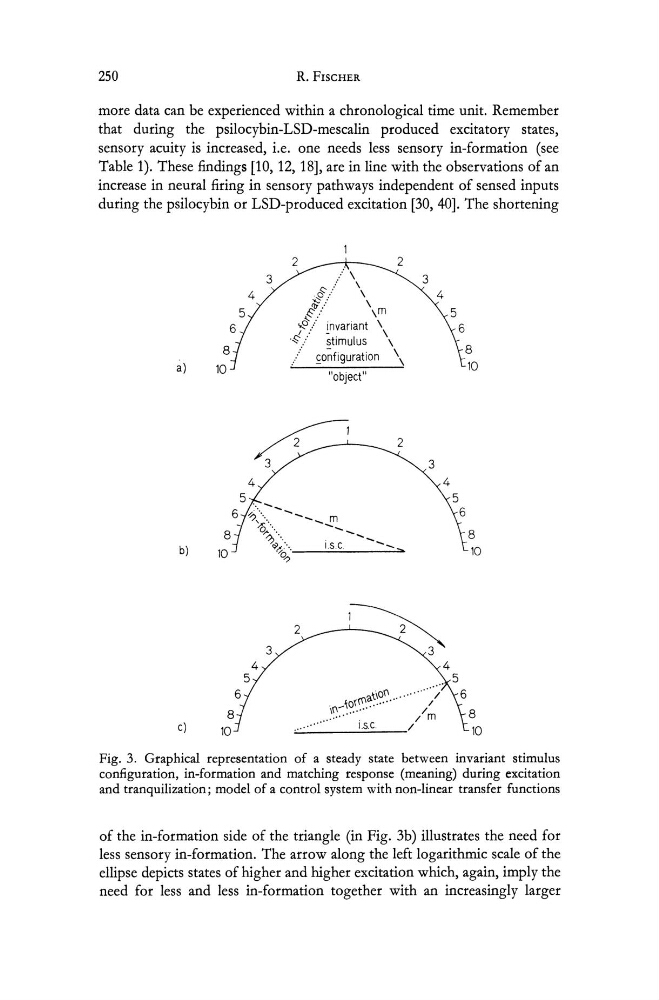
Fig. 3. Graphical representation of a steady state between invariant stimulus
configuration, in-formation and matching response (meaning) during excitation
and tranquilization; model of a control system with non-linear transfer functions
of the in-formation side of the triangle (in Fig. 3b) illustrates the need for
less sensory in-formation. The arrow along the left logarithmic scale of the
ellipse depicts states of higher and higher excitation which, again, imply the
need for less and less in-formation together with an increasingly larger
R. FISCHER
more data can be experienced within a chronological time unit. Remember
that during the psilocybin-LSD-mescalin produced excitatory states,
sensory acuity is increased, i.e. one needs less sensory in-formation (see
Table 1). These findings [10, 12, 18], are in line with the observations of an
increase in neural firing in sensory pathways independent of sensed inputs
during the psilocybin or LSD-produced excitation [30, 40]. The shortening
a)
b)
c)
2
.'
2
3
.' \
3
....
\
4
&:..
\
-v:::.:
\
5
t!....
m
!.: .'
.
\
6
~.... invariant \
I .
_
\
8
.~ . .'
stimulus
\
fonfiguration \ \
10
"object"
/ 9
3
2
3
4
5 .. _
6 0> . . . -. . . . . . . __ . . . . . . . m
1) ",
.............
8
10
~.....
....... ...... - .......
<;I,;:;....
I.sc.
- __
0"
2
~ 3
3
a.tlo\l ... ...... /
\0\(1' ......
/
.. \~:-:........
/m
I.s.c
/
10
8
10
8
10
Fig. 3. Graphical representation of a steady state between invariant stimulus
configuration, in-formation and matching response (meaning) during excitation
and tranquilization; model of a control system with non-linear transfer functions
of the in-formation side of the triangle (in Fig. 3b) illustrates the need for
less sensory in-formation. The arrow along the left logarithmic scale of the
ellipse depicts states of higher and higher excitation which, again, imply the
need for less and less in-formation together with an increasingly larger