

Metabolic Effects of Acute Hypoxia on Brain
189
pression in hypoxia before existing information about intracellular changes
in hypoxia can be used to explain changes in behavior and other higher
neural activities.
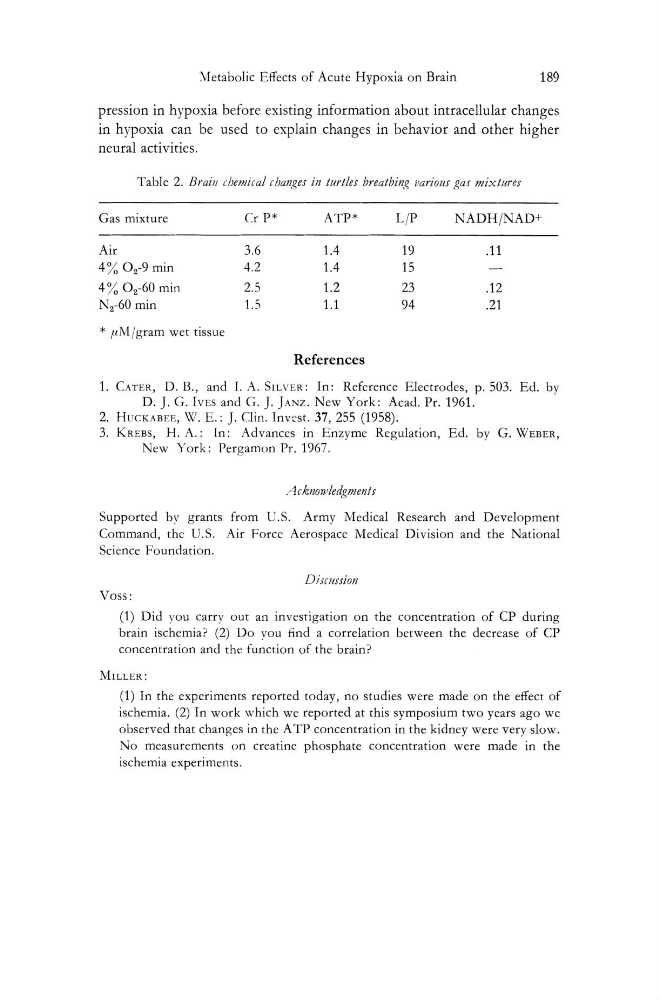
Table 2. Brain cbemical cbanj',es in turtles breatbing various gar mixtures
Gas mixture
Cr P*
ATP*
LIP
NADH/NAD+
Air
3.6
1.4
19
.11
4% O 2-9 min
4.2
1.4
15
4% O 2-60 min
2.5
1.2
23
.12
N z -60 min
1.5
1.1
94
.21
* pJ'vI/gram wet tissue
References
1. CATER, D. B., and 1. A. SILVER: In: Reference Electrodes, p. 503. Ed. by
D. J. G. IvES and G.]. JANZ. New York: Acad. Pro 1961.
2. HUCKABEE, W. E.: J. Clin. Invest. 37, 255 (1958).
3. KREBS, H. A.: In: Advances in Enzyme Regulation, Ed. by G. WEBER,
New York: Pergamon Pr. 1967.
Acknowledp,ments
Supported by grants from U.S. Army Medical Research and Development
Command, the U.S. Air Force Aerospace Medical Division and the National
Science Foundation.
Discussion
Voss:
(1) Did you carry out an investigation on the concentration of CP during
brain ischemia? (2) Do you find a correlation between the decrease of CP
concentration and the function of the brain?
MILLER:
(1) In the experiments reported today, no studies were made on the effect of
ischemia. (2) In work which we reported at this symposium two years ago we
observed that changes in the A TP concentration in the kidney were very slow.
No measurements on creatine phosphate concentration were made in the
ischemia experiments.
189
pression in hypoxia before existing information about intracellular changes
in hypoxia can be used to explain changes in behavior and other higher
neural activities.
Table 2. Brain cbemical cbanj',es in turtles breatbing various gar mixtures
Gas mixture
Cr P*
ATP*
LIP
NADH/NAD+
Air
3.6
1.4
19
.11
4% O 2-9 min
4.2
1.4
15
4% O 2-60 min
2.5
1.2
23
.12
N z -60 min
1.5
1.1
94
.21
* pJ'vI/gram wet tissue
References
1. CATER, D. B., and 1. A. SILVER: In: Reference Electrodes, p. 503. Ed. by
D. J. G. IvES and G.]. JANZ. New York: Acad. Pro 1961.
2. HUCKABEE, W. E.: J. Clin. Invest. 37, 255 (1958).
3. KREBS, H. A.: In: Advances in Enzyme Regulation, Ed. by G. WEBER,
New York: Pergamon Pr. 1967.
Acknowledp,ments
Supported by grants from U.S. Army Medical Research and Development
Command, the U.S. Air Force Aerospace Medical Division and the National
Science Foundation.
Discussion
Voss:
(1) Did you carry out an investigation on the concentration of CP during
brain ischemia? (2) Do you find a correlation between the decrease of CP
concentration and the function of the brain?
MILLER:
(1) In the experiments reported today, no studies were made on the effect of
ischemia. (2) In work which we reported at this symposium two years ago we
observed that changes in the A TP concentration in the kidney were very slow.
No measurements on creatine phosphate concentration were made in the
ischemia experiments.