

B þ X ! Y þ D
ð10:4Þ
X ! E
ð10:5Þ
A and B are used to make D and E with intermediate products X and Y.
These reactions can be maintained far from equilibrium by continually supplying the substances A and B and extracting D and E. These additions and subtractions eliminate the back reactions by holding the concentrations A, B, D, and E
constant. This assumption allows us to capture in the STELLA model the concentrations of those products as transforming variables rather than reservoirs. In
contrast, the two intermediate components (X and Y) may have concentrations
that change in time.
For simplicity, and without loss of generality, we set the kinetic constants equal
to one. The following system of nonlinear equations results, after eliminating D,
which does not enter any of the reactions and is continuously removed from the
system. Thus, by analogy with Chap. 7:
dX=dt ¼ A þ X
2
à Y À B à X À X
ð10:6Þ
dY=dt ¼ B Ã X À X
2
à Y
ð10:7Þ
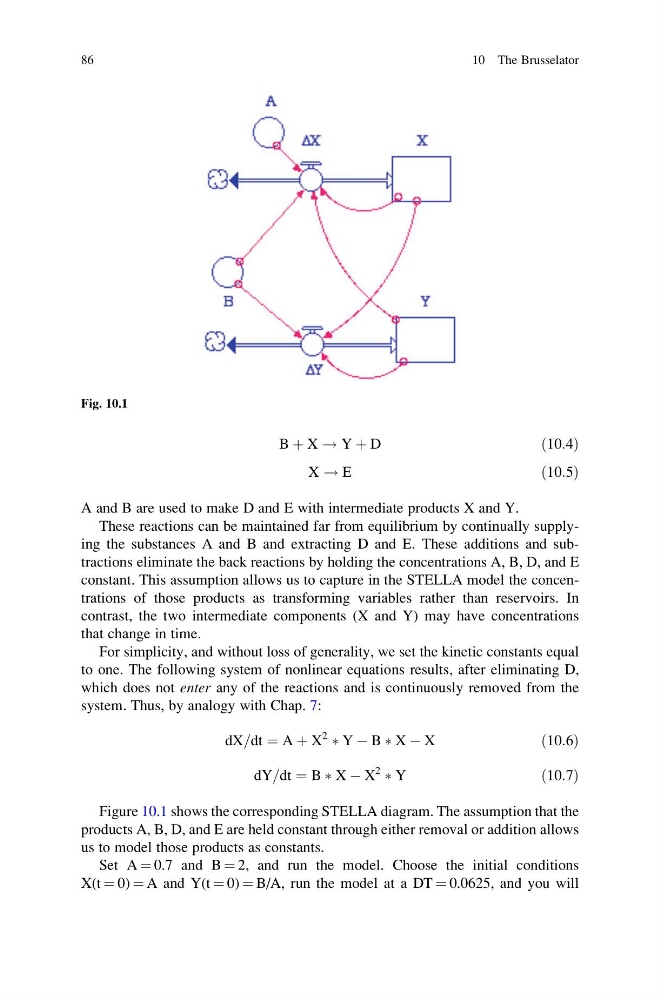
Figure 10.1 shows the corresponding STELLA diagram. The assumption that the
products A, B, D, and E are held constant through either removal or addition allows
us to model those products as constants.
Set A ¼ 0.7 and B ¼ 2, and run the model. Choose the initial conditions
X(t ¼ 0) ¼ A and Y(t ¼ 0) ¼ B/A, run the model at a DT ¼ 0.0625, and you will
Fig. 10.1
86
10 The Brusselator
ð10:4Þ
X ! E
ð10:5Þ
A and B are used to make D and E with intermediate products X and Y.
These reactions can be maintained far from equilibrium by continually supplying the substances A and B and extracting D and E. These additions and subtractions eliminate the back reactions by holding the concentrations A, B, D, and E
constant. This assumption allows us to capture in the STELLA model the concentrations of those products as transforming variables rather than reservoirs. In
contrast, the two intermediate components (X and Y) may have concentrations
that change in time.
For simplicity, and without loss of generality, we set the kinetic constants equal
to one. The following system of nonlinear equations results, after eliminating D,
which does not enter any of the reactions and is continuously removed from the
system. Thus, by analogy with Chap. 7:
dX=dt ¼ A þ X
2
à Y À B à X À X
ð10:6Þ
dY=dt ¼ B Ã X À X
2
à Y
ð10:7Þ
Figure 10.1 shows the corresponding STELLA diagram. The assumption that the
products A, B, D, and E are held constant through either removal or addition allows
us to model those products as constants.
Set A ¼ 0.7 and B ¼ 2, and run the model. Choose the initial conditions
X(t ¼ 0) ¼ A and Y(t ¼ 0) ¼ B/A, run the model at a DT ¼ 0.0625, and you will
Fig. 10.1
86
10 The Brusselator