

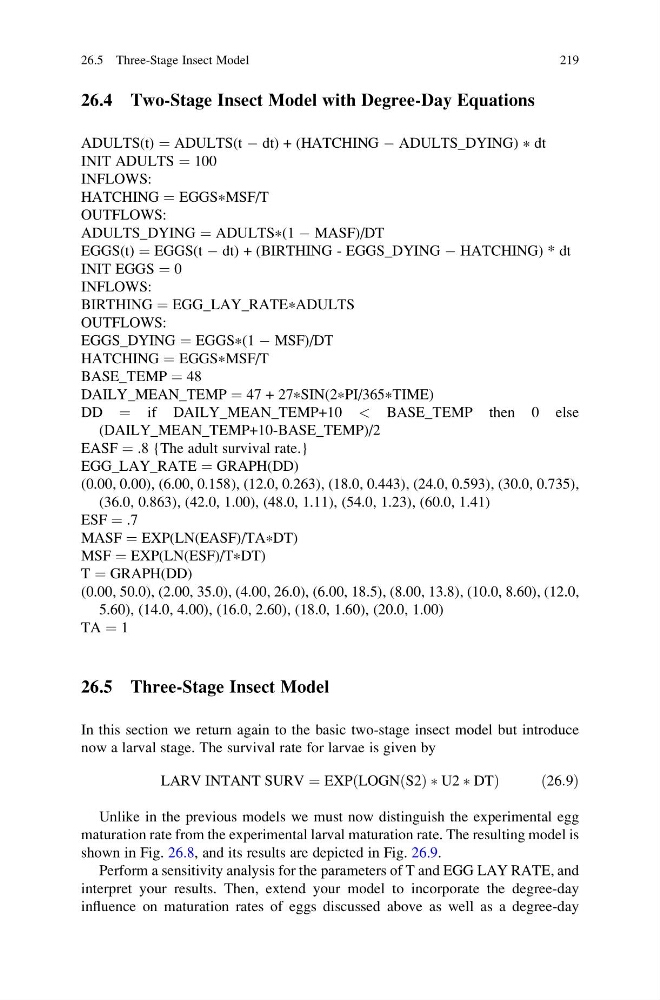
26.4 Two-Stage Insect Model with Degree-Day Equations
ADULTS(t) ¼ ADULTS(t À dt) + (HATCHING À ADULTS_DYING) * dt
INIT ADULTS ¼ 100
INFLOWS:
HATCHING ¼ EGGS * MSF/T
OUTFLOWS:
ADULTS_DYING ¼ ADULTS * (1 À MASF)/DT
EGGS(t) ¼ EGGS(t À dt) + (BIRTHING - EGGS_DYING À HATCHING) * dt
INIT EGGS ¼ 0
INFLOWS:
BIRTHING ¼ EGG_LAY_RATE * ADULTS
OUTFLOWS:
EGGS_DYING ¼ EGGS * (1 À MSF)/DT
HATCHING ¼ EGGS * MSF/T
BASE_TEMP ¼ 48
DAILY_MEAN_TEMP ¼ 47 + 27 * SIN(2 * PI/365 * TIME)
DD ¼ if DAILY_MEAN_TEMP+10 < BASE_TEMP then 0 else
(DAILY_MEAN_TEMP+10-BASE_TEMP)/2
EASF ¼ .8 {The adult survival rate.}
EGG_LAY_RATE ¼ GRAPH(DD)
(0.00, 0.00), (6.00, 0.158), (12.0, 0.263), (18.0, 0.443), (24.0, 0.593), (30.0, 0.735),
(36.0, 0.863), (42.0, 1.00), (48.0, 1.11), (54.0, 1.23), (60.0, 1.41)
ESF ¼ .7
MASF ¼ EXP(LN(EASF)/TA * DT)
MSF ¼ EXP(LN(ESF)/T * DT)
T ¼ GRAPH(DD)
(0.00, 50.0), (2.00, 35.0), (4.00, 26.0), (6.00, 18.5), (8.00, 13.8), (10.0, 8.60), (12.0,
5.60), (14.0, 4.00), (16.0, 2.60), (18.0, 1.60), (20.0, 1.00)
TA ¼ 1
26.5 Three-Stage Insect Model
In this section we return again to the basic two-stage insect model but introduce
now a larval stage. The survival rate for larvae is given by
LARV INTANT SURV ¼ EXP LOGN S2
ð Þ Ã U2 Ã DT
ð
Þ
ð26:9Þ
Unlike in the previous models we must now distinguish the experimental egg
maturation rate from the experimental larval maturation rate. The resulting model is
shown in Fig. 26.8, and its results are depicted in Fig. 26.9.
Perform a sensitivity analysis for the parameters of T and EGG LAY RATE, and
interpret your results. Then, extend your model to incorporate the degree-day
influence on maturation rates of eggs discussed above as well as a degree-day
26.5 Three-Stage Insect Model
219
ADULTS(t) ¼ ADULTS(t À dt) + (HATCHING À ADULTS_DYING) * dt
INIT ADULTS ¼ 100
INFLOWS:
HATCHING ¼ EGGS * MSF/T
OUTFLOWS:
ADULTS_DYING ¼ ADULTS * (1 À MASF)/DT
EGGS(t) ¼ EGGS(t À dt) + (BIRTHING - EGGS_DYING À HATCHING) * dt
INIT EGGS ¼ 0
INFLOWS:
BIRTHING ¼ EGG_LAY_RATE * ADULTS
OUTFLOWS:
EGGS_DYING ¼ EGGS * (1 À MSF)/DT
HATCHING ¼ EGGS * MSF/T
BASE_TEMP ¼ 48
DAILY_MEAN_TEMP ¼ 47 + 27 * SIN(2 * PI/365 * TIME)
DD ¼ if DAILY_MEAN_TEMP+10 < BASE_TEMP then 0 else
(DAILY_MEAN_TEMP+10-BASE_TEMP)/2
EASF ¼ .8 {The adult survival rate.}
EGG_LAY_RATE ¼ GRAPH(DD)
(0.00, 0.00), (6.00, 0.158), (12.0, 0.263), (18.0, 0.443), (24.0, 0.593), (30.0, 0.735),
(36.0, 0.863), (42.0, 1.00), (48.0, 1.11), (54.0, 1.23), (60.0, 1.41)
ESF ¼ .7
MASF ¼ EXP(LN(EASF)/TA * DT)
MSF ¼ EXP(LN(ESF)/T * DT)
T ¼ GRAPH(DD)
(0.00, 50.0), (2.00, 35.0), (4.00, 26.0), (6.00, 18.5), (8.00, 13.8), (10.0, 8.60), (12.0,
5.60), (14.0, 4.00), (16.0, 2.60), (18.0, 1.60), (20.0, 1.00)
TA ¼ 1
26.5 Three-Stage Insect Model
In this section we return again to the basic two-stage insect model but introduce
now a larval stage. The survival rate for larvae is given by
LARV INTANT SURV ¼ EXP LOGN S2
ð Þ Ã U2 Ã DT
ð
Þ
ð26:9Þ
Unlike in the previous models we must now distinguish the experimental egg
maturation rate from the experimental larval maturation rate. The resulting model is
shown in Fig. 26.8, and its results are depicted in Fig. 26.9.
Perform a sensitivity analysis for the parameters of T and EGG LAY RATE, and
interpret your results. Then, extend your model to incorporate the degree-day
influence on maturation rates of eggs discussed above as well as a degree-day
26.5 Three-Stage Insect Model
219