

194
Yiannis G. Matsinos, Wilfried F. Wolff, and Donald L. DeAngelis
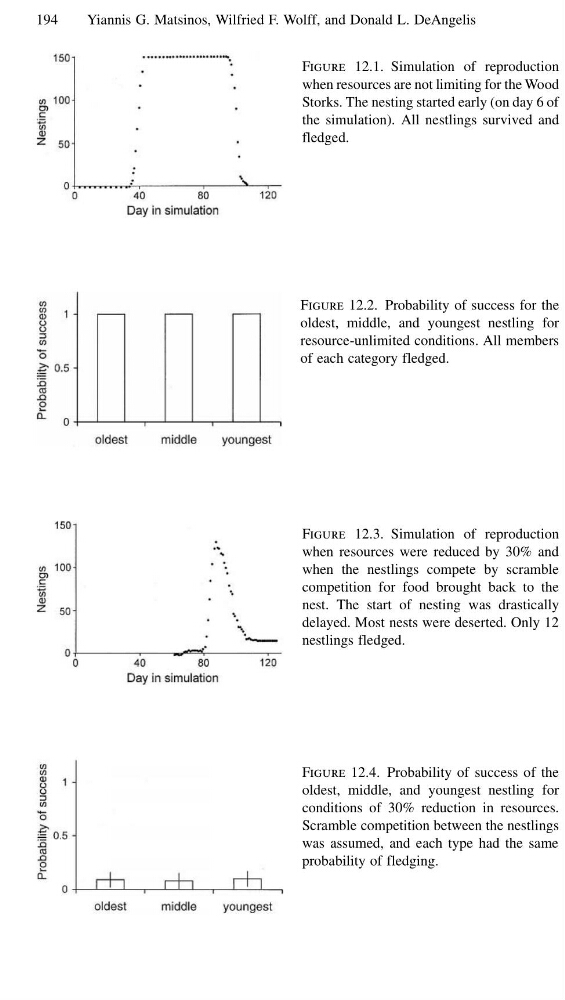
Figure 12.1. Simulation of reproduction
when resources are not limiting for the Wood
Storks. The nesting started early (on day 6 of
the simulation). All nestlings survived and
fledged.
Figure 12.2. Probability of success for the
oldest, middle, and youngest nestling for
resource-unlimited conditions. All members
of each category fledged.
Figure 12.3. Simulation of reproduction
when resources were reduced by 30% and
when the nestlings compete by scramble
competition for food brought back to the
nest. The start of nesting was drastically
delayed. Most nests were deserted. Only 12
nestlings fledged.
Figure 12.4. Probability of success of the
oldest, middle, and youngest nestling for
conditions of 30% reduction in resources.
Scramble competition between the nestlings
was assumed, and each type had the same
probability of fledging.
Yiannis G. Matsinos, Wilfried F. Wolff, and Donald L. DeAngelis
Figure 12.1. Simulation of reproduction
when resources are not limiting for the Wood
Storks. The nesting started early (on day 6 of
the simulation). All nestlings survived and
fledged.
Figure 12.2. Probability of success for the
oldest, middle, and youngest nestling for
resource-unlimited conditions. All members
of each category fledged.
Figure 12.3. Simulation of reproduction
when resources were reduced by 30% and
when the nestlings compete by scramble
competition for food brought back to the
nest. The start of nesting was drastically
delayed. Most nests were deserted. Only 12
nestlings fledged.
Figure 12.4. Probability of success of the
oldest, middle, and youngest nestling for
conditions of 30% reduction in resources.
Scramble competition between the nestlings
was assumed, and each type had the same
probability of fledging.