

224
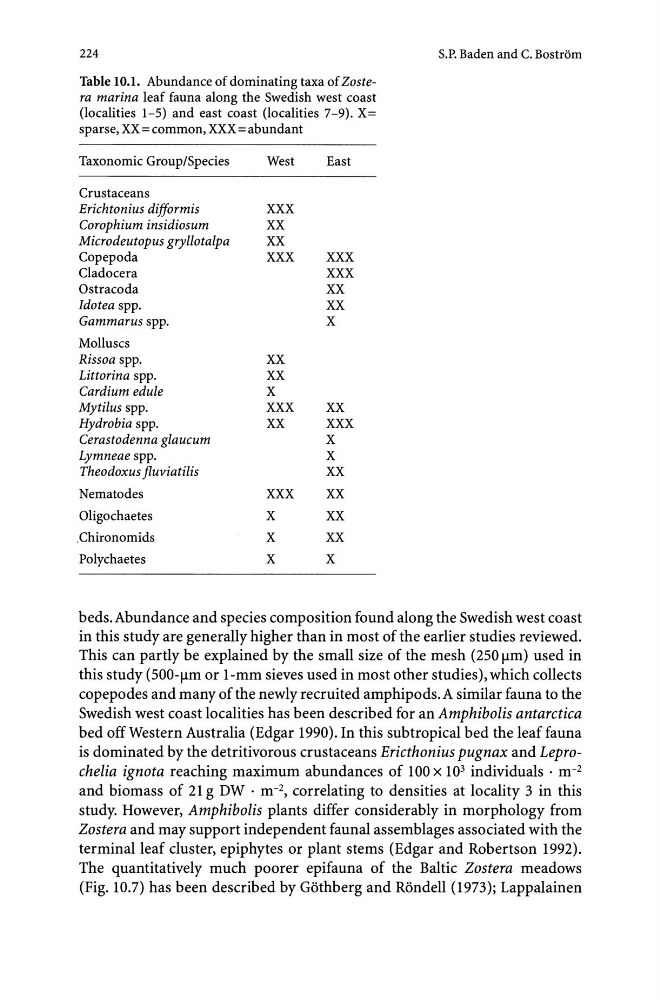
Table 10.1. Abundance of dominating taxa of Zostera marina leaf fauna along the Swedish west coast
(localities 1-5) and east coast (localities 7-9). X=
sparse, XX = common, XXX = abundant
Taxonomic Group/Species
Crustaceans
Erichtonius difformis
Corophium insidiosum
Microdeutopus gryllotalpa
Copepoda
Cladocera
Ostracoda
Idotea spp.
Gammarus spp.
Molluscs
Rissoa spp.
Littorina spp.
Cardium edule
Mytilus spp.
Hydrobia spp.
Cerastodenna glaucum
Lymneae spp.
Theodoxus jluviatilis
Nematodes
Oligochaetes
.Chironomids
Polychaetes
West
XXX
XX
XX
XXX
XX
XX
X
XXX
XX
XXX
X
X
X
East
XXX
XXX
XX
XX
X
XX
XXX
X
X
XX
XX
XX
XX
X
S.P. Baden and C. Bostrom
beds. Abundance and species composition found along the Swedish west coast
in this study are generally higher than in most of the earlier studies reviewed.
This can partly be explained by the small size of the mesh (250 11m) used in
this study (SOO-l1m or I-mm sieves used in most other studies), which collects
copepodes and many of the newly recruited amphipods. A similar fauna to the
Swedish west coast localities has been described for an Amphibolis antarctica
bed off Western Australia (Edgar 1990). In this subtropical bed the leaf fauna
is dominated by the detritivorous crustaceans Ericthonius pugnax and Leprochelia ignota reaching maximum abundances of 100 x 10 3 individuals· m- 2
and biomass of 21 g DW . m- 2 , correlating to densities at locality 3 in this
study. However, Amphibolis plants differ considerably in morphology from
Zostera and may support independent faunal assemblages associated with the
terminal leaf cluster, epiphytes or plant stems (Edgar and Robertson 1992).
The quantitatively much poorer epifauna of the Baltic Zostera meadows
(Fig. 10.7) has been described by Gothberg and Rondell (1973); Lappalainen
Table 10.1. Abundance of dominating taxa of Zostera marina leaf fauna along the Swedish west coast
(localities 1-5) and east coast (localities 7-9). X=
sparse, XX = common, XXX = abundant
Taxonomic Group/Species
Crustaceans
Erichtonius difformis
Corophium insidiosum
Microdeutopus gryllotalpa
Copepoda
Cladocera
Ostracoda
Idotea spp.
Gammarus spp.
Molluscs
Rissoa spp.
Littorina spp.
Cardium edule
Mytilus spp.
Hydrobia spp.
Cerastodenna glaucum
Lymneae spp.
Theodoxus jluviatilis
Nematodes
Oligochaetes
.Chironomids
Polychaetes
West
XXX
XX
XX
XXX
XX
XX
X
XXX
XX
XXX
X
X
X
East
XXX
XXX
XX
XX
X
XX
XXX
X
X
XX
XX
XX
XX
X
S.P. Baden and C. Bostrom
beds. Abundance and species composition found along the Swedish west coast
in this study are generally higher than in most of the earlier studies reviewed.
This can partly be explained by the small size of the mesh (250 11m) used in
this study (SOO-l1m or I-mm sieves used in most other studies), which collects
copepodes and many of the newly recruited amphipods. A similar fauna to the
Swedish west coast localities has been described for an Amphibolis antarctica
bed off Western Australia (Edgar 1990). In this subtropical bed the leaf fauna
is dominated by the detritivorous crustaceans Ericthonius pugnax and Leprochelia ignota reaching maximum abundances of 100 x 10 3 individuals· m- 2
and biomass of 21 g DW . m- 2 , correlating to densities at locality 3 in this
study. However, Amphibolis plants differ considerably in morphology from
Zostera and may support independent faunal assemblages associated with the
terminal leaf cluster, epiphytes or plant stems (Edgar and Robertson 1992).
The quantitatively much poorer epifauna of the Baltic Zostera meadows
(Fig. 10.7) has been described by Gothberg and Rondell (1973); Lappalainen