

176
R.G. Hughes
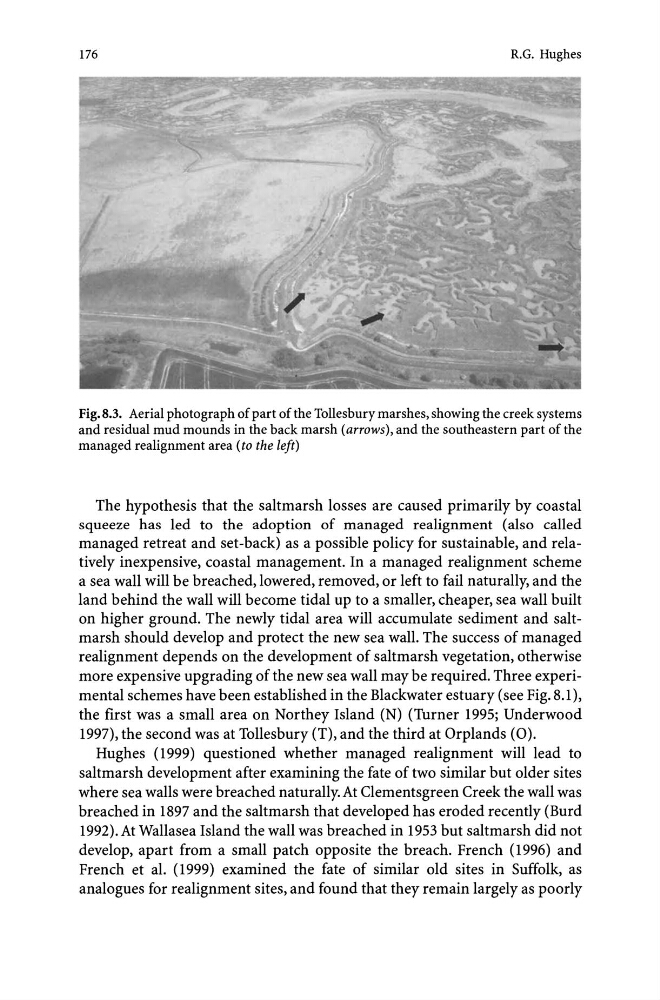
Fig. 8.3. Aerial photograph of part of the Tollesbury marshes, showing the creek systems
and residual mud mounds in the back marsh (arrows), and the southeastern part of the
managed realignment area (to the left)
The hypothesis that the saltmarsh losses are caused primarily by coastal
squeeze has led to the adoption of managed realignment (also called
managed retreat and set-back) as a possible policy for sustainable, and relatively inexpensive, coastal management. In a managed realignment scheme
a sea wall will be breached, lowered, removed, or left to fail naturally, and the
land behind the wall will become tidal up to a smaller, cheaper, sea wall built
on higher ground. The newly tidal area will accumulate sediment and saltmarsh should develop and protect the new sea wall. The success of managed
realignment depends on the development of saltmarsh vegetation, otherwise
more expensive upgrading of the new sea wall may be required. Three experimental schemes have been established in the Blackwater estuary (see Fig. 8.1),
the first was a small area on Northey Island (N) (Turner 1995; Underwood
1997), the second was at Tollesbury (T), and the third at Orplands (0).
Hughes (1999) questioned whether managed realignment will lead to
saltmarsh development after examining the fate of two similar but older sites
where sea walls were breached naturally. At Clementsgreen Creek the wall was
breached in 1897 and the saltmarsh that developed has eroded recently (Burd
1992). At Wallasea Island the wall was breached in 1953 but saltmarsh did not
develop, apart from a small patch opposite the breach. French (1996) and
French et al. (1999) examined the fate of similar old sites in Suffolk, as
analogues for realignment sites, and found that they remain largely as poorly
R.G. Hughes
Fig. 8.3. Aerial photograph of part of the Tollesbury marshes, showing the creek systems
and residual mud mounds in the back marsh (arrows), and the southeastern part of the
managed realignment area (to the left)
The hypothesis that the saltmarsh losses are caused primarily by coastal
squeeze has led to the adoption of managed realignment (also called
managed retreat and set-back) as a possible policy for sustainable, and relatively inexpensive, coastal management. In a managed realignment scheme
a sea wall will be breached, lowered, removed, or left to fail naturally, and the
land behind the wall will become tidal up to a smaller, cheaper, sea wall built
on higher ground. The newly tidal area will accumulate sediment and saltmarsh should develop and protect the new sea wall. The success of managed
realignment depends on the development of saltmarsh vegetation, otherwise
more expensive upgrading of the new sea wall may be required. Three experimental schemes have been established in the Blackwater estuary (see Fig. 8.1),
the first was a small area on Northey Island (N) (Turner 1995; Underwood
1997), the second was at Tollesbury (T), and the third at Orplands (0).
Hughes (1999) questioned whether managed realignment will lead to
saltmarsh development after examining the fate of two similar but older sites
where sea walls were breached naturally. At Clementsgreen Creek the wall was
breached in 1897 and the saltmarsh that developed has eroded recently (Burd
1992). At Wallasea Island the wall was breached in 1953 but saltmarsh did not
develop, apart from a small patch opposite the breach. French (1996) and
French et al. (1999) examined the fate of similar old sites in Suffolk, as
analogues for realignment sites, and found that they remain largely as poorly