

160
Ql
C
o
N
E
.2
c:
o
.Q
~
50m
Representative
transect
Prionospio zone
5t Expansion
U after 1979
1J
E. Flach and A. Tamaki
330
300
-250 E
-- Q)
C
Q)
~
200 0
.c
C/)
Q)
.c +"""'
150 E
0
~
- Q)
(.)
100 c
ro
+"""'
en
0
50
o
Shoreline
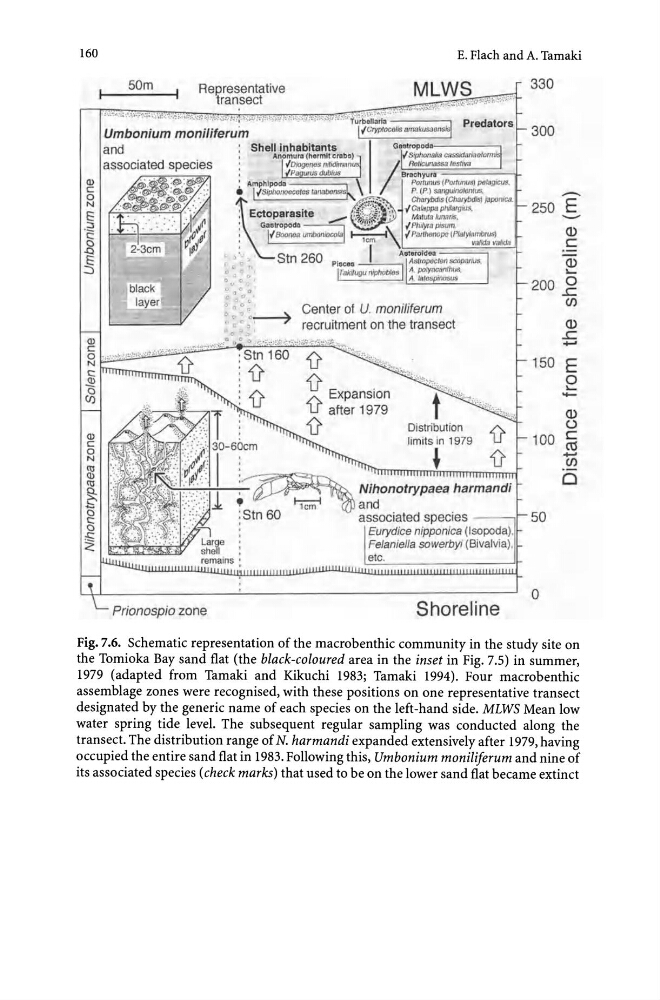
Fig.7.6. Schematic representation of the macrobenthic community in the study site on
the Tomioka Bay sand flat (the black-coloured area in the inset in Fig. 7.5) in summer,
1979 (adapted from Tamaki and Kikuchi 1983; Tamaki 1994). Four macrobenthic
assemblage zones were recognised, with these positions on one representative transect
designated by the generic name of each species on the left-hand side. MLWS Mean low
water spring tide level. The subsequent regular sampling was conducted along the
transect. The distribution range of N. harmandi expanded extensively after 1979, having
occupied the entire sand flat in 1983. Following this, Umbonium moniliferum and nine of
its associated species (check marks) that used to be on the lower sand flat became extinct
Ql
C
o
N
E
.2
c:
o
.Q
~
50m
Representative
transect
Prionospio zone
5t Expansion
U after 1979
1J
E. Flach and A. Tamaki
330
300
-250 E
-- Q)
C
Q)
~
200 0
.c
C/)
Q)
.c +"""'
150 E
0
~
- Q)
(.)
100 c
ro
+"""'
en
0
50
o
Shoreline
Fig.7.6. Schematic representation of the macrobenthic community in the study site on
the Tomioka Bay sand flat (the black-coloured area in the inset in Fig. 7.5) in summer,
1979 (adapted from Tamaki and Kikuchi 1983; Tamaki 1994). Four macrobenthic
assemblage zones were recognised, with these positions on one representative transect
designated by the generic name of each species on the left-hand side. MLWS Mean low
water spring tide level. The subsequent regular sampling was conducted along the
transect. The distribution range of N. harmandi expanded extensively after 1979, having
occupied the entire sand flat in 1983. Following this, Umbonium moniliferum and nine of
its associated species (check marks) that used to be on the lower sand flat became extinct